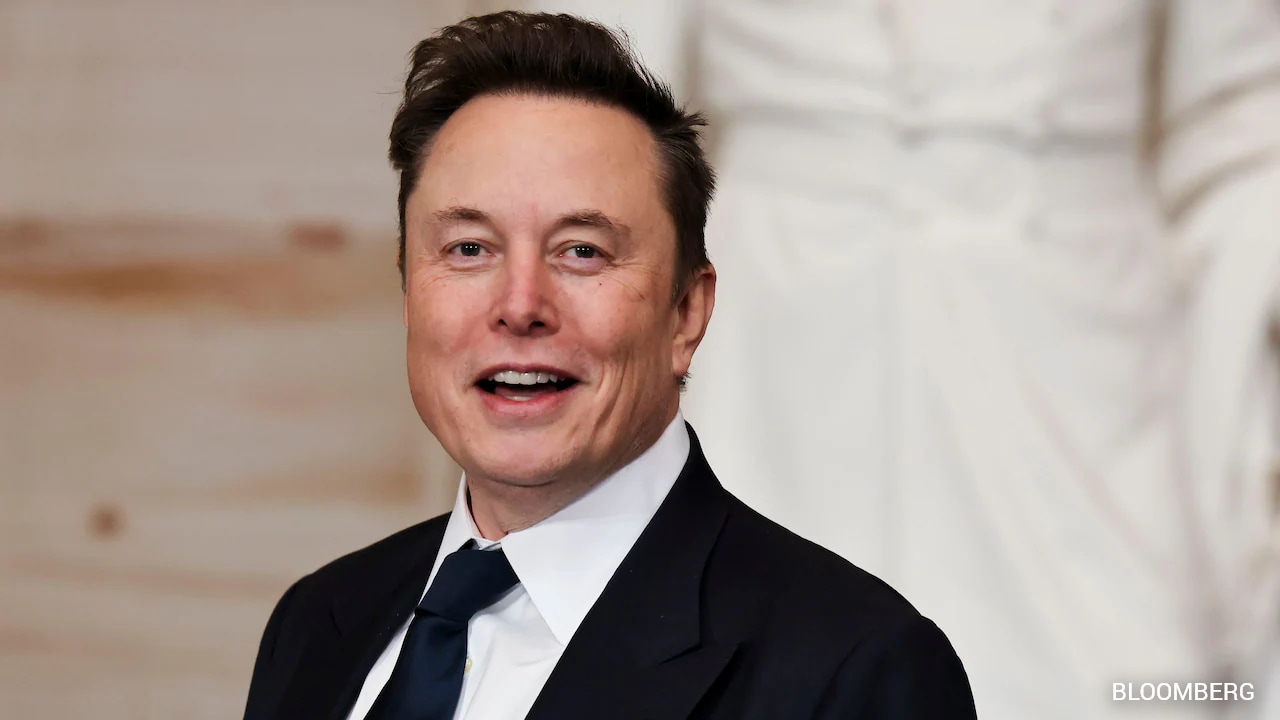
Money works differently now. When a single individual's net worth crosses thirteen digits, standard economic models break down completely. Elon Musk's fortune jumped by $65 billion in a single day, pushing his total valuation back to $1.04 trillion according to the Bloomberg Billionaires Index.
If you are paying attention, you know this is not just another headline about a rich guy getting richer. It is a masterclass in how hyper-scaled private aerospace, artificial intelligence, and electric vehicle infrastructure compound value at a rate the world has never witnessed before.
Let us look at what actually drove this massive rebound. SpaceX shares surged 13 percent since the start of October, while Tesla gained 6.7 percent over the same stretch. This milestone marks a dramatic return to the 13-digit club just three months after a brutal valuation slump wiped out hundreds of billions of dollars from his peak.
The Volatility of Thirteen-Digit Fortunes
Most people struggle to comprehend what a billion dollars looks like, let alone a trillion. At this scale, daily fluctuations dwarf the Gross Domestic Product of small nations. Back in July, Musk experienced a wealth contraction exceeding $600 billion from his previous high. That drop alone was larger than the entire net worth of almost every single individual who has ever populated the Bloomberg 500 index.
Then the narrative flipped. Wall Street institutions re-evaluated their positions. Morgan Stanley analysts recently labeled SpaceX as one of the most efficient vehicles for capturing the exponential upside of the commercial space and intelligence sectors. That single analyst note triggered a chain reaction, helping push SpaceX shares up roughly 58 percent from their August lows.
Tesla followed suit by dropping third-quarter sales figures that beat conservative estimates on Wall Street. When your primary holdings consist of private and public enterprises that completely dominate their respective industries, a modest quarterly beat acts like rocket fuel.
Why Traditional Wealth Metrics No Longer Apply
We are watching a fundamental shift in how concentration of capital operates. Musk does not sit on piles of cash in checking accounts. More than 98 percent of his total wealth is locked directly inside equity stakes in SpaceX and Tesla.
When you own foundational infrastructure for humanity's future transport, global satellite internet, and autonomous robotics, your valuation acts as a referendum on humanity's technological ambitions. If investors believe humanity will become multi-planetary and autonomous, your net worth spikes. If market sentiment turns cautious for even a few weeks, billions vanish overnight.
This extreme sensitivity means the concept of a stable billionaire is dead. We have entered the era of the volatile trillionaire, where fortunes swing by the GDP of mid-sized countries before lunch.
What This Means for the Rest of Us
You do not need to own Tesla stock or launch rockets to learn from this dynamic. The underlying driver here is equity ownership in assets that scale infinitely with zero marginal cost. Musk built a moat so wide that traditional automakers and legacy aerospace contractors are still struggling to catch up years later.
If you want to build durable financial security, look at the principles behind these massive valuations. Focus on high-leverage assets, solve hard engineering problems that nobody else wants to touch, and hold ownership stakes in things that compound while you sleep.
The trillion-dollar threshold is no longer a theoretical ceiling. It is the new frontier of extreme capitalism. Keep watching closely, because the rules of the game are rewriting themselves in real time.