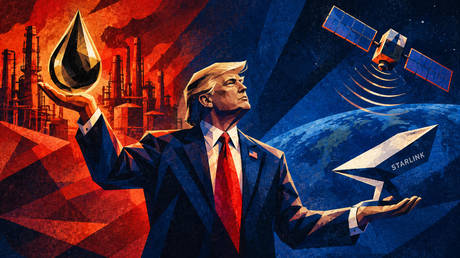
Billions of dollars are flooding into political accounts right now, but the financial architecture of the 2026 midterms looks completely broken if you are trying to find balance. On one side, Democratic campaigns are sitting on piles of candidate-raised cash. On the other, the Republican party is leaning heavily on a single individual: Elon Musk.
With voters heading to the polls on November 3, 2026, the spending numbers are staggering. Musk has poured a record-shattering $366 million into the current midterm cycle, including a massive $276 million wave of donations distributed since July. That kind of mega-donor footprint has completely transformed how conservative candidates are fighting to keep control of Congress against strong political headwinds, rising cost of living concerns, and declining popularity ratings for Donald Trump's administration.
Let's look at how this financial chess match is actually playing out on the ground and why conventional political wisdom no longer applies.
The Trillionaire Megadonor Factor
Elon Musk didn't stay quiet for long. After claiming in May 2025 that he was going to scale back his political contributions, the world's first trillionaire reversed course in spectacular fashion.
Where did all that cash go? According to financial disclosures and reports detailed by outlets like The New York Times, the distribution of Musk's post-July spending reveals a targeted rescue mission for the GOP:
- $158 million went straight to the Senate Leadership Fund, making it one of the largest single political donations in U.S. history to back Republican Senate candidates.
- $76 million flowed directly into America PAC, Musk's own political action committee, which has built extensive voter-turnout operations across critical swing states and competitive House races.
- $20 million landed with the Congressional Leadership Fund to support House Republicans.
- $10 million backed the Lone Star Liberty PAC in Texas, supporting Attorney General Ken Paxton's tight Senate battle against Democrat James Talarico.
- $10 million went to the Republican Governors Association, alongside $2 million for the Republican Attorneys General Association.
For Musk, maintaining influence carries massive personal and professional stakes. As the chief executive of SpaceX and a massive federal contractor for NASA and the Pentagon—not to mention his previous work advising government cost-cutting initiatives—protecting his business empire from potential Democratic congressional investigations is a top priority. When House Democrats call for inquiries into federal contracts, having sympathetic majorities in Congress matters immensely.
Where Democrats Found Their Strength
While Republicans rely heavily on outside super PAC mega-spending, Democratic campaigns have built their financial foundation differently. They are heavily funded by direct candidate cash and traditional donor networks.
Democratic committees and allied groups like the Senate Majority PAC argue that Republicans are trying to buy elections to compensate for an unpopular economic climate and legislative record. Yet, candidate-raised cash offers distinct advantages that super PAC money cannot always replicate. Direct contributions bypass the legal coordination restrictions placed on independent expenditure groups. Campaigns can purchase TV advertising at heavily discounted lowest-unit rates, whereas outside super PACs are forced to pay premium commercial rates.
This creates a fascinating tactical divide. Democrats have plenty of spendable liquidity sitting directly in campaign accounts, allowing them to build hyper-local infrastructure and run personalized candidate-focused messaging. Republicans, meanwhile, are relying on outside groups like America PAC and MAGA Inc—which held $416 million in the bank as of August—to flood the airwaves and drive ground-game turnout operations in competitive districts.
The Stakes in Key Battlegrounds
This cash disparity is most visible in individual state matchups that will decide control of Congress. In Texas, for instance, outside conservative money has rushed in to defend vulnerable seats, pushing statewide races into dramatic polling dead heats.
When you look past the national top-line numbers, fundraising this cycle is less about broad ideological enthusiasm and more about damage control. Incumbent parties always face historical midterm penalties, but the combination of cost-of-living anxiety and executive branch approval numbers has forced outside billionaires to intervene at an unprecedented scale.
The outcome on November 3 will test whether an individual tech titan's fortune can successfully outweigh a fragmented coalition of traditional campaign treasuries. Politics has always been an expensive game, but the 2026 cycle has rewritten the rules of engagement for good.