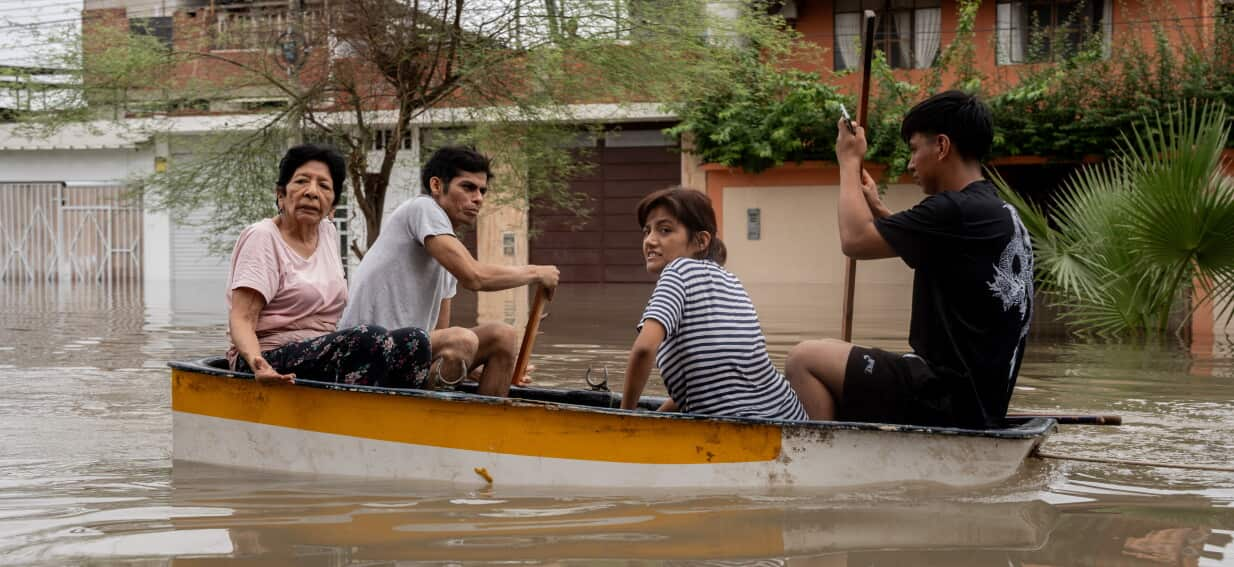
Waist-high water in Piura. Chest-deep currents in Manta. When a powerful El Niño hits the arid coasts of northern Peru and western Ecuador, deserts don't just get wet—they behave like concrete bowls overflowing all at once.
Recent downpours linked to an intensifying El Niño event have pushed both Peru and Ecuador into national emergencies, leaving thousands of families inundated and tens of thousands of people dealing with disrupted lives, damaged homes, and overwhelmed drainage. Reporting from late November 2026 shows Ecuador's National Secretariat for Risk Management recording 34 deaths and roughly 47,000 people impacted across the crisis, while northern Peru's Piura saw streets turn into waterways after roughly 12 hours of heavy rain, affecting around 2,000 families in initial civil defense assessments. Recently making headlines recently: Why Costa Blocking Francesca Albanese At The Airport Backfired Completely.
Honestly, news coverage often treats these deluges like freak acts of God. That's a mistake. The ocean physics are predictable months ahead, yet cities built for dry conditions keep getting caught off guard by storm drains that can't swallow a year's worth of normal rain in hours.
http://googleusercontent.com/lmdx_content/cGXvrkJikULefFhKaBKeNjmxkEFLpjutXwjgmwbaOKQHwGVABndITWiPUwnrOCIjUBhmpIyCjyqrQnUmQaDrXUYmkBsVefefGaGLJaJDhafgaDHkSdEvPPqGEKXwElRoJXogszzwHHblLYzfwRmhOXhIwRIezUWdJnCsVixO11614 Additional information into this topic are covered by The New York Times.
Why El Niño Turns Dry Coasts Into Flood Zones
Normally, cold, nutrient-rich water wells up along the coasts of Peru and Ecuador, keeping coastal air cool and dry. Trade winds push warm surface water west toward Asia and Australia.
El Niño flips that script.
When trade winds weaken—or westerly wind bursts push warm water eastward—warm surface water piles up against South America's Pacific coast. Warmer ocean water means higher evaporation and more atmospheric moisture right over coastal cities that rarely see sustained heavy rain. Coastal ocean warming can also suppress normal upwelling and depress the
I've watched people assume "more rain" simply means "water flows downhill to the sea like usual." Doesn't work that way in coastal deserts. Soils baked dry or compacted by urban paving absorb water slowly at first, sending sheets of runoff straight into low-lying neighborhoods, unpaved roads, and aging sewer lines.
What Happens When Cities Aren't Built for Deluges
Look at what happens on the ground when heavy rain hits cities like Piura in northern Peru or Manta in western Ecuador. Within hours, streets flood, rivers or canals swell past their banks, and municipal pumps struggle to keep pace.
Reports from late November 2026 describe residents in Piura's Santa Margarita neighborhood dealing with floating appliances and mud-soaked homes, while people in Manta waded through chest-deep water after local rivers overflowed. In Peru, military crews and water pumps were deployed to clear flooded streets, though delays and fuel bottlenecks for pumping gear made recovery slower for residents stuck in standing water and backed-up sewage.
This isn't just a story about rain totals. It's a story about infrastructure mismatch.
Most storm drainage networks in arid or semi-arid coastal towns are sized for rare, light showers—not multi-hour cloudbursts. When sewers back up during floods, standing water isn't just inconvenient. It turns into a sanitation hazard fast.
Common Mistakes Made Before and During Coastal Floods
- Waiting for official evacuation orders while streets are already rising. Water in coastal basins can climb fast once upstream tributaries or urban channels fill up. Waiting until water reaches your door often means leaving when roads are already impassable.
- Driving or wading into fast-moving or sewer-contaminated water. A few inches of moving water can knock a person off their feet or stall a vehicle. Worse, floodwater mixed with raw sewage carries real infection risks—cuts, skin sores, and contaminated hands become immediate health concerns.
- Treating early downpours as the worst of the season. Heavy rain early in an El Niño cycle can saturate ground, weaken slopes, and strain drainage before peak rainfall even arrives.
Comparing Recent Events With Historical El Niño Extremes
To understand why meteorologists and disaster agencies take coastal El Niño warnings seriously, compare current emergencies against past benchmarks documented by climate researchers and disaster records.
During the 1997–1998 El Niño, extreme rains turned parts of northern Peru's Sechura Desert into a massive temporary lake and caused catastrophic damage across the region. Later, the 2017 coastal El Niño—which developed rapidly with intense local coastal warming even without a classic basin-wide super El Niño—hit northern Peru hard, flooding Piura and destroying tens of thousands of homes. And in 2023, strong coastal warming and atmospheric anomalies again triggered severe flooding across Peru and Ecuador, highlighting how coastal ocean-atmosphere feedback can drive intense localized rain.
One important nuance deserves candid attention: not every El Niño behaves identically, and real-time disaster tallies shift quickly during active emergencies. Early figures on affected families, deaths, or displaced residents are often preliminary and revised as agencies reach cut-off communities. Claiming exact final losses while water is still rising is bad journalism.
What You Should Do Right Now If You're in a Flood-Prone Area
Whether you live in coastal Peru, western Ecuador, or another region facing El Niño-driven heavy rain, practical preparation beats panic every single time.
- Move valuables and essential documents up high today. Shift electronics, IDs, medical records, prescriptions, and irreplaceable family items to upper floors, high shelves, or waterproof bags before the next storm band hits.
- Build a 72-hour grab-and-go kit. Pack clean drinking water, non-perishable food, flashlights, power banks, basic first-aid supplies, antiseptic wipes, and rubber boots. If power cuts out or roads flood, you won't want to rely on neighborhood stores.
- Avoid contact with floodwater whenever possible. Wear sturdy waterproof boots and gloves if you must move through standing water, and wash thoroughly with clean water and soap afterward. Never let children play in floodwater.
- Follow official civil defense and meteorological alerts. Rely on updates from national risk agencies—such as Peru's INDECI and Ecuador's Secretaría Nacional de Gestión de Riesgos, alongside international trackers like IFRC GO—rather than unverified social media rumors.
- Plan two exit routes before heavy rain starts. Know which streets flood first in your neighborhood and identify higher ground or an official shelter ahead of time.