Football organizations love to project absolute control. When star quarterbacks take hits, the machine spins into gear. But human biology doesn't care about game plans, transatlantic flights, or must-win road trips.
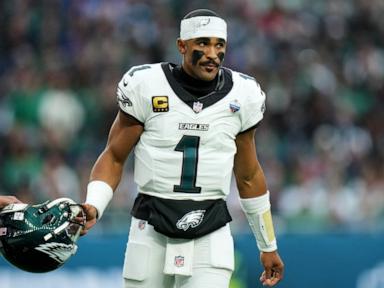
The medical emergency surrounding Philadelphia Eagles quarterback Jalen Hurts exposes the terrifying friction between NFL urgency and real health risks. What started as a perceived calf tweak after a routine hit snowballed into deep vein thrombosis and bilateral pulmonary emboli, knocking Hurts out of contact football for months and throwing the franchise's season into chaos.
The Breakdown of the Timeline
Let's look at how this unfolded behind closed doors. On Thursday, October 8, 2026, Hurts reported left calf soreness to the Eagles training staff. He believed he had simply taken a clean cleat or kick to the back of the leg during the previous game against the Los Angeles Rams.
Instead of resting or shutting things down for deep imaging, the team kept him moving. Hurts practiced in full on Friday, October 9, before boarding a transatlantic flight to London to face the Jacksonville Jaguars.
That overseas trip changed everything. Upon landing in the UK on Saturday, October 10, medical specialists evaluated Hurts and performed an ultrasound. The scan revealed a superficial vein thrombosis in his left calf. Sources later reported that Hurts spent hours in a London hospital until the early morning hours of Sunday before receiving clearance to take the field.
He played in London on Sunday, October 11, as the Eagles dropped a tight 19-17 game. Post-game reports noted he looked sluggish and took the field later than usual. Then came the flight back to Philadelphia.
Medical teams monitored him through Monday and Tuesday. By Wednesday, October 14, Hurts practiced again. But a follow-up evening ultrasound flagged alarming news: the small blood clot showed movement.
By Thursday, the team pulled him from the upcoming matchup against the Carolina Panthers. By Monday, October 19, the organization and agent Nicole Lynn announced the devastating update. The superficial clot had transitioned into deep vein thrombosis (DVT) and bilateral pulmonary emboli—meaning pieces had broken off and traveled straight to his lungs.
Why the Handling Is Facing Intense Scrutiny
Critics are asking the obvious question. How do you put an athlete with a diagnosed blood clot on a commercial or team charter flight across the Atlantic Ocean?
Long-haul flights are notorious breeding grounds for circulation issues. Sitting stagnant in a pressurized cabin for hours while managing a vascular clot is a textbook medical hazard. Allowing Hurts to play an intense, high-impact professional football game immediately after an overnight hospital stay in London looks reckless in hindsight.
Coaches and medical personnel lean heavily on specialist clearances. When doctors say a player can go, organizations trust the white coats. Yet, vascular health is notoriously fickle. A superficial clot can act as a warning siren for deeper system failures.
When the initial diagnosis came back as a superficial vein thrombosis, staff treated it like a minor nuisance. They missed the underlying threat. Blood clots don't stay neatly contained when subjected to the physical trauma of professional tackles and the dehydration of international travel.
The Reality of Recovery and Anticoagulants
Hurts is currently stable, but his football life is on pause. Treating deep vein thrombosis and pulmonary emboli requires strong anticoagulants, commonly known as blood thinners.
While on these medications, contact sports are entirely off-limits. Any hard hit or internal bleeding could turn fatal instantly. Medical experts estimate he will need roughly three months of treatment and monitoring before doctors even consider clearing him for physical contact.
For the Eagles, the loss of their franchise cornerstone is catastrophic. Backup quarterback Tanner McKee has taken over the starting role, but the offense looks entirely different without Hurts orchestrating the scheme. The team dropped four consecutive games, sliding to a 2-4 record just as the division race heats up.
What Modern Sports Medicine Must Learn From This
Football teams employ massive medical staffs, yet vascular emergencies continue to catch franchises off guard. Muscle strains and bone bruises get immediate attention because they impact performance on Sunday. Vascular anomalies are silent killers that don't always present with obvious swelling or immediate pain.
When a player reports unusual calf tightness after a game, imaging needs to go beyond basic orthopedic checks. It needs to rule out circulatory distress immediately. Sticking a player with a vascular issue onto a crowded airplane cabin shouldn't happen twice.
Jalen Hurts will recover, and his long-term health prognosis remains positive. But the organization has to answer hard questions about player safety protocols. Trusting quick clearances over conservative caution nearly cost a star player his life.
Protect the player first. The wins can wait.