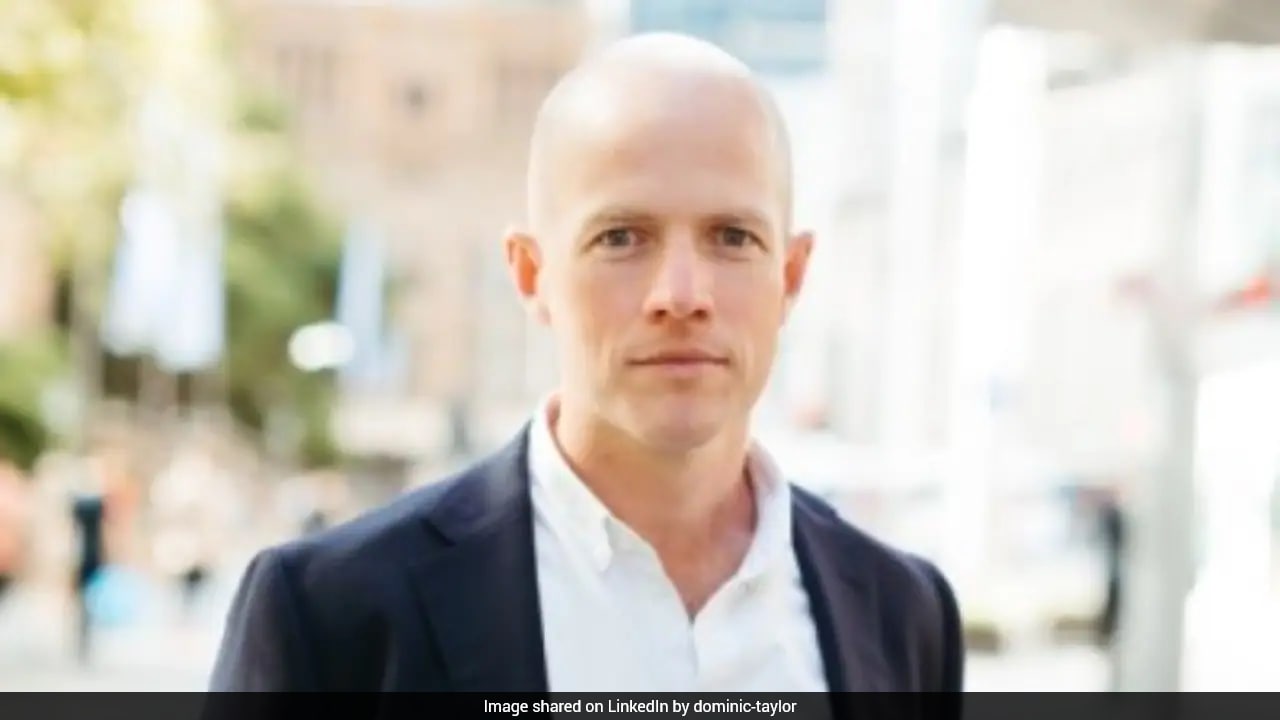
Big tech leadership summits usually fill up with tired buzzwords and empty corporate promises. But when Dominic Taylor steps up to the stage at the NDTV World Summit 2026 in New Delhi, he represents something much more concrete. He runs mobility for Uber across the entire Asia-Pacific region. If you want to understand how a global giant plans to conquer the world's trickiest transportation markets, you watch what Taylor does next.
India sits right at the center of that strategy. On October 23, Taylor takes part in a high-stakes panel titled "Building At Scale: The New Economy of India." He shares the stage with heavyweights like Puneet Chandok from Microsoft India and Jiten Vyas from VFS Global. They aren't just talking about abstract growth curves. They are dissecting how tech platforms survive and expand when millions of users demand instant, hyper-local service at a fraction of Western costs.
The Journey From Sydney To Regional Powerhouse
Most people see a corporate title and assume an easy climb up the executive ladder. Taylor's path looked a bit different. He started back in 2014 simply managing drivers in Sydney. That grassroots entry point matters. You don't learn how app-based logistics work by sitting in a boardroom in California. You learn it by figuring out why local drivers log off during peak hours or how sudden regulatory shifts can wipe out a fleet overnight.
Before he ever touched ridesharing code, Taylor spent years in traditional finance and consulting. He worked at PwC, crunched numbers for Macquarie Group as an equity analyst in capital markets, and covered engineering and chemicals at Morgan Stanley. He even picked up a master’s degree in economic history from Oxford, focusing on the economics of indigenous art markets.
That mix of hard-nosed financial background and unusual academic curiosity shapes how he manages APAC mobility today. He understands margins, but he also understands people. When Uber pushes into a new market, it has to balance strict local regulations with erratic consumer demand. Taylor survived those friction points across Australia and New Zealand before taking the regional reins.
Scaling Up Where The Rules Change Daily
Operating rideshare networks in the Asia-Pacific region is a masterclass in bureaucratic survival. Western playbooks fail miserably in cities like Mumbai, Tokyo, or Sydney. Every country operates under a completely different set of transportation laws.
Take Japan, for instance. Uber didn't just drop its standard app into Tokyo and hope for the best. Taylor helped steer practical local integrations, partnering directly with Rakuten to fit into local consumer habits. In Australia, he pushed for ride-matching innovations like Uber Pool to tackle dense urban congestion without alienating drivers.
India presents a different beast entirely. It's massive, hyper-competitive, and price-sensitive. When executives talk about "building at scale," they mean handling millions of micro-transactions per second while keeping fares low enough for daily commuters and high enough to keep drivers on the road.
If you look at what Uber faces in India right now, the challenges go far beyond simple navigation apps. Local players, EV adoption mandates, and aggressive municipal transit updates force companies to adapt almost weekly. Taylor’s presence at the New Delhi summit signals that Uber isn't treating India as a side project. It's the testing ground for the company's entire global future.
What This Means For The Future Of Urban Mobility
The modern gig economy is shifting away from pure, unbridled expansion toward brutal efficiency and regulatory compliance. Governments across Asia are tightening rules around worker classification, data privacy, and environmental standards.
Taylor's career trajectory shows a clear pivot toward sustainable operations. You can't just burn venture capital to subsidize rides anymore. You have to build partnerships, respect regional oversight, and weave your service into the fabric of local public transport.
Watch what comes out of that New Delhi panel session. The real takeaways won't be headline-grabbing press releases. Pay attention to how tech executives talk about working alongside local regulators, managing electric vehicle transitions, and making public transit systems actually talk to private apps.
The next decade of transport belongs to the operators who figure out scale without losing local trust. Dominic Taylor has his hands directly on the wheel.