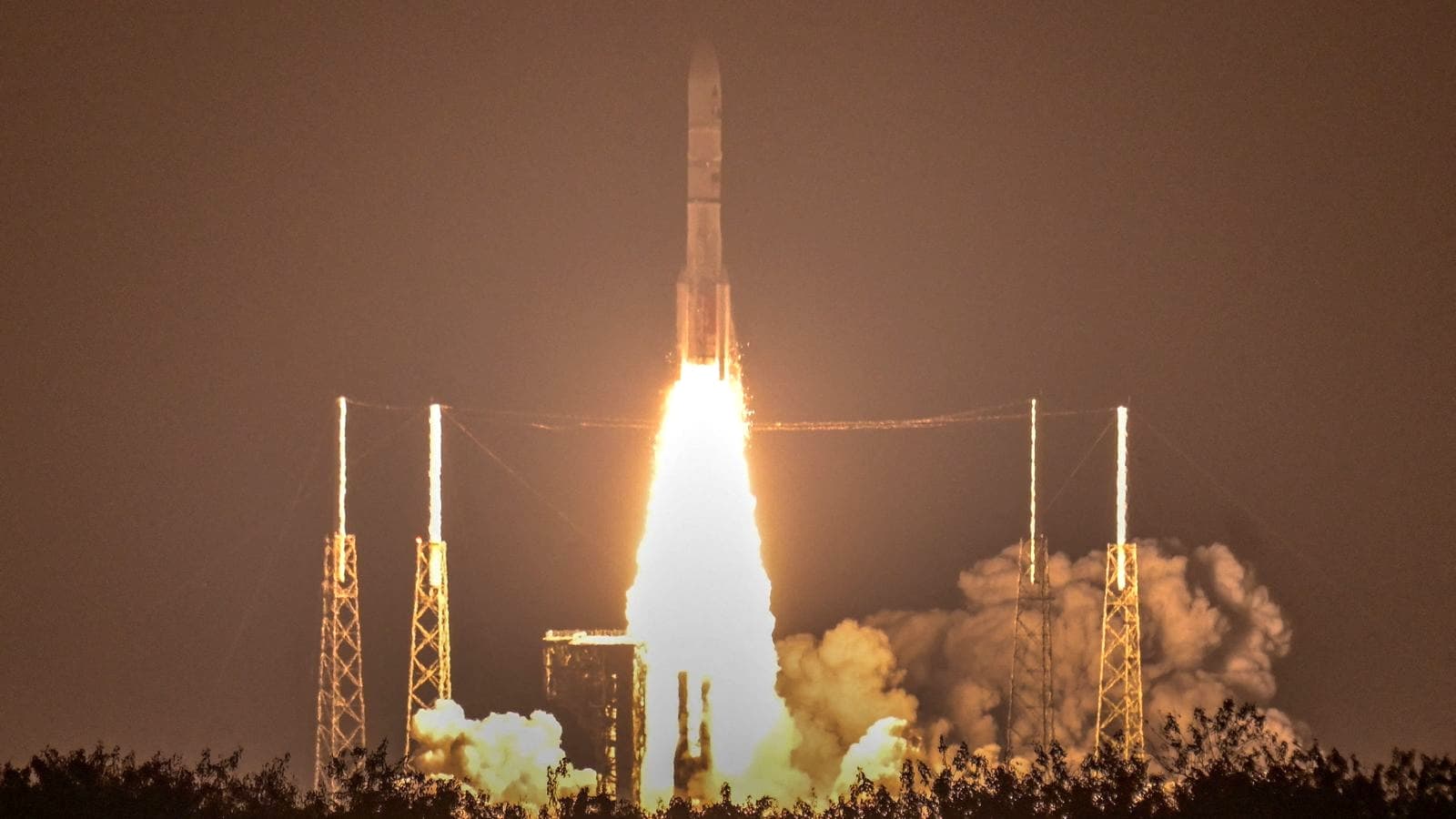
Ten minutes into flight, everything fell apart.
On a Sunday morning at Cape Canaveral Space Force Station, a United Launch Alliance Vulcan rocket suffered a catastrophic mid-flight anomaly, turning forty brand-new internet satellites into expensive space debris. For the Boeing and Lockheed Martin joint venture, this wasn't just a minor glitch. It marked the first total mission failure in the vehicle's history. For Amazon, it dealt a brutal blow to an orbital broadband ambitions already strained by tight regulatory deadlines and supply chain bottlenecks. Building on this theme, you can find more in: Why Nasa Astronaut Selection Beats Most People Before They Apply.
Space is unforgiving. When things go wrong, they do so with zero warning and maximum financial wreckage.
Anatomy of a Catastrophe
The launch started normally enough at Space Launch Complex 41. The Vulcan heavy-lift rocket, powered by Blue Origin BE-4 engines and armed with six solid rocket boosters, roared off the pad. Everything looked solid on telemetry until the tenth minute of flight, when an unannounced anomaly tore through the vehicle. The rocket failed to deliver its payload into low-Earth orbit, dooming forty spacecraft built for Amazon's Leo internet network. Observers at Gizmodo have provided expertise on this matter.
Investigations are currently underway, but aerospace engineers already know the painful reality. A failure this deep into ascent means a lengthy grounding. ULA cannot simply slap a patch on the next booster and hope for the best. Every piece of telemetry will be picked apart by federal regulators and internal boards.
Prior to this disaster, Vulcan had flown five times since its January 2024 debut. While earlier flights faced minor booster nozzle issues that still managed to limp payloads into orbit, Sunday's disaster crossed the ultimate red line. It destroyed hardware completely.
Why Amazon Leo Cannot Catch a Break
Amazon is pouring billions into its Leo satellite internet constellation to challenge SpaceX's dominant Starlink network. The business model requires sheer scale. To provide global broadband coverage, Amazon needs to deploy over 3,200 satellites into low-Earth orbit.
Before the November 15 accident, Amazon had successfully launched around 390 to 398 satellites across roughly fourteen separate missions. That represents a fraction of its total goal, leaving the tech giant scrambling to meet aggressive deployment quotas. Federal Communications Commission rules tied severe spectrum priority and operational milestones to rigid calendar dates, putting immense pressure on corporate leadership to rush manifests.
The worst part for Amazon isn't just the loss of forty satellites. It is the compounding nature of launch provider delays. Amazon booked dozens of flights across multiple heavy-lift vehicles, including Blue Origin's New Glenn—which suffered its own fiery pad explosion earlier in the year. When your primary rocket partners all hit simultaneous roadblocks, your entire commercial rollout schedule shatters.
The Boeing and Lockheed Headache
United Launch Alliance exists because Boeing and Lockheed Martin combined their rocket divisions to maintain a tight grip on government and commercial payload delivery. For two decades, ULA boasted a pristine reliability record on legacy rockets like the Atlas V and Delta IV. Vulcan was supposed to be their modern ticket to cheap, reusable-adjacent heavy lifting.
Instead, the joint venture is facing intense scrutiny. Leadership changes—including longtime CEO Tory Bruno leaving for Blue Origin and Mark Peller taking over the helm—meant the company was already navigating a cultural transition. Now, executive desks in Huntsville and Denver are dealing with a grounded flagship rocket.
National security payloads also ride on Vulcan. The U.S. Space Force previously paused national security flights following earlier booster anomalies. This complete mission failure guarantees that military brass will tighten the screws even further. No defense contractor survives repeated propulsion anomalies without losing contracts to agile competitors.
The Starlink Gap Widens
We have to look at the broader market. SpaceX operates Starlink with hundreds of thousands of active users, a massive manufacturing cadence, and a reusable booster fleet that catches massive rockets out of mid-air.
Amazon is still trying to get its first commercial internet service off the ground. While Amazon executives talk up multi-gigabit speeds and compact consumer hardware terminals, those promises require hardware sitting fifty miles above our heads. Every time a rocket blows up on the evening news, the timeline for rural broadband customers gets pushed back another year.
Forty satellites gone in a single flash. Millions of dollars vaporized. Years of engineering work erased in ten minutes.
Space remains brutally hard. No amount of corporate backing or aggressive scheduling can bend the laws of physics. Until ULA figures out what went wrong in the tenth minute of flight, Amazon's ambitions of challenging Starlink remain grounded right alongside the wreckage.