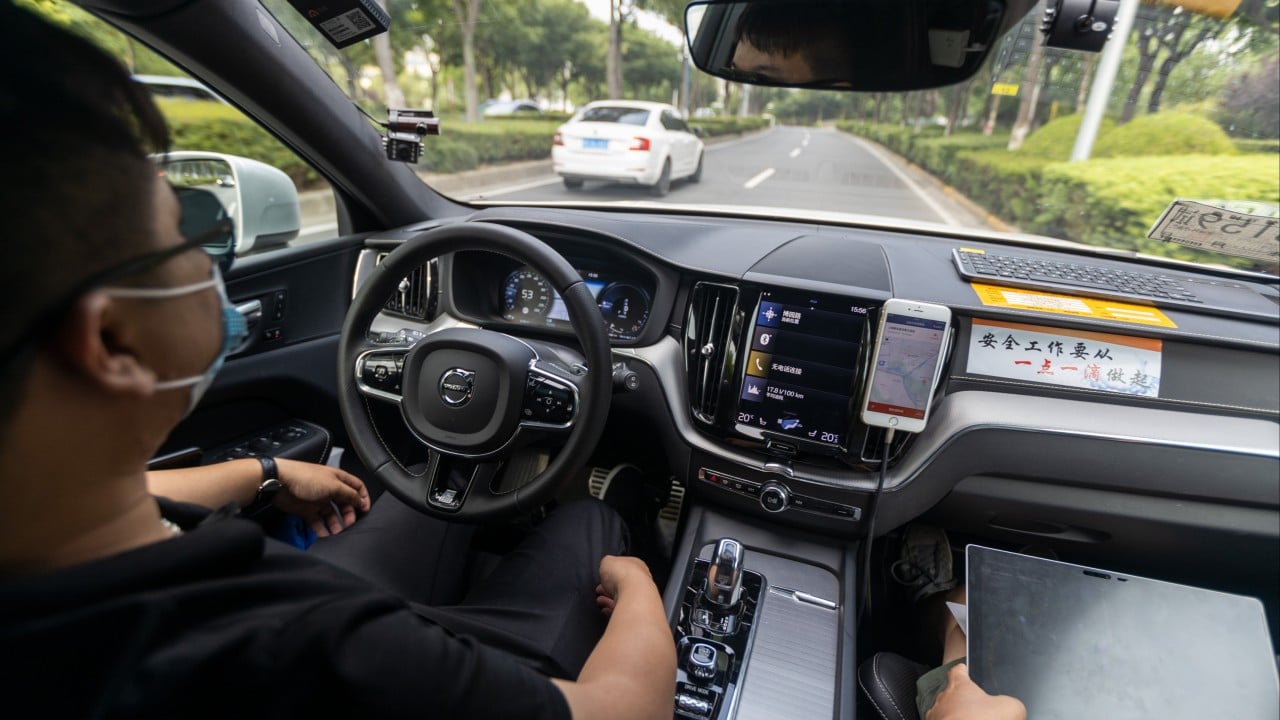
Hong Kong's crowded, chaotic streets are about to get a lot more futuristic. Didi Chuxing, the titan of ride-hailing, is moving forward with plans to apply for autonomous vehicle testing permits in the city. If you think self-driving cars only work in wide, predictable American suburbs, you haven't seen how mainland tech giants operate under pressure.
This isn't just about another company dropping cars onto foreign asphalt. It's a calculated chess move happening right after a high-profile visit to Didi's Beijing headquarters by Hong Kong's legislative panel on transport. When government officials tour tech campuses, policy shifts follow fast.
The Real Challenge of Hong Kong Streets
Let's be honest for a second. Driving in Hong Kong is an extreme sport. You're dealing with narrow lanes, aggressive mini-buses, endless pedestrian foot traffic, and vertical skyscrapers that completely fry GPS signals. Most Western autonomous systems would probably freeze up within the first five minutes of navigating Causeway Bay at rush hour.
Yet, Chinese autonomous firms are tackling these exact high-density environments head-on. Didi's push into the city comes on the heels of competitors like Baidu securing trials, showing that autonomous vehicle testing in right-hand-drive urban centers is entering a hyper-competitive phase. Didi isn't walking into this blind. They've already rolled out their next-generation R2 robotaxi trials in mainland cities like Beijing and Guangzhou, gathering mountains of real-world data to handle chaotic urban transit.
What Didi's Move Means for Commuters
You might wonder how this affects you if you're just trying to catch a ride home after work. Right now, it doesn't change your daily commute overnight. These are testing phases. Regulatory hurdles in Hong Kong remain notoriously strict.
However, the writing is on the wall. Didi's strategy points to a future where software replaces human error in one of the world's most congested transit systems. While traditional taxi unions push back against ride-hailing regulations, technology is moving past the human argument entirely. Autonomous trials mean developers can fine-tune right-hand-drive systems against local peculiarities—like narrow hillsides and unpredictable weather patterns unique to the territory.
The Bigger Picture in Autonomous Transit
Most observers miss the geopolitical and logistical undertones here. Hong Kong serves as a vital testing ground for companies wanting to prove their technology can scale internationally. If an algorithm can survive Hong Kong, it can survive almost anywhere.
Didi's imminent application marks a turning point. We are watching the transition from experimental science projects to commercial realities. Keep your eyes on Tseung Kwan O and other designated zones where these trials are taking shape. The robotaxi era isn't coming tomorrow. It's rolling down the street right now.