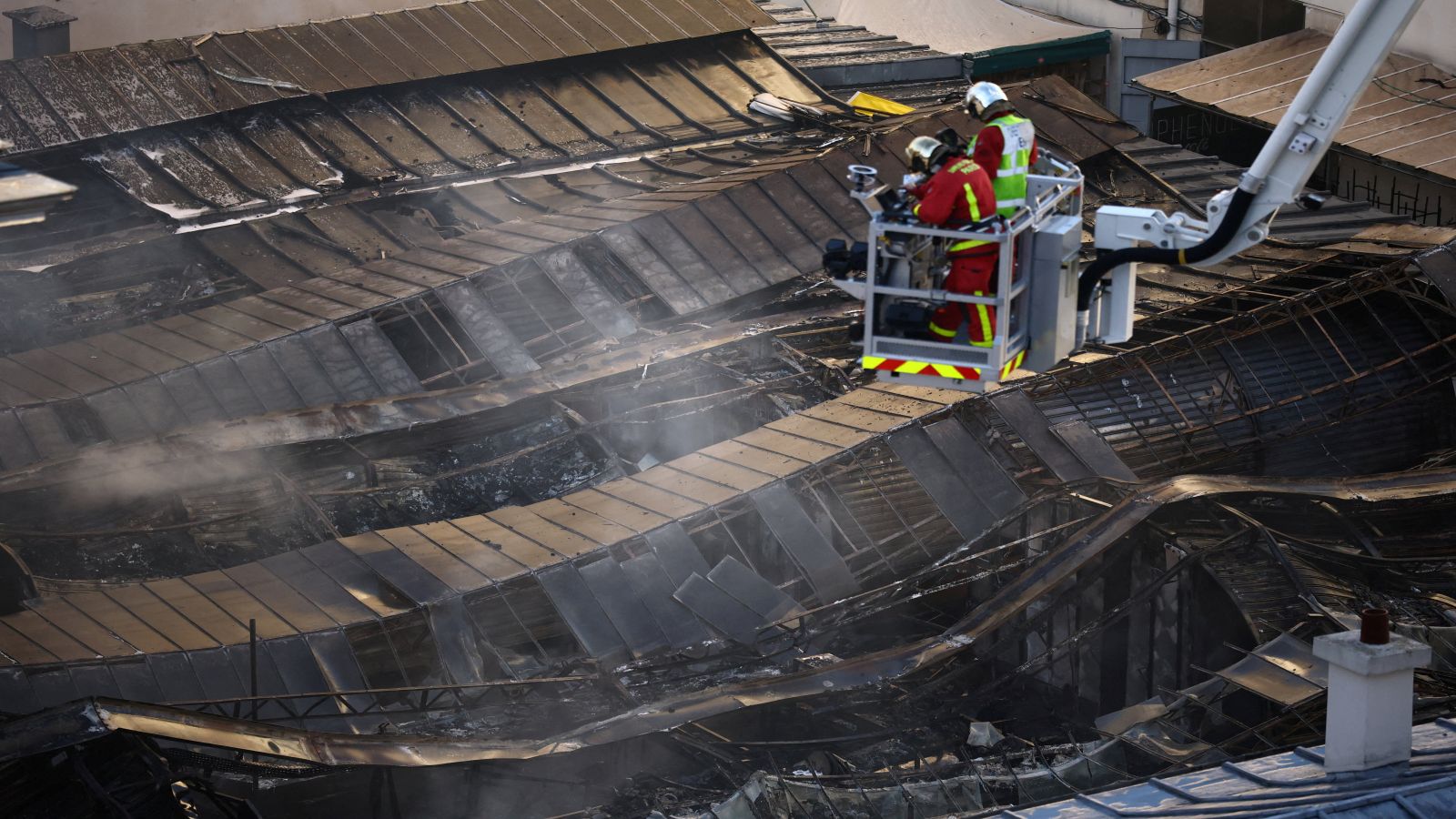
A massive overnight blaze reduced the Marché des Enfants Rouges to charred ruins. Paris lost its oldest covered food market in a single night.
If you've ever squeezed through the narrow, lively alleys of the Marais district to grab Moroccan couscous, Japanese bento, or fresh organic produce, you know what vanished. Located in the 3rd arrondissement, this legendary marketplace had stood since 1615. Lieutenant Colonel Pierre de Bouvier confirmed the grim reality to reporters at the scene, stating that nothing remains of the covered market and its metal structure partially collapsed internally.
Let's look at what actually happened, why this site mattered so much to the cultural fabric of Paris, and what comes next for the dozens of traders left stranded.
What Happened at the Marché des Enfants Rouges
The violent fire broke out overnight between Sunday and Monday, catching emergency services off guard. Roughly one hundred and fifty firefighters rushed to the historic site to contain the flames and prevent them from spreading to adjacent residential buildings in the densely packed Marais neighborhood.
Ariel Weil, the mayor of the central Paris district, expressed relief that neighboring structures remained untouched, noting that the worst-case scenario of a wider urban disaster was avoided. One firefighter sustained minor injuries during the operation.
Authorities have launched an official inquiry to determine the exact cause of the blaze. At this stage, officials haven't pointed to a definitive trigger. The sudden destruction leaves about twenty vendors and shopkeepers facing immediate unemployment, structural displacement, and commercial uncertainty.
A Four-Century Legacy Reduced to Ash
To understand why this fire hurts, you have to look at the timeline. King Louis XIII commissioned the market in 1615, making it older than most landmarks tourists visit today.
Its unusual name translates to the "Market of the Red Children." The moniker dates back to a nearby seventeenth-century orphanage where children wore distinctive red uniforms financed by Christian charity. While the neighborhood evolved from a quiet royal district into a bustling hub of modern urban life, the market stayed stubbornly authentic.
It wasn't a pristine, corporate tourist trap. It was noisy, cramped, aromatic, and deeply lived-in. Just recently, Food & Wine ranked it fifth worldwide for street food, placing it alongside iconic food cultures in Bangkok, London, Lyon, and Mexico City. It served as a daily gathering spot where neighborhood locals, busy professionals, and international visitors mingled over communal tables.
The Immediate Impact on Local Traders and Food Culture
Historic preservation in European cities always walks a tightrope between modernization and heritage protection. Old wooden beams, tight spaces, and aging electrical systems create constant hazards in centuries-old structures.
The destruction of the Marché des Enfants Rouges disrupts the daily lives of independent vendors who relied on the foot traffic of the Marais. Local officials are currently exploring temporary setups or alternative locations to keep these small businesses afloat while investigators sift through the ash.
Paris has weathered structural disasters before. When major landmarks burn, the immediate grief often gives way to fierce public debate over reconstruction standards, fire safety upgrades in historic zones, and the preservation of authentic community spaces against hyper-gentrification.
The smoke has cleared over the 3rd arrondissement. The physical stalls are gone. What remains is a stark reminder of how fragile urban history truly is when confronted with a sudden spark in the middle of the night.