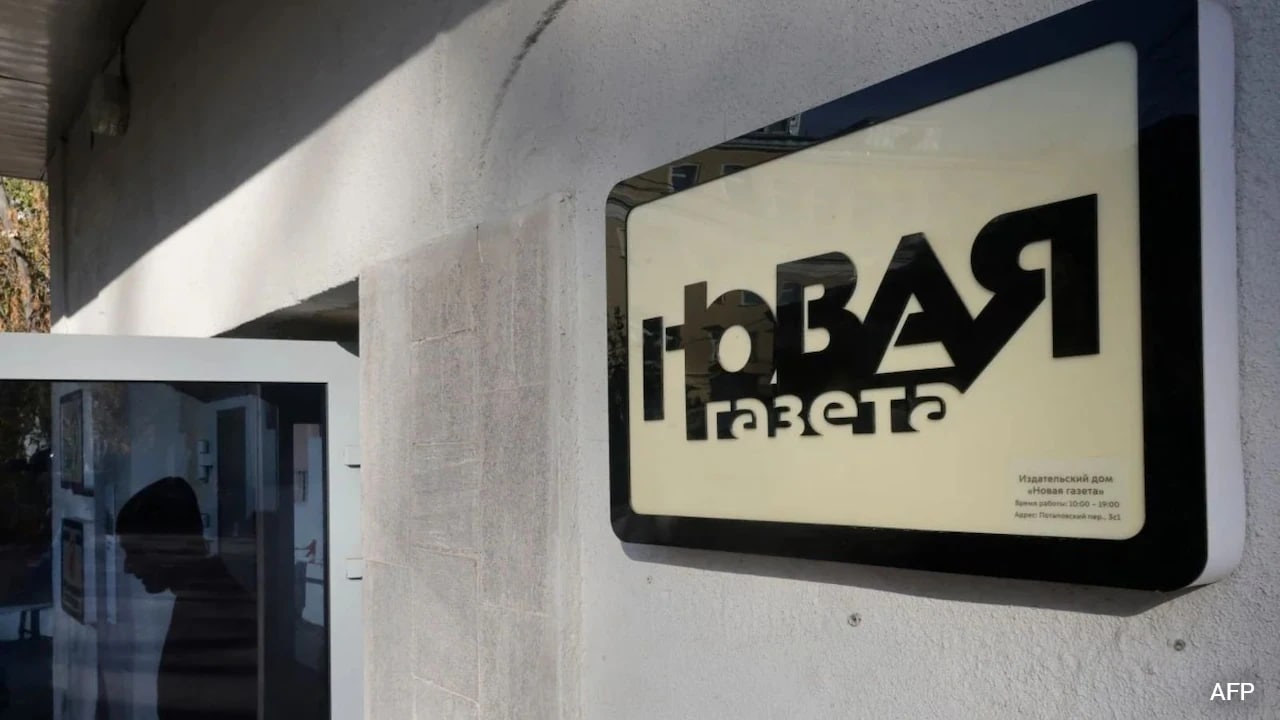
When an editorial team declares that state security services have "killed" them, it's time to pay attention. Novaya Gazeta, Russia's last true bastion of high-profile independent journalism, announced it is shutting its doors for good. Founded back in 1993 with a helping hand from former Soviet leader Mikhail Gorbachev—who used a slice of his Nobel Peace Prize money to get it off the ground—the newspaper survived for over three decades. It outlasted financial collapses, political upheavals, and massive institutional shifts.
It couldn't survive the final squeeze.
The Anatomy of a Slow-Motion Shutdown
You don't just close a legendary newsroom overnight. The throttling of Novaya Gazeta happened in brutal, calculated phases following the 2022 escalation in Ukraine. Authorities stripped the outlet of its media registration, blocked its online channels, and slapped staff members with the toxic "foreign agent" label.
Things shifted from hostile to impossible later. Financial institutions cut off the paper's donation systems after the entire editorial team was officially designated as foreign agents. Landlords told the team to pack up and vacate the Moscow office space they had occupied for nearly thirty years.
Editor-in-chief Sergei Sokolov didn't mince words in his final video address. He stated plainly that the newsroom had ended up in a functional kill zone, surrounded entirely by intelligence services.
A Legacy Written in Courage and Blood
To understand why Novaya Gazeta mattered, you have to look at what they investigated. This wasn't a publication that chased clickbait; it dug into heavy corruption, state overreach, and human rights abuses both inside Russia and across conflict zones. That reporting came at a devastating cost.
Six of the paper's journalists were killed over the years. That grim roster includes Anna Politkovskaya, the fearless investigative reporter gunned down in her apartment building in October 2006 after exposing atrocities in Chechnya.
Even when its longtime editor Dmitry Muratov won the Nobel Peace Prize in 2021, the protection it afforded was temporary. Muratov was physically attacked with red paint on a train, forced to step down, and eventually pushed out of the formal structure as pressure intensified. When journalists like Oleg Roldugin face high-profile arrests and multi-hour office raids under dubious computer crime charges, the message to the remaining independent press is clear.
Defending human rights has been formally reclassified as a crime.
What the Closure Means for the Global Information Space
People often ask if independent journalism can simply move entirely online or survive safely from abroad. While projects like Novaya Gazeta Europe continue to operate outside Russia's physical borders, the domestic lights have basically gone out.
The loss of a physical newsroom in Moscow means the end of localized, ground-level accountability reporting inside the country. When the institutions meant to check state power are systematically dismantled, public life changes. The constitution becomes a piece of paper that can be ignored, and independent thought is treated as treason.
Novaya Gazeta will publish its final commemorative edition before locking the office for good. The team walked out into an environment hostile to the very concept of free inquiry.
Support independent media outlets while they still exist, and pay attention to the journalists who risk everything to report facts from closed societies.


