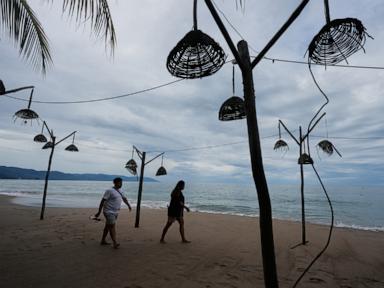
Torrential water doesn't knock politely. It smashes through doors, rips up highways, and turns quiet neighborhood streams into roaring, unpredictable rivers within minutes. That's the harsh reality facing communities along Mexico's Pacific coast right now. The combined toll from Hurricane Simon and the remnants of Tropical Storm Rachel has climbed to at least six lives lost, leaving emergency responders scrambling to rescue trapped residents from stranded vehicles and flooded homes.
When you look at satellite loops of concurrent Pacific weather systems, you see a meteorological squeeze play. Simon churned parallel to the coast as a formidable storm, while Rachel's post-tropical remnants pushed heavy moisture inland and up into Southern California. The double-barreled impact caught many off guard. It's easy to assume that a storm doesn't pose an existential threat if it stays offshore, but heavy rainfall bands stretch hundreds of miles out. That moisture has to go somewhere. In states like Guerrero and Baja California, it slammed against mountainous terrain, triggering flash floods and devastating structural collapses.
Why Offshore Storms Still Turn Deadly
Most people think hurricanes only kill when they make landfall. That's a dangerous myth. Hurricane Simon didn't need to smash directly into a coastal town to wreak havoc. As it moved parallel to the shore, outer rainbands dumped catastrophic amounts of water onto saturated ground.
Take what happened in Guerrero, where a 71-year-old man lost his life when a heavy retaining wall buckled and collapsed under relentless pressure from pooling water. When continuous rain saturates soil, the earth turns to liquid mud. Retaining walls, cliffside roads, and hillside homes become immediate hazards.
Further north, the remnants of Rachel hit Baja California with brutal efficiency. Creeks overflowed their banks in minutes, sweeping away cars, livestock, and personal belongings. Emergency services deployed helicopters to pull people off rooftops and out of surging torrents. Among those rescued were foreign nationals, including American and German tourists and missionaries caught off guard by how fast the water rose.
The Broader Climate Picture Behind the Chaos
Meteorologists point to an unusually aggressive Pacific storm cycle driven by intense oceanic heat patterns and a powerful El Niño phase. Warmer ocean waters act like high-octane fuel for tropical systems. When systems like Simon rapidly intensify into major hurricanes, they hold massive amounts of moisture.
When those storms encounter cooler air masses or rugged land barriers, that moisture dumps out in record-breaking quantities. It's a pattern that emergency management agencies are struggling to keep up with. Infrastructure built decades ago simply isn't designed to handle modern flash-flood volumes.
What You Need to Know If You Live In or Travel to Storm-Prone Regions
If you're caught in a region facing tropical storm remnants, standard advice changes fast. Don't wait for an evacuation order if you live near a stream or low-lying area. Water rises much faster than people expect.
- Never drive through flooded roads. Just six inches of moving water can knock you off your feet, and a foot of water can float an SUV.
- Monitor local civil protection alerts. Mexican authorities use systems like SIAT-CT to grade storm danger, but local conditions can deteriorate faster than official warnings update.
- Secure loose outdoor items. High winds and rising water turn lawn furniture, propane tanks, and building materials into dangerous projectiles or debris clogs that block drainage culverts.
The rising death toll from Simon and Rachel serves as a grim reminder that Pacific storms demand absolute respect, long before they ever touch land. Stay clear of swollen waterways, listen to local authorities, and treat every heavy rain alert as a potential emergency.