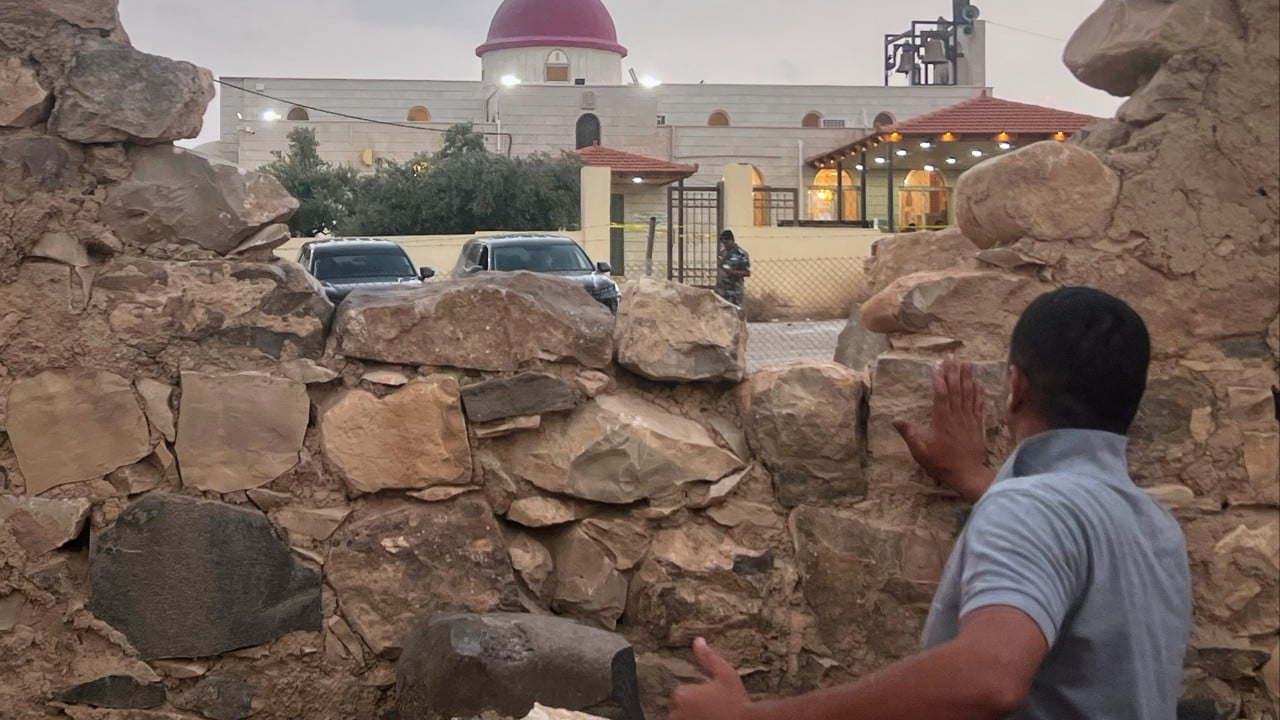
Violence rarely shatters the fragile calm of southern Jordan, but an attack in the Karak governorate changed that reality overnight. Gunmen opened fire during a funeral gathering at a local church, leaving seven worshippers dead and over thirty others injured. It is a grim, shocking escalation in a country that has historically managed to insulate itself from wider regional turmoil.
When tragedy strikes a house of worship, the ripple effects go far beyond local grief. They hit at the core of national stability. King Abdullah II wasted no time responding, using social media and direct statements to vow the harshest retaliation against the perpetrators. He stated that the kingdom would strike with an iron fist against anyone daring to threaten national security. If you found value in this piece, you should look at: this related article.
Understanding the Stakes in Karak
Why does this specific attack carry such heavy weight? Jordan sits in a volatile neighborhood. It borders regional conflicts and has faced multiple security tests over recent years, ranging from foiled militant plots to missile spillovers. Yet, internal sectarian or mass-casualty violence targeting civilian spaces like churches is exceedingly rare.
Interior Minister Mazen Al-Faraya called the incident painful and horrific, noting it stands apart from anything seen in modern Jordanian history. Local witnesses reported that between 150 and 200 people were gathered in and around the church when the gunfire started. Most victims were older adults, caught completely off guard during a time of mourning. For another perspective on this event, check out the recent update from USA.gov.
The immediate government response reflects extreme anxiety over social cohesion. Jordan's leadership has long prided itself on maintaining internal unity across different communities. When a violent act targets a Christian house of worship during a funeral, the implicit goal of the attackers is often to fracture that social fabric.
The Royal Response and Security Tightening
King Abdullah's promise of an iron-fist response is designed to send a clear message. Security forces flooded the Karak area immediately following the shooting. Hospitals filled with anxious family members demanding answers and swift justice, while federal authorities locked down key access points to hunt down the gunmen.
The king explicitly warned that anyone attempting to use treacherous fire to divide Jordanians had failed. That emphasis on unity is crucial. In nations with complex regional dynamics, a single security breach can easily spiral into broader civil tension if leaders fail to act decisively.
Intelligence agencies and local police now face immense pressure to track down the network behind the assault. Was this an isolated cell or part of a broader, coordinated plot? Investigators are scouring digital footprints and local testimonies to piece together the motive.
What Comes Next for Regional Stability
For anyone tracking Middle Eastern geopolitics, this event serves as a stark reminder of how fragile domestic security can be, even in well-policed states. Jordan's security apparatus has built a strong reputation for counterterrorism, making a breach of this magnitude deeply troubling for state planners.
The coming days will test the resilience of the kingdom's governance. Expect heavy security sweeps, heightened surveillance around religious sites, and a hardline judicial response once suspects are apprehended. The message from Amman is uncompromising: internal stability is non-negotiable, and threats to civilian safety will be met with immediate, overwhelming force.