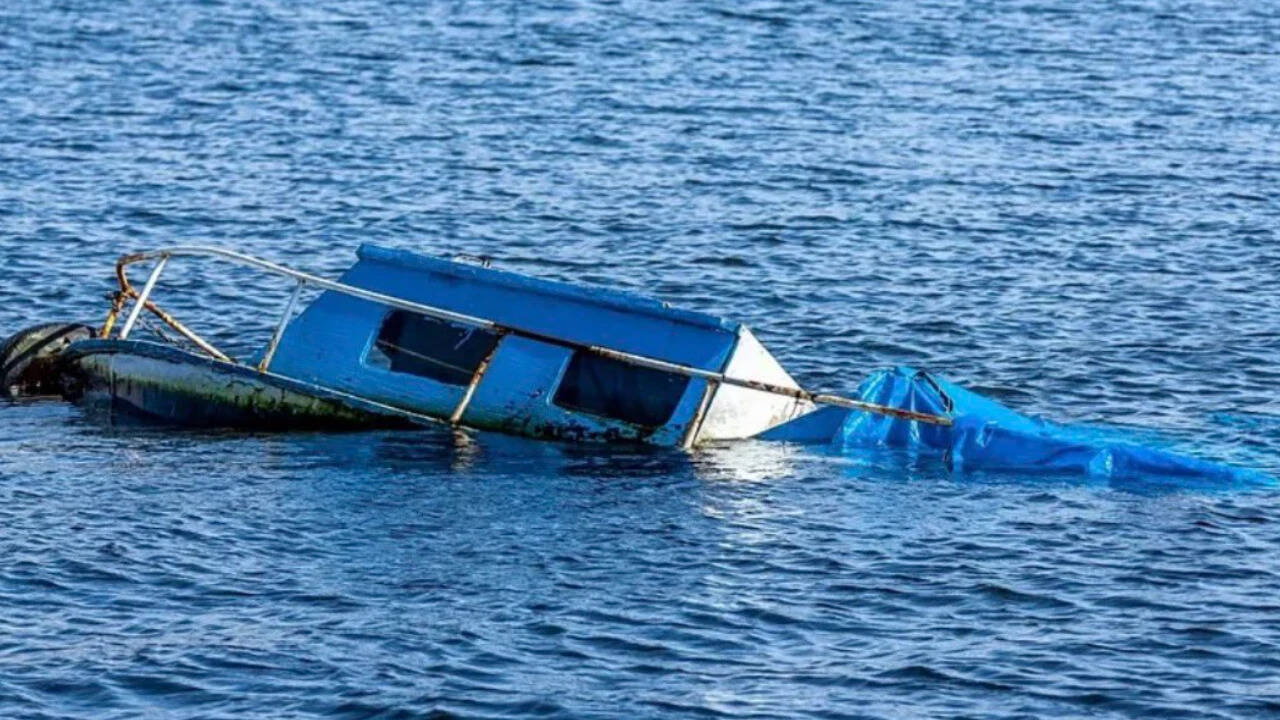
Twenty-one bodies. That is the grim toll pulled from the Atlantic Ocean off the northwestern coast of Senegal this weekend. Just one survivor has been dragged from the surf so far. Search boats are still cutting through the gray swells near the Loumpoul dunes, looking for anyone else who might have been aboard.
Most people read these headlines, feel a fleeting pang of sorrow, and swipe to the next story. But numbers like twenty-one don't happen in a vacuum. They are the brutal outcome of a compounding crisis along one of the most perilous maritime migration corridors on earth. If you want to understand why West Africans keep boarding flimsy wooden boats despite near-certain tragedy, you have to look past the breaking news and examine the systemic pressures driving them out to sea.
The Brutal Reality Of The Kebemer Sinking
The wooden vessel capsized off Kebemer, roughly 180 kilometers north of Dakar. Local reports indicate that many of the victims hailed from the Leona and Thieppe districts within the Kebemer department. These aren't abstract statistics from distant lands. They are young people, fathers, mothers, and friends from tight-knit coastal communities where economic survival has become an everyday gamble.
The Senegalese interior ministry confirmed the recovery of the bodies by Saturday evening, noting that the death toll remains provisional. Officials haven't even released a reliable count of how many passengers were crammed onto the boat when it left the shore. That ambiguity is standard practice for smuggling operations. Boats depart under cover of darkness, overloaded beyond capacity, with no manifests, no life jackets, and no margin for error.
When a vessel founders in the open Atlantic, the margin shrinks to zero instantly. The Atlantic isn't the Mediterranean. The currents are ferocious, the water temperatures fluctuate wildly, and the distance to the nearest landmass means that rescue ships often arrive hours or days too late.
Pushed Further South By Increased Patrols
To understand why boats are sinking off northern Senegal now, you have to look at regional enforcement shifts. Over the past year, governments in Morocco, Mauritania, and Senegal have ramped up maritime patrols near traditional departure hubs. On paper, clamping down on human-smuggling networks sounds like a victory for law enforcement. In practice, it creates a deadly hydraulic effect.
When you block one exit point, desperate people don't simply give up. They adapt. Smugglers simply move their operations further south along the coast, launching from remoter beaches in Gambia, Guinea-Bissau, and Guinea. This forces migrants into longer, much more hazardous sea voyages. A journey that might have started further north now requires navigating hundreds of additional miles of open ocean just to reach the Canary Islands.
The numbers reflect this grim reality. Walking Borders, a prominent migrant rights organization, reported that at least 635 people died along this specific Atlantic route in the first five months of the year alone. That figure represents only documented shipwrecks. Countless other boats simply vanish without a trace, leaving families ashore with agonizing uncertainty that lasts for decades.
The Canary Islands Breaking Point
Spain's Canary Islands sit just off the northwest coast of Africa, making them the ultimate destination for thousands fleeing economic collapse and political instability on the mainland. But the islands are buckling under the weight of the influx.
Just as the tragedy unfolded off Kebemer, authorities on El Hierro declared an emergency. More than 3,300 people arrived on the island aboard roughly thirty boats in the span of a single month. Local infrastructure is overwhelmed. Shelters are packed to capacity, and local officials are screaming for federal assistance from Madrid and Brussels.
The Canary route has transformed into the primary entry point for irregular migration into Spain. Every time European leaders tighten border controls without offering viable legal pathways for work or asylum, the black market for human smuggling adapts. Criminal networks charge exorbitant fees for seats on death traps, knowing full well that demand vastly outstrips supply.
Interceptions And The Illusion Of Control
Senegalese authorities are quick to highlight their enforcement efforts. Just a day before the Kebemer shipwreck, police intercepted 142 migrants packed into another small boat trying to make the crossing. That intercepted group included twenty-three women, two babies, and two other children, hailing not just from Senegal but from Gambia, Guinea-Bissau, Guinea, and Nigeria.
Governments like Senegal's find themselves caught in a difficult bind. European partners pressure West African capitals to lock down their shores, offering financial aid and security equipment in exchange for border policing. But heavy-handed policing doesn't address the root causes driving young people to risk everything. When inflation spikes, youth unemployment hovers near crippling highs, and agricultural lands degrade due to climate pressures, the calculation changes. Staying home feels like a guaranteed slow death, while the ocean offers a slim lottery ticket to a better life.
Treating migration purely as a law enforcement problem ignores the economic desperation fueling the entire enterprise. As long as the wealth gap between West Africa and Europe remains astronomical, and legal visa channels remain practically nonexistent for ordinary workers, smuggling syndicates will always find customers.
What Real Solutions Require
Stopping these recurring maritime disasters requires a complete overhaul of how international policy approaches West African migration. Security crackdowns alone will never stem the tide. They only make the journeys longer, deadlier, and more profitable for criminal gangs.
First, destination countries in Europe must create practical, accessible legal pathways for labor migration. When young Africans have lawful, safe avenues to travel, work, and send remittances home, the black market for smuggling collapses overnight.
Second, economic investment must target the specific regions driving the exodus. Coastal fishing communities in Senegal have seen their livelihoods decimated by foreign industrial trawlers overfishing local waters. Restoring local marine ecosystems and investing in sustainable domestic industries gives young people a viable reason to stay.
Finally, humanitarian search and rescue capabilities in the Atlantic must be massively expanded. Leaving rescue operations to overextended local navies or relying on commercial cargo ships to spot tiny wooden boats in vast open waters is a moral failure.
The twenty-one lives lost off the coast of Kebemer aren't just a tragic news cycle. They are a glaring warning. Until policymakers shift away from fortress mentalities and tackle the root economic and structural drivers of migration, the Atlantic will continue to swallow the future of West Africa.