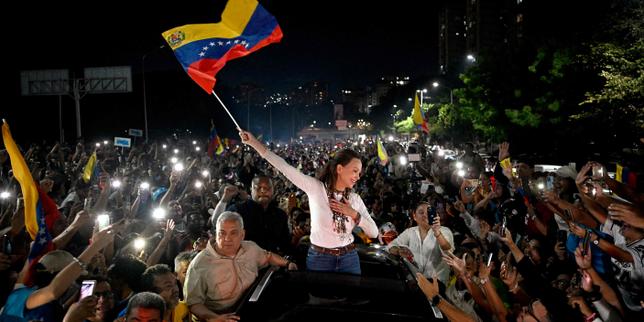
Political shockwaves are hitting Caracas once again. María Corina Machado just pulled off a surprise return to Venezuela after nearly a year spent in exile, and she isn't wasting any time shaking up the status quo.
Right after touching down and drawing massive, jubilant crowds in places like Guacara and Caracas, Machado stated she's completely ready to sit down and talk face-to-face with interim president Delcy Rodríguez. Predictably, the government didn't roll out the red carpet. Instead, Rodríguez blasted the homecoming as a political "show," setting the stage for a high-stakes standoff over Venezuela's democratic future.
If you’ve been trying to make sense of what this sudden comeback means for the country's fragile political transition, you're not alone. Let's break down why this meeting proposal matters, how the interim leadership is reacting, and what lies ahead for Venezuela.
The Shock Return That Upended Venezuelan Politics
For almost a year, Machado operated from abroad, watching US-backed transition talks move forward without her physical presence. Her absence left a massive leadership vacuum inside the country's opposition movement. When she posted "Estoy aquí. Con ustedes" on social media and appeared on the streets on October 25, 2026, thousands of ecstatic supporters flooded highways and toll plazas, chanting for liberty and demanding concrete electoral timelines.
Her return isn't just symbolic. It instantly shifts the dynamics of power. The interim government under Delcy Rodríguez has promised elections, yet officials have dragged their feet on establishing an exact calendar. By reappearing on home turf and immediately calling out a willingness to negotiate directly with Rodríguez, Machado is cornering the executive branch. She is forcing them to choose between genuine political engagement or looking obstructionist in front of international observers.
Why Delcy Rodriguez Called It a Show
Governments rarely welcome back their fiercest critics with open arms. True to form, Rodríguez didn't mince words, dismissing Machado's triumphant return as a theatrical performance meant to manufacture political pressure.
From the administration's perspective, Machado's homecoming threatens to derail the delicate, behind-the-scenes negotiations that have involved international actors and oil-sector compromises. The interim government wants control over the narrative of the transition. They want reforms on their own timeline, managed by officials who survived the previous power shifts.
By labeling the move a show, Rodríguez is trying to minimize Machado's leverage. She wants to convince the public that the real work of institutional repair happens in closed-door diplomatic rooms, not on the back of a truck greeting cheering crowds in Guacara.
What Happens When the Opposition Meets the State
Can a face-to-face sit-down actually happen between Machado and Rodríguez? It's complicated, but stranger things have happened in Venezuelan politics over the past year.
Machado's offer to meet changes the game because it calls the government's bluff. If Rodríguez refuses to talk, she exposes the administration's reluctance to include the most popular figures of the opposition in real power-sharing talks. If she accepts, she legitimizes Machado as an equal negotiating partner, something the ruling party has historically tried to avoid at all costs.
Yet, serious risks remain on the table. The return of the Nobel laureate brings hope to millions of citizens tired of economic collapse and political repression, but it also revives fears of judicial crackdowns or sudden detentions. Authoritarian habits die hard, even during a negotiated thaw.
The Pressure for Real Elections
At the core of this standoff is the demand for a clear electoral timetable. International partners, including the United States, have tied economic relaxations and sanctions relief to tangible progress toward free and fair voting.
Without a firm date for presidential and legislative elections, every diplomatic breakthrough remains fragile. Machado knows this. Her strategy relies on keeping public pressure at a boiling point so the interim government cannot quietly stall the transition process.
Expect a tense few weeks in Caracas. The streets are energized, the leadership is defensive, and the stakes for the country's long-term stability have never been higher. Watch how the interim administration responds to the meeting offer—their next move will tell you everything you need to know about whether true political change is actually on the horizon.