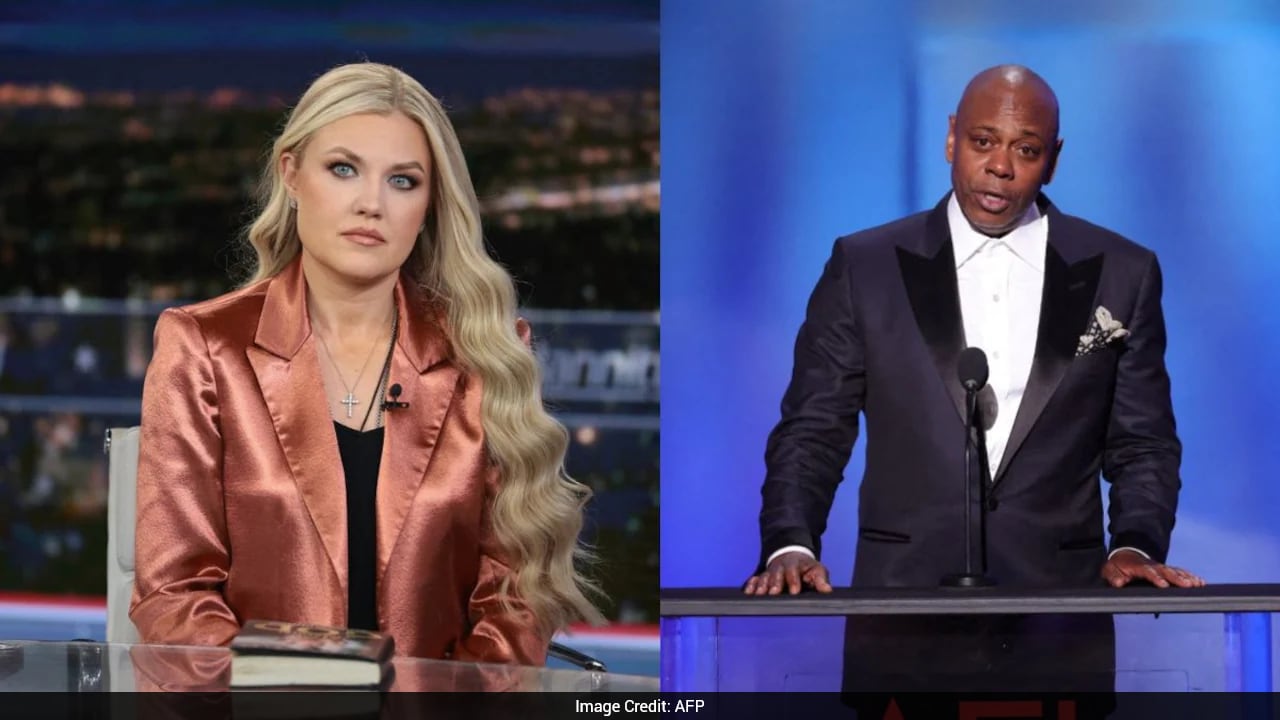
Words carry weight. When you step onto a massive stage like Madison Square Garden and crack jokes about a high-profile assassination, people notice. Comedian Dave Chappelle learned that lesson immediately following his recent stand-up set during the New York Comedy Festival, where a remark about the late conservative activist Charlie Kirk triggered an instant, fierce public outcry.
Erika Kirk, the CEO of Turning Point USA and the widow of Charlie Kirk, did not mince words. She fired back on social media, labeling the commentary "beyond disgusting" and calling out what she views as a terrifying normalization of political violence in modern American culture.
The Remark That Sparked the Firestorm
The controversy erupted during Chappelle's "Karmageddon" show on November 7. While discussing the physical dangers public speakers face in today's hyper-polarized climate, Chappelle addressed the September 2025 murder of Charlie Kirk at Utah Valley University.
"It's scary being a public speaker," Chappelle told the crowd. "And I mean, look, ever since that guy Charlie Kirk got murdered and I shouldn't say this publicly, but I feel better. I know I shouldn't say that, but it's just a feeling."
For a comedian known for walking tightropes and pushing cultural boundaries, the joke landed with a sickening thud for millions who view the assassination as a dark turning point in American public life. While some in the comedy world defend the right of performers to tackle dark or taboo topics, critics argue that joking about a brutal murder crosses a bright ethical line. It shifts the cultural conversation from edgy social critique into the active celebration of a human tragedy.
Erika Kirk's Scathing Response
Erika Kirk's reaction cuts straight to the heart of the debate. She pointed directly at the broader cultural rot where political violence is treated as entertainment.
"To see podcasters, comedians, and commentators laugh about political assassination as though it's entertainment and the destruction of a human life is a punchline, is beyond disgusting," Erika shared.
She emphasized the personal and human toll of the tragedy. Her husband was killed in front of audiences during an outdoor speaking event—an act that left two children without a father and a family grieving permanently.
"You do not have to agree with someone's politics to recognize the value of their life," she noted. "This should not be so hard. Political violence must never be something this country tolerates, excuses, or celebrates."
The core issue isn't just about hurt feelings or political correctness. It's about safety. When cultural heavyweights joke about political murders, it normalizes violence and puts other public speakers, regardless of their ideology, directly in the crosshairs.
The Context of the Charlie Kirk Murder Case
To understand why this joke caused such an explosion, you have to look at the gravity of the ongoing legal case. Charlie Kirk was assassinated on September 10, 2025, while speaking at Utah Valley University. The alleged shooter, 23-year-old Tyler Robinson, faces the death penalty, with prosecutors detailing a targeted motive tied to Kirk's conservative positions on cultural issues.
The case itself remains a raw nerve in national politics, with court dates stretching forward into 2028. The legal battles, combined with university security debates and grieving families, mean that wounds are nowhere near healing. Toss a casual joke about feeling "better" after that kind of murder into the mix, and the backlash is entirely predictable.
Where Comedy and Conscience Collide
Stand-up comedy has always thrived on transgression. Comedians test limits, offend polite society, and drag uncomfortable truths into the light. But there is a massive gap between punching up at power structures and joking about a real-world political assassination.
When laughter becomes a tool to celebrate the physical elimination of a political opponent, freedom of speech morphs into something much darker. It creates a chilling environment where disagreement is no longer settled at the ballot box or through fierce debate, but through silence and bullets.
Dave Chappelle's defenders will argue it was just a joke, a dark musing meant to provoke thought or express internal anxiety about the state of public speaking. But Erika Kirk's response reminds everyone that real lives were destroyed, and real children lost their father.
Society can handle edgy humor. What it shouldn't tolerate is the erosion of basic human empathy in the name of a punchline.