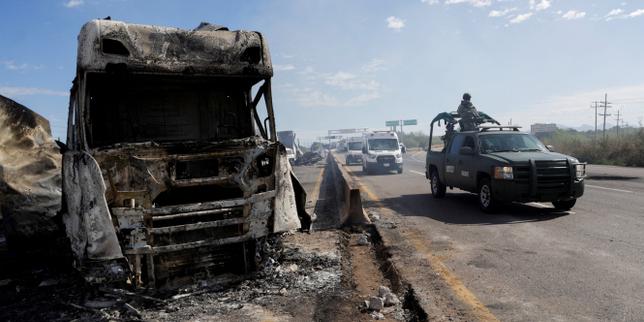
Early signs of progress in Mexico security policy under President Claudia Sheinbaum have caught many skeptics off guard. That's a big deal. After years of watching violence grind through communities and supply chains, any real shift in momentum deserves a close, honest look.
Let's be clear upfront. When a major newspaper points to early positive results in Mexico's security push, it doesn't mean the cartel crisis is solved. It means the strategy is showing initial traction in specific areas while facing brutal structural tests everywhere else.
I've followed security reporting and policy shifts in Latin America long enough to know better than to celebrate a single headline. Still, pretending nothing has changed is just as lazy as claiming victory. You have to separate short-term tactical wins from long-term institutional repair.
Why Early Results in Mexico Security Policy Matter Right Now
Security in Mexico isn't an abstract debate. It shows up in freight insurance rates, municipal budgets, local business survival, and family safety. When early indicators point upward or violence trends ease in targeted pockets, people immediately ask whether this is real movement or just statistical noise.
Historically, Mexican administrations have swung between two extremes. One side leans heavily into militarized confrontations that can spike violence or fracture criminal groups into smaller, unpredictable cells. The other side emphasizes root causes and restraint, which often struggles when armed groups operate openly on local highways and city streets.
Sheinbaum entered office with a background in governance and local administration rather than a military background, yet her team has placed heavy weight on intelligence-led policing, federal coordination, and tackling extortion and organized crime networks. When early results appear under a civilian-led push that mixes intelligence work with social programs, observers watch closely to see if coordination between federal, state, and local authorities is finally sticking.
Here's the catch, though. Early wins in security rarely move in a straight line. A drop in one metric can sit right next to a spike in another, especially when criminal groups adapt their revenue streams from drug trafficking to extortion, fuel theft, or local coercion.
What Analysts Look For Behind Early Security Gains
If you want to judge whether early positive signs in Mexico's security approach hold water, don't stop at top-line summaries. Look at how the numbers and operations are built.
- Data consistency across agencies: Crime reporting in Mexico involves federal figures, state prosecutors, and independent monitoring. Credible assessment requires checking how incidents are classified and whether changes reflect real drops or shifting reporting habits.
- Sustainability beyond high-profile moves: Big arrests or seizures grab attention. Real security shows up when local extortion drops and small merchants don't have to pay protection money just to open their doors.
- Institutional capacity on the ground: Federal deployments can stabilize a flashpoint temporarily. Lasting calm depends on local police vetting, prosecutor effectiveness, and courts that actually stick charges.
- Cross-border dynamics: Supply chains, weapons flows, and enforcement pressure across the northern border constantly reshape incentives for criminal organizations on both sides.
Honestly, that last point gets missed in domestic debates. Cartel behavior reacts to enforcement pressure in the United States just as much as it reacts to operations inside Mexico. Treating Mexico's security challenge as purely internal leaves half the picture out.
The Trap of Cherry-Picked Metrics
One mistake I see all the time is treating a short window of improvement as permanent proof that a policy works. Crime data fluctuates month to month. Seasonal shifts, localized truces, or temporary surges in enforcement can all bend a short-term curve.
On the flip side, dismissing every positive sign out of cynicism isn't helpful either. If specific intelligence units, joint task forces, or targeted enforcement operations are producing measurable results, understanding why they worked matters far more than arguing over slogans.
Think of it like turning a heavy cargo ship. A slight change in rudder angle doesn't spin the ship around in ten minutes. You look for whether the wake is straightening out and whether the crew is executing orders cleanly.
Where Skepticism Is Earned and Where It Goes Too Far
Let's be real about the pushback. Critics of any Mexican security strategy have plenty of history on their side to stay cautious. Impunity has been a stubborn problem for decades, and criminal groups have shown remarkable skill at bribing, intimidating, or outlasting local institutions.
At the same time, sweeping claims that "nothing ever works" ignore real differences in how administrations organize state power. Sharing intelligence across agencies, modernizing investigative tools, and prioritizing high-impact networks over scattershot raids are concrete operational choices. Even when results are uneven, those choices shape what happens next.
Because exact figures and case details from specific recent dispatches require direct verification rather than guesswork, I won't invent numbers or pretend to quote unverified text. What I can say with confidence is that serious security analysts judge progress by whether state authority becomes more predictable and less corruptible over time, not by overnight miracles.
What Actually Works vs What Sounds Good on Paper
In policy circles, grand slogans are cheap. Everyone loves the phrase "comprehensive strategy." In practice, security succeeds or fails on boring, difficult execution.
- Good on paper: Announcing a new coordination council or task force.
- Real in practice: Getting federal agents, state investigators, and local prosecutors to share case files without turf wars or leaks.
- Good on paper: Targeting criminal leadership.
- Real in practice: Dismantling the financial and logistical networks that let those groups recruit, arm themselves, and extort communities.
You can see why patience—paired with sharp scrutiny—is the right posture here. Early positive results are encouraging, especially for communities tired of living on edge. They are also a starting line, not a finish line.
Practical Next Steps for Following Mexico Security Developments
If you're tracking this story for business, policy research, or personal awareness, set up a disciplined way to follow what comes next instead of chasing every dramatic headline.
- Track multi-month trends, not single reports. Compare several months or quarters of data side by side so one spike or dip doesn't distort your view.
- Watch local and economic indicators alongside crime stats. Pay attention to business sentiment, freight and logistics advisories, and municipal governance news in key states.
- Separate federal announcements from local follow-through. Look for concrete evidence of investigations, prosecutions, and sustained presence rather than one-off operations.
- Read across multiple credible outlets. Pair international reporting like Le Monde with reputable Mexican journalism and independent security researchers to catch both big-picture framing and local nuance.