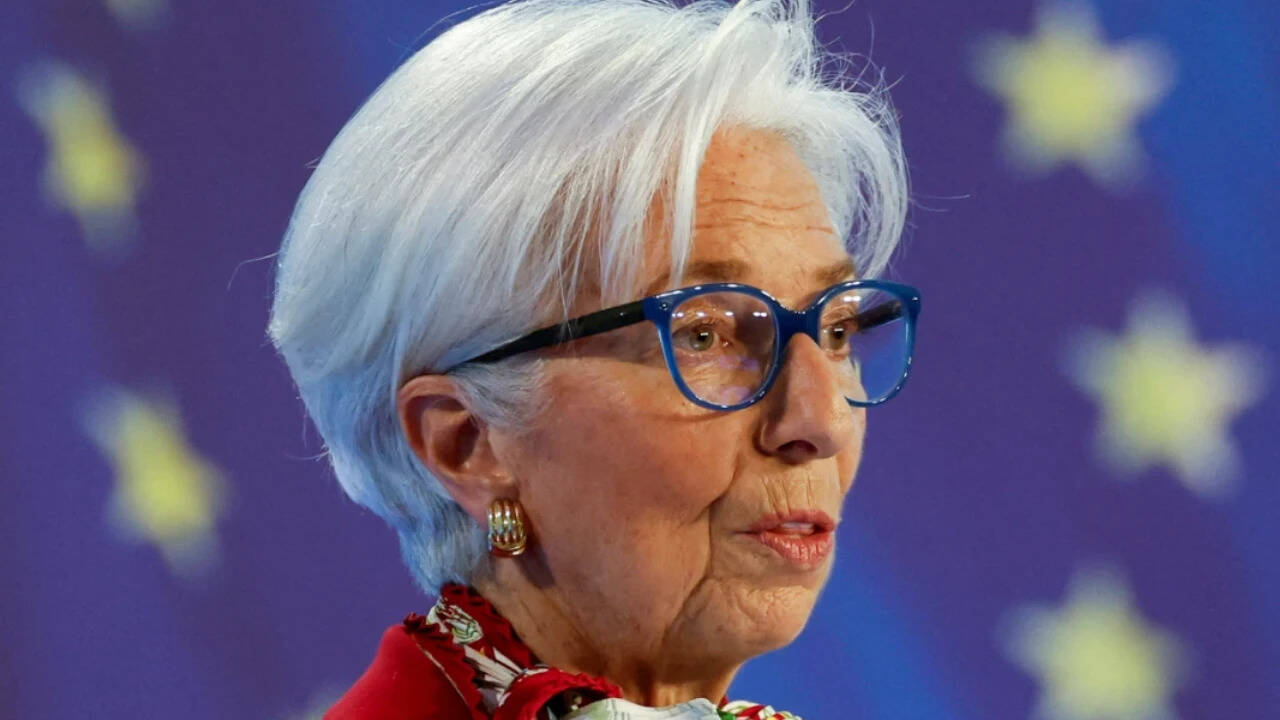
Christine Lagarde dropped a bomb on Frankfurt. The European Central Bank President announced she's stepping down on February 7, 2027—nine months before her eight-year tenure was scheduled to end.
Why leave early? She's tired of keeping quiet.
"I don't think that I can remain neutral," Lagarde admitted during her post-policy press conference. "I don't think that I can be comfortable in that neutrality at the present time."
Her core explanation was straight to the point: institutional neutrality feels like a muzzle when global truths are being distorted. By stepping aside early, Lagarde trades the rigid constraints of central banking for the freedom to engage directly in political debate.
The Constraints of Central Bank Neutrality
Central bankers are expected to act like Technocratic monks. They look at rate curves, inflation reports, and labor metrics while tuning out political noise.
When you run the ECB, every word moves currency markets and sovereign bond yields across 21 euro-zone nations. That's why central bank governors rarely speak about anything outside their specific monetary mandates.
Lagarde didn't hide how restrictive that mandate felt. She noted that central bank leaders pay for their independence by staying inside a narrow box. When broader social and political issues flare up, they're expected to stay silent.
She clearly reached her limit. Facing geopolitical instability, economic fragmentation, and rampant disinformation, Lagarde chose to shed her central banking cloak so she can speak without corporate constraints.
ECB Presidential Timeline
--------------------------------------------------
2019            : Christine Lagarde takes office as ECB President
Late 2026       : Lagarde announces early departure
Feb 7, 2027     : Scheduled resignation date (9 months early)
October 2027    : Original end date of 8-year term
Why Timing Is Everything for European Politics
Lagarde's exit date isn't random. Leaving in February 2027 gives European leaders time to pick a successor before France's spring 2027 presidential election.
If she stayed until October 2027, the succession process would fall right in the middle of potential French political turbulence. That could easily turn a standard appointment into a chaotic partisan fight across the continent.
European Council President António Costa acknowledged the urgency immediately, signaling that the search for the next ECB head is already underway.
The early timeline avoids leaving Europe's monetary authority in leadership limbo during a delicate economic transition.
The Frontrunners for Frankfurt's Top Job
Replacing Lagarde isn't just about picking an economist. It requires balancing regional politics, monetary philosophy, and institutional authority across European member states.
Two prominent names have already taken center stage:
- Pablo Hernández de Cos: The former governor of the Bank of Spain and current head of the Bank for International Settlements (BIS). Known as a rigorous technician with consensus-building skills.
- Klaas Knot: The former Dutch central bank chief. A traditional monetary hawk who appeals strongly to northern European member states looking for strict inflation control.
The battle between a southern European pragmatist and a northern hawk highlights long-standing tensions inside the ECB governing council. The next leader will need to manage persistent energy cost spikes, fragile growth, and shifting geopolitical trade relationships.
What Lagarde Leaves Behind
Lagarde didn't take a traditional path to the ECB. She wasn't a doctorate-holding academic or a career central banker like Mario Draghi before her. She was a lawyer, France's finance minister, and head of the International Monetary Fund.
Her real strength was political communication and coalition building. She navigated the ECB through post-pandemic inflation surges, aggressive interest rate hikes, and war-driven energy shocks in Europe.
Critics often pointed out her non-traditional background, but her diplomatic skill kept the 26-member Governing Council unified during aggressive policy tightening cycles.
What Her Resignation Means for Investors
Don't expect an immediate shift in interest rate trajectories over the coming weeks. Lagarde stressed that she'll remain fully active through her final months, chairing monetary policy meetings through early 2027.
The short-term takeaway for markets:
- No sudden policy shifts: The ECB maintained its policy rate pause at its latest meeting, keeping decisions dependent on incoming data.
- Focus on underlying inflation: Officials are monitoring energy price volatility to see if energy costs spill over into wider inflation.
- Continuity in the transition: Lagarde reassured investors that institutional structures remain solid, preventing policy paralysis while European leaders deliberate on her replacement.
Lagarde's move underlines a reality about modern global finance. The line between monetary policy, geopolitical strategy, and domestic politics has blurred. By stepping down early, Lagarde is betting that she can exert more influence outside Frankfurt's boardroom than inside it.
Track the upcoming European Council nominations over the next few months to see who secures the support of Paris and Berlin. That decision will set the direction for euro-zone borrowing costs and economic stability for the rest of the decade.