Football fans love a simple narrative. A player leaves a giant club like Manchester United, heads abroad, and everyone assumes their career is winding down into a quiet, sun-drenched retirement. But Chris Smalling didn't do that. Instead, he packed his bags for Rome, reinvented his entire physical routine, earned a nickname blending him with AC Milan legend Paolo Maldini, and proved that modern center-backs can peak well into their thirties if they manage their bodies correctly.
People forget how quickly opinions turn in the Premier League. Towards the end of his time at Old Trafford, critics claimed Smalling couldn't pass out from the back, that his body was too fragile, and that his ceiling had been reached. Those evaluations look lazy now. When you look at how he carved out an elite reputation in Serie A under both Paulo Fonseca and Jose Mourinho, it's clear that English football often discards defenders who simply need a different tactical environment to thrive.
The Italian Rebirth and the Mourinho Connection
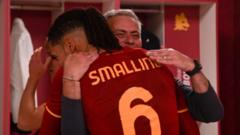
It's funny how football relationships work. During their shared stint at Manchester United, Mourinho and Smalling had their share of friction—most famously when the manager publicly questioned players willing to sit out matches through minor discomfort. Many pundits predicted an immediate civil war when Mourinho walked through the doors at Roma.
Instead, the pair clicked instantly in the Italian capital. Mourinho understood Smalling's strengths better than anyone: his recovery pace, his aerial dominance in the box, and his ability to marshal a rigid defensive block. Smalling wasn't asked to play like a deep-lying playmaker; he was asked to defend with absolute authority.
And defend he did. Fans in Rome started calling him "Smalldini"—half-jokingly at first, but with growing sincerity as he pocketed some of Europe's top forwards during Roma's run to European glory. Winning the Europa Conference League wasn't just a nice trophy for the cabinet; it was absolute vindication for a player who had been written off as surplus to requirements back home.
Diet, Discipline, and Longevity
You don't survive and thrive in Italian football past thirty without obsessing over the details. Smalling's shift to a plant-based diet became a massive talking point, but it wasn't just a lifestyle trend. It was a calculated medical decision to combat the chronic tendonitis and muscle fatigue that plagued his late twenties.
Most players accept that their physical peak ends at twenty-eight. Smalling changed his recovery protocols, leaned heavily into sports science, and effectively bought himself a second career. When you watch him track fast, modern strikers, you don't see a defender losing his step. You see someone who understands positioning so well that he rarely needs to make a desperate, lung-busting slide tackle.
What Happens When the Chapter Closes
Every player eventually faces the reality of moving on, and Smalling's career trajectory remains a fascinating blueprint for English players stuck in a rut. Too many stay in the Premier League comfort zone, sitting on the bench for mid-table clubs just to chase a paycheck. Smalling took a massive risk by moving abroad, learning a new language, adapting to a completely different defensive philosophy, and respecting the demands of Italian tactical discipline.
If you're a young center-back struggling to find your footing under the intense microscope of English media scrutiny, look at Smalling's path. Sometimes, you just need to step away from the noise to let your actual quality speak for itself.