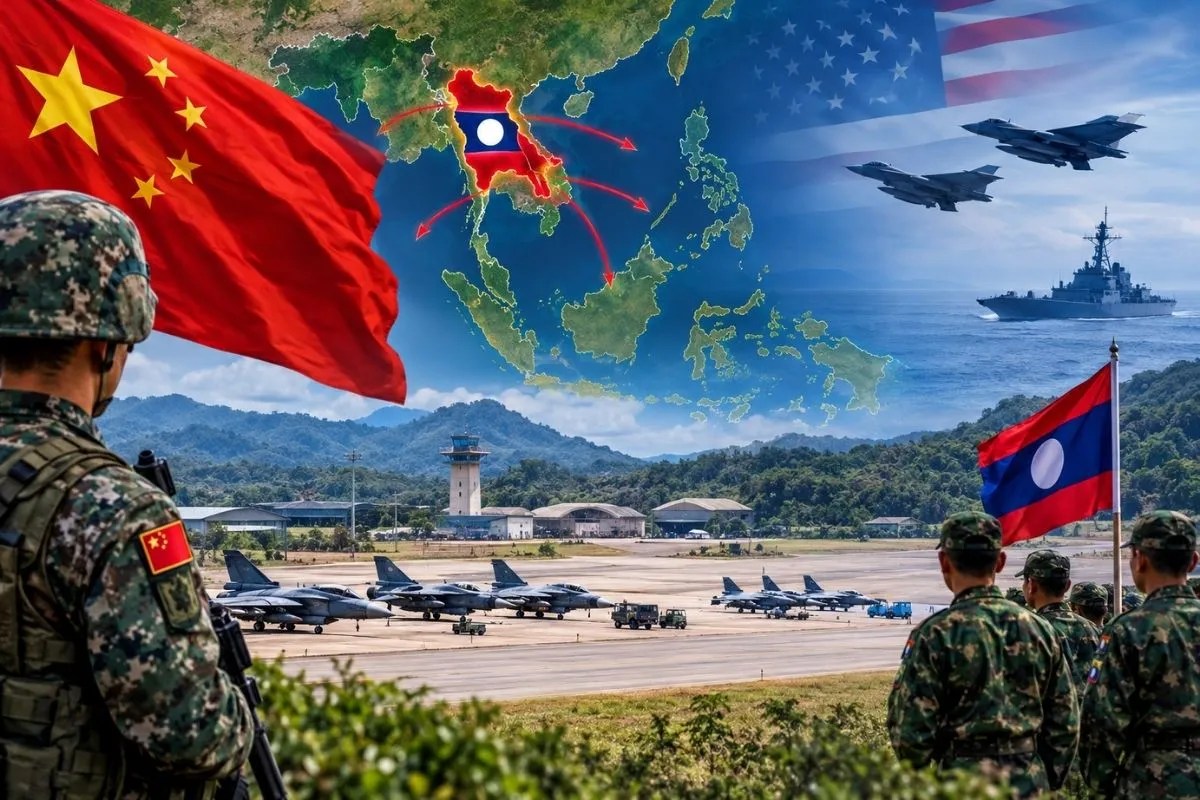
We need to talk about what is happening quietly in mainland Southeast Asia. While everyone stares at the South China Sea or the Taiwan Strait, Beijing just secured something far more strategic. China is building a joint support and training center at the Ban Keun airfield in Laos.
If you think this is just another routine infrastructure project funded by Beijing, look closer. This is Chinas very first overseas military facility focused primarily on airpower. And honestly, it changes the geopolitical math for every single country in the region. You might also find this similar story useful: When Academic Politics And Westminster Collide The Fallout At Cambridge.
What the Ban Keun Airfield Actually Represents
Chinas Ministry of Defense announced the Ban Keun project to little fanfare. Officials in Beijing insist it is just a training center aimed at regional cooperation. They claim it has no hostile third-party intent. But defense analysts are not buying the innocent neighbor routine.
Think about the physical footprint. Satellite imagery of the site reveals a 2,000-meter runway that has undergone rapid upgrades. Analysts have spotted light combat aircraft and logistics support vehicles parked on the tarmac. Sure, the runway is too short for heavy, long-range nuclear bombers. That misses the point entirely. As extensively documented in recent reports by BBC News, the effects are worth noting.
This airfield gives the Peoples Liberation Army Air Force an operational stepping stone deep inside mainland Southeast Asia. It extends their logistics network, improves intelligence gathering, and anchors Laos tighter into Chinas military-industrial supply chain.
Why Washington and Hanoi Are Sweating
Geopolitics rarely happens in a vacuum. Two capitals are watching these developments with deep anxiety: Washington and Hanoi.
For the United States, a Chinese military footprint in landlocked Laos complicates regional defense planning. American forces operating in or around the Eastern Indian Ocean now have to account for a permanent Chinese presence further inland than previously anticipated. It puts pressure on US defense planners to allocate more resources to a theater that is growing increasingly crowded.
Then there is Vietnam. Hanoi shares a massive, porous border with Laos and has historically maintained deep security ties with Vientiane. Seeing Beijing set up a military facility right next door feels like a tightening noose. Vietnam already feels surrounded by Chinese maritime ambitions in the South China Sea. Now, the land border looks just as exposed.
Most Southeast Asian governments try to play a delicate balancing act between Washington and Beijing. They take Chinese infrastructure money while quietly keeping American security ties warm. But installations like Ban Keun make that balancing act nearly impossible to sustain over the long haul.
The Bigger Picture of Overseas Bases
People often compare Ban Keun to Chinas naval base at Ream in Cambodia or their support base in Djibouti. The comparison is fair, but the air power aspect makes Ban Keun unique.
Naval bases take time to project power inland. Airfields do the opposite. They allow for rapid response, immediate power projection, and constant surveillance of neighboring airspace. Beijing is methodically building a global network of logistics hubs. They are learning the lessons of historic empires—you cannot project global influence without secure nodes around the world.
For years, skeptics argued that China lacked the alliances or the administrative competence to establish overseas military outposts. Djibouti proved them wrong. Ream proved them wrong again. Ban Keun cements the reality that Beijing is now a global military power capable of securing foreign basing rights wherever local governments are willing to sign on the dotted line.
What Happens Next
Laos is economically vulnerable and heavily indebted to Beijing. When a giant neighbor offers to upgrade your airfields and train your military, saying no is rarely an option for Vientiane.
Expect more of these arrangements across developing nations in the coming years. Beijing calls them training centers or logistics hubs. Other powers call them military bases by another name. Whatever you call them, the strategic reality on the ground has shifted permanently.
Keep an eye on satellite updates around Ban Keun over the next twelve months. Watch how Vietnam adjusts its border security posture. The quiet expansion of power is always more dangerous than the loud declarations, and this is as quiet as it gets.