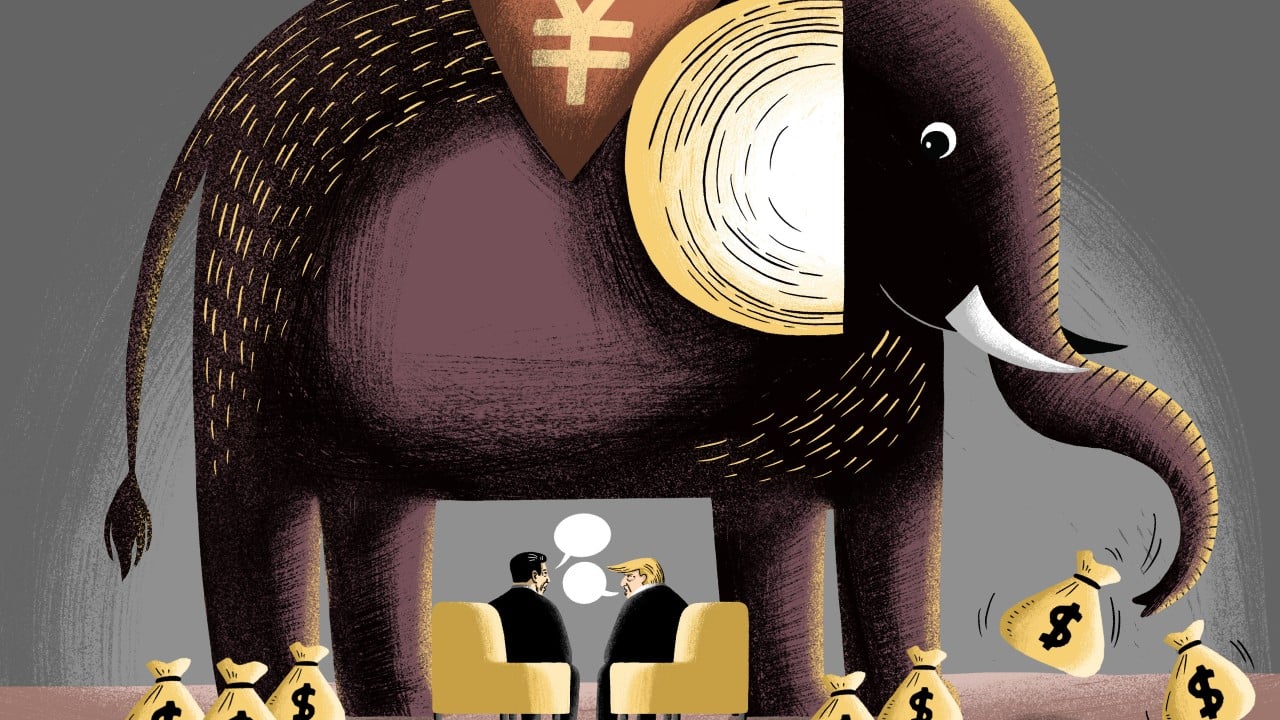
The handshakes in Washington look great on television. Leaders smile, cameras flash, and optimistic headlines declare a diplomatic reset. But behind the closed doors of modern financial statecraft, a much heavier game is being played. China isn't just arguing over tariffs or rare earth minerals. Beijing is quietly rewiring its balance sheet, cutting down its exposure to US Treasuries, and building a heavily fortified financial perimeter around the yuan.
If you think a polite summit between Xi Jinping and Donald Trump means currency peace, you're missing the forest for the trees. Sovereign debt management doesn't get signed away in a neat little trade communique. It operates on a cold, calculated timeline of self-preservation.
The Quiet Exodus from US Debt
Let's look at the actual numbers. China's foreign holdings of US government debt haven't crashed overnight, but the long-term trend line points straight down. Years ago, Beijing sat comfortably as America's largest foreign banker. Today, it's systematically trimming that exposure, hedging against the exact kind of weaponized financial pressure Washington loves to deploy against geopolitical rivals.
When you watch superpowers trade polite diplomatic notes, remember that capital allocation tells the true story. Beijing remembers the freezing of Russian foreign reserves following the Ukraine invasion. That single event sent shockwaves through every non-aligned central bank on earth. If Washington can lock up billions in sovereign wealth on a whim, holding massive piles of greenbacks suddenly looks less like a smart investment and more like keeping your money in a burning building.
So, what is Beijing doing instead? It's diversifying. Gold reserves are up. Bilateral currency swap lines are expanding. Alternative payment infrastructure is quietly bypassing Western-dominated clearing systems like SWIFT. These aren't wild conspiracy theories. They are defensive mechanisms designed to insulate the world's second-largest economy from future shocks.
Why Washington is Nervous
You won't hear Treasury officials panicking on CNBC, but make no mistake: America's exorbitant privilege depends entirely on global demand for the US dollar. If foreign central banks decide they don't need to hoard mountains of US debt to protect their currencies, the cost of servicing America's staggering national debt skyrockets.
This is where the real friction lies. While politicians negotiate trade truces and temporary tariff rollbacks on thirty billion dollars worth of basic goods, the structural baseline of global trade is shifting beneath our feet. Washington views China's currency diversification as a direct challenge to the dollar's supremacy. Beijing views it as simple financial hygiene.
When finance experts at institutions like Fudan University point out that sovereign debt is too sensitive for formal treaty text, they're right. You can't put a line item in a presidential press release that says "China agrees to stop dumping Treasuries." Instead, it happens in the background, drip by drip, month after month.
The Ripple Effects on Global Markets
So, could this pivot cause actual tremors? Absolutely. But the tremors won't look like an instantaneous financial doomsday. They will manifest as a slow, grinding erosion of liquidity in US debt markets, higher long-term borrowing costs for American consumers, and a fractured global trade landscape split into competing currency blocs.
Emerging markets are already paying attention. When giants like China and Brazil start experimenting with local-currency settlements for commodities, the monopoly of the greenback starts to fray at the edges.
You don't need a currency collapse to experience a systemic shift. You just need a world where fewer people depend on Washington's financial plumbing. The Xi-Trump summit bought a few months of media-friendly breathing room. It didn't solve the structural war over who controls the future of global money. Stop watching the handshakes and start watching the central bank balance sheets. That's where the next global crisis is actually being written.