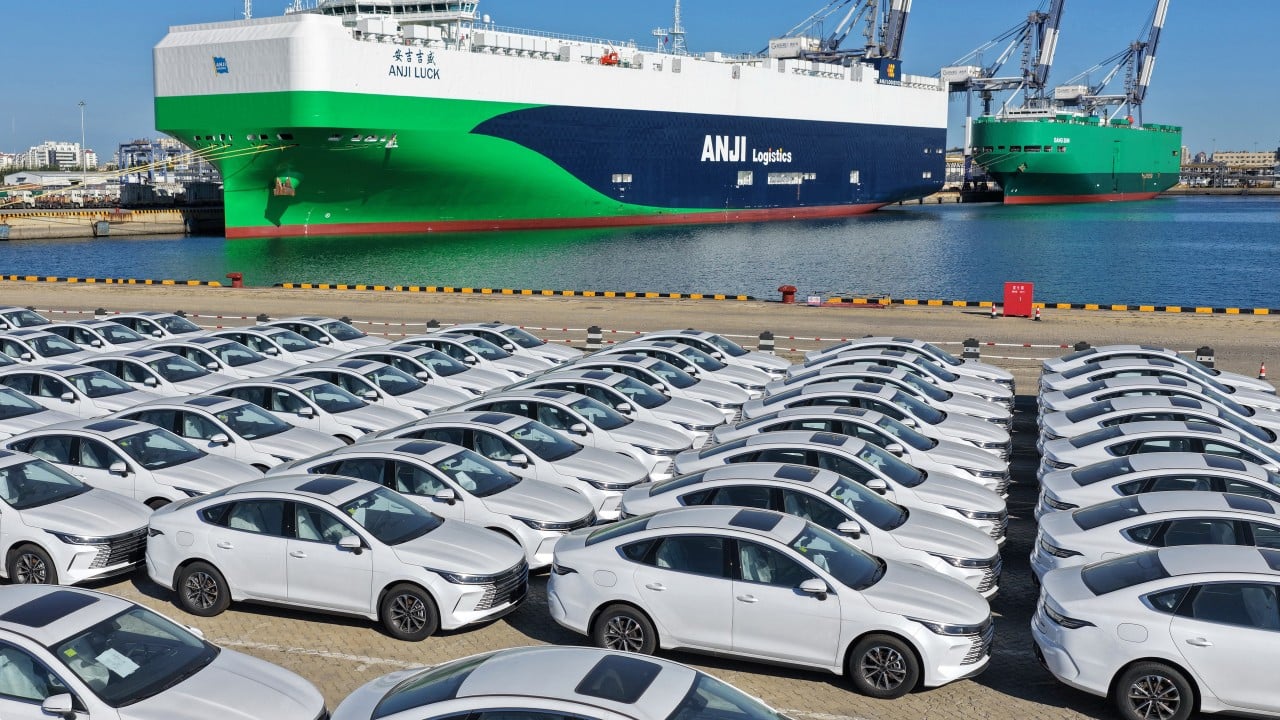
If you've been watching the automotive world lately, you know the European Union's heavy tariffs on pure electric vehicles from China didn't actually solve Brussels' primary headache. Instead of stopping the flow, those tariffs triggered an immediate detour. Automakers simply shifted their focus to plug-in hybrids and conventional hybrids, sending shipments skyrocketing by over 200 percent as factories rushed to beat upcoming trade restrictions.
Exports climbed toward 100,000 vehicles a month by September, creating a massive end-of-year scramble. But why did this happen so fast, and what does it mean for the broader market now that an annual cap of 350,000 units is locked in? Let's break down the real mechanics behind this sudden surge. Expanding on this theme, you can also read: Why Britain Is Borrowing To Pay Interest And What Comes Next.
The Loophole That Supercharged Hybrid Shipments
When the European Commission slapped steep duties on pure battery electric vehicles made in China, industry analysts immediately pointed out the obvious alternative. Hybrids offered a convenient escape hatch. Because many European buyers remain hesitant about pure battery range or infrastructure gaps, plug-in hybrid electric vehicles (PHEVs) became the ultimate compromise.
Chinese giants like BYD, Geely, and Chery didn't waste time. They ramped up production lines and pushed aggressive pricing strategies into European markets. By August, Chinese brands had captured roughly 12 percent of Europe's total new-car market, with one out of every four hybrid sales in the region coming from a Chinese manufacturer. Analysts at Bloomberg have provided expertise on this matter.
Production costs heavily favored the influx. AlixPartners research shows that a Chinese-branded electric or hybrid vehicle costs roughly $20,000 to produce, compared to a staggering $31,000 for a comparable European-built alternative. Facing a cooling domestic market at home, Chinese automakers treated overseas expansion as an absolute necessity rather than a luxury.
The Brussels Response and the 350,000 Import Cap
Naturally, alarm bells started ringing across European capitals. German and French leaders pushed for tougher protections to shield domestic manufacturers who were already struggling with declining local sales and fierce competition.
Following intense negotiations between EU trade chief Maroš Šefčovič and China's Minister of Commerce Wang Wentao, a compromise took shape. The European Union and China reached an interim agreement to cap annual imports of Chinese hybrid and plug-in hybrid vehicles at 350,000 units. This limit is designed to cut projected annual volumes by more than half, aiming to pull Chinese hybrid market share down from roughly 6 percent to around 3 percent across the bloc.
Starting as early as December, customs authorities across the 27-nation bloc will monitor shipments closely, halting further imports once the annual ceiling is breached. The quota will see incremental adjustments of roughly 6 percent annually starting in 2028 through 2030, but the immediate message is clear: the era of unchecked growth for direct hybrid imports is coming to an abrupt halt.
How Automakers Are Adapting to the New Reality
If you think a 350,000 vehicle cap is going to stop Chinese automakers from dominating European roads, you're missing the bigger picture. Caps and tariffs only change the playbook; they rarely stop determined players.
Smart manufacturers are already executing a familiar pivot: localizing production. Building cars inside the trade zone completely sidesteps import quotas and tariffs. BYD is leading this charge by aggressively constructing and expanding manufacturing hubs in regions like Hungary, Thailand, Indonesia, and Brazil.
Executive vice president Stella Li has repeatedly noted that geopolitics remains the toughest hurdle for global expansion, making localized assembly an absolute priority. European plants bypass the border checks entirely, meaning Chinese brands will still maintain a strong physical presence in showrooms across Germany, France, and beyond.
Meanwhile, legacy European automakers find themselves caught in a complex trade-off. While German Chancellor Friedrich Merz and French President Emmanuel Macron debate further protections and potential local-content rules, local brands are racing to cut their own production costs to match the efficiency of foreign rivals.
Expect the coming months to feature a frantic scramble at European ports as the final wave of pre-cap shipments clears customs. Once December hits, the rules of engagement change permanently, forcing every major player to rethink how they build, ship, and price vehicles for European drivers.