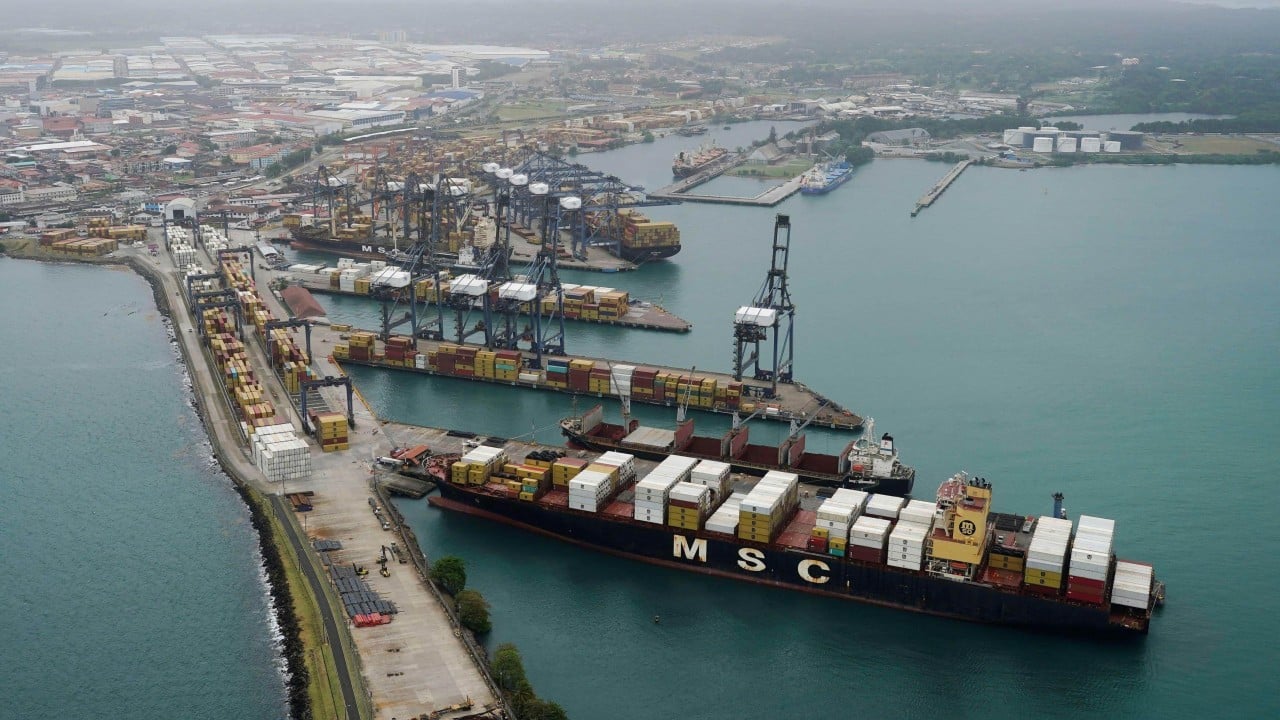
Nearly 500 Panama-flagged vessels held in Chinese ports, a bipartisan congressional panel warning of economic coercion, and shipowners caught in a tug-of-war over canal terminals. That isn't routine maritime paperwork. It's a pressure campaign dressed up as safety checks.
When the U.S.-China Economic and Security Review Commission released its 2026 report to Congress, the detention of Panama-flagged ships stood out as a sharp example of how commercial rules get bent into geopolitical leverage. The panel urged lawmakers to treat the wave of detentions as economic coercion, give the president authority to impose sanctions tied to the behavior, push the United Nations' International Maritime Organization to build an official record of port-access pressure, and direct the Federal Maritime Commission to investigate and report back within 90 days. You might also find this similar story insightful: Are French Soldiers In Ukraine Turning Paris Into A Cobelligérant.
If you've ever watched a ship sit idle waiting for port clearance, you know how quickly a technical hold turns into real money. Crew wages keep running. Fuel burns or sits in limbo. Charter schedules slip, and cargo buyers start breathing down necks. Turning port state control into a blunt instrument hits the whole chain from shipowner to insurer.
How Routine Safety Checks Turned Into a Squeeze on Panama-Flagged Ships
Port state control is supposed to be boring. Inspectors board foreign vessels to verify fire gear, lifeboats, hull integrity, and crew certificates under regional agreements like the Tokyo Memorandum of Understanding. Done right, it keeps unseaworthy ships from sinking and polluting waters. As highlighted in latest reports by Al Jazeera, the implications are widespread.
In 2026, the numbers stopped looking like normal enforcement. Data compiled from Tokyo MOU records by Lloyd's List showed monthly detentions of Panama-flagged vessels in mainland Chinese ports jumping from roughly 21 a month in 2025 to 140 in May 2026, before dropping sharply to around 16 in July after Panamanian officials held talks in Beijing. Across the broader stretch of the dispute, the congressional commission estimated total detentions of Panama-flagged ships at nearly 500.
Timing matters here. In late January 2026, Panama's Supreme Court annulled the port concession held by CK Hutchison's Panama Ports Company covering the Balboa and Cristóbal terminals at either end of the canal, and Panamanian authorities moved in February to transition operations toward units of Maersk and MSC while preparing a new tender. Soon after, detentions of Panama-flagged merchant vessels in Chinese ports spiked.
Beijing has rejected claims that port inspections were weaponized, arguing that its maritime authorities carry out lawful safety inspections to protect navigation and the marine environment, and urging Panama to reverse what Chinese officials called mistakes over the Hutchison contracts. Federal Maritime Commission Chair Laura DiBella, by contrast, called out the punitive nature of the detentions in public remarks, and U.S. officials at the International Maritime Organization argued that port inspections and shipbuilding leverage were being used to pressure smaller states.
Why Flag State Status Matters Way More Than People Think
A lot of outsiders still treat a ship's flag as a sticker on the stern or a tax convenience. Honestly, that's a lazy way to look at maritime law.
Under international shipping norms, the flag state has primary jurisdiction and oversight over vessels on its registry. Panama ranks among the world's largest ship registries—right alongside major open registries like Liberia and the Marshall Islands—carrying thousands of bulk carriers, tankers, and container ships that move global trade. When a single flag gets singled out for extra scrutiny at major import and export hubs, the pain spreads fast even if the beneficial owner is based in Athens, Tokyo, London, or New York.
Here's what happens on the ground when a flag draws heat:
- Schedules get messy fast: A multi-day detention in a busy Chinese port can blow up tight liner rotations or spot bulk fixtures, forcing operators to pad transit buffers or eat off-hire disputes.
- Reflagging isn't a magic wand: Switching registries takes paperwork, fees, class coordination, and lender or charterer sign-offs. Plus, older vessels often face strict vetting at alternative registries, so jumping ship isn't always quick or cheap.
- Financing quietly shifts: Reports from maritime risk analysts have noted Chinese leasing firms pushing owners away from the Panama flag on newbuilding financing deals, even without a sudden mass exodus of existing ships.
Still, I don't think every single inspection deficiency cited by a port authority is fake. Older tonnage and sloppy maintenance exist across every registry, and safety rules give inspectors real hooks when a ship's records or equipment are weak. The debate isn't whether safety rules exist—it's whether enforcement intensity swung wildly out of proportion right when political friction spiked over the canal terminals.
What the US Panel Is Pushing For—and Where It Could Stall
Recommending sanctions authority and a 90-day Federal Maritime Commission probe makes for strong headlines in Washington. Turning those ideas into enacted law and real commercial leverage is harder.
Congress has plenty of competing priorities, and sanctions language around shipping can get tangled up in trade negotiations, diplomatic talks, or broader executive-branch strategy. Remember what happened in July 2026: detentions dropped sharply after Panamanian officials met in Beijing, showing that back-channel diplomacy can move the needle faster than legislative drafts.
At the same time, pushing the issue through the International Maritime Organization and the Federal Maritime Commission targets the rulebook and trade-practice investigations rather than pure military posturing. If Washington and its partners document patterns of disproportionate holds, it puts more pressure on maritime transparency and commercial risk pricing. On the flip side, Beijing can counter with its own legal framing and economic pushback, keeping shipowners stuck in the middle.
There's also a real tension for U.S. policymakers. Washington wants to curb Chinese influence around strategic waterways and ports, yet heavy-handed shipping measures can raise freight costs or complicate deals involving global carriers and financiers. You can't talk tough about supply chain resilience while ignoring how sanctions or port friction ripple through container rates.
Practical Moves for Anyone Managing Maritime or Supply Chain Risk
If you run fleet operations, trade compliance, cargo insurance, or supply chain planning, waiting around for Washington and Beijing to settle their score isn't a strategy. A few grounded steps help right now:
- Audit vessel readiness before China port calls: Treat flag-state circulars and port state control checklists—like fire safety systems, lifeboat readiness, air pipes and ventilators, and safety management documentation—as pre-arrival non-negotiables, with clean records ready to show inspectors.
- Stress-test charter party and delay clauses: Check how off-hire, demurrage, laytime, and force majeure language read when a ship is held for regulatory or port state control reasons, and build realistic time buffers on routes calling Chinese ports.
- Price reflagging realistically before pulling the trigger: If you're weighing a switch away from Panama on specific hulls, compare registration and class costs against lender covenants, charterer approvals, and vetting hurdles—don't guess on the math.
- Track official notices instead of rumors: Watch Tokyo MOU detention statistics, Panama Maritime Authority notices, Federal Maritime Commission actions, and diplomatic statements closely so your risk team reacts to verified shifts rather than port gossip.
Maritime disputes rarely stay confined to diplomatic cables. When a flag becomes a flashpoint, every berth, bill of lading, and inspection checklist starts carrying extra weight.