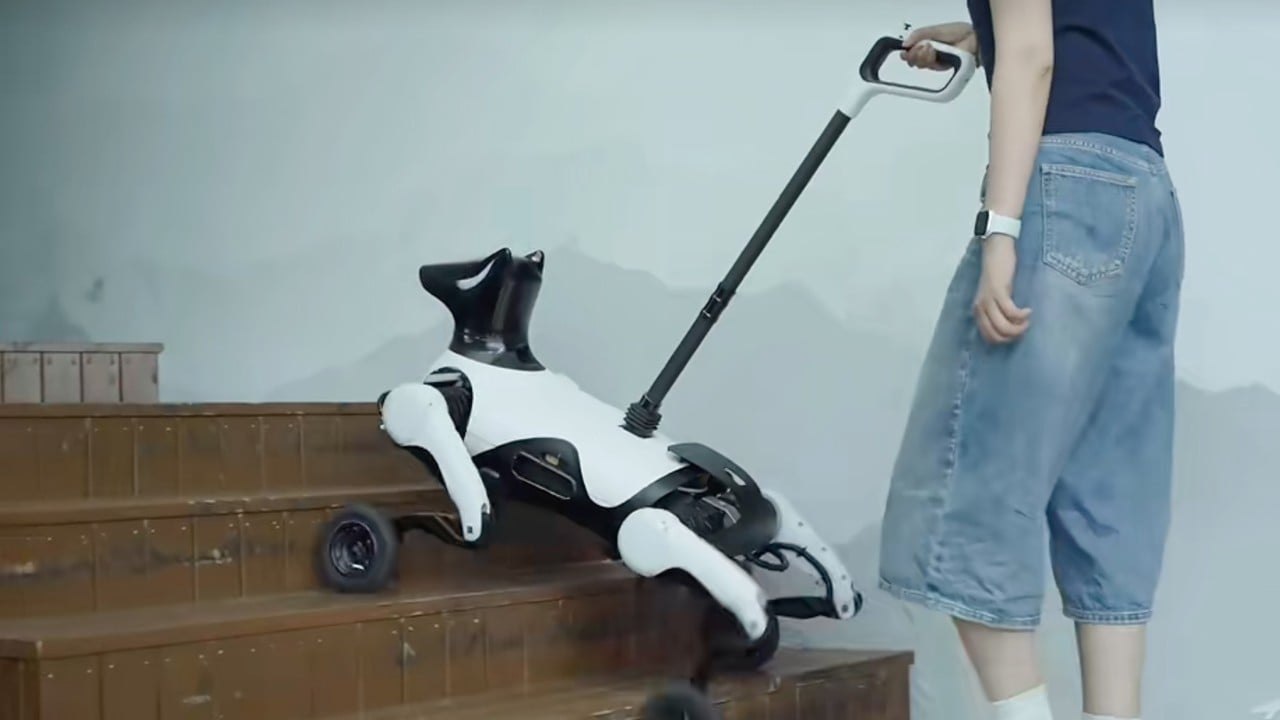
Millions of people need guide dogs, but only a tiny fraction ever get one. China faces a staggering mismatch. The country counts roughly 20 million visually impaired citizens, yet active, fully trained biological guide dogs number in the mere hundreds. Biological dogs take years to breed, cost small fortunes to train, and face strict bans in plenty of public transit networks and venues.
Enter the robot guide dog. Recent rollouts across China showcase AI-powered robotic canines designed to bridge this massive accessibility gap. These mechanical assistants rely on advanced sensors, high-definition cameras, and smart navigation software to steer users safely through crowded streets. But can a piece of hardware ever truly replace a living animal?
The Reality Behind the Shortage
Breeding and training a traditional guide dog is an agonizingly slow process. Most puppies wash out during training due to temperament or health issues. The ones that graduate require intense, specialized labor that drives costs sky-high.
When you scale that reality against a population of millions, the math simply fails. You cannot train enough biological dogs quickly enough to meet demand. This brutal supply bottleneck leaves millions of visually impaired individuals entirely dependent on human assistance or white canes.
Mechanical alternatives change the equation completely. They do not get tired, they do not suffer from sudden medical issues, and they can be mass-produced in a factory.
How Robot Guide Dogs Actually Work
Unlike a golden retriever, a robotic assistant brings pure computational power to navigation. These machines use a mix of cameras, lidar sensors, and artificial intelligence models to map their surroundings in real-time.
They do things biological dogs physically cannot do. For instance, robot guide dogs can interpret traffic light colors, reading red and green signals with exact precision. They process voice commands rapidly and calculate optimal routes through complex urban environments.
Developers use wheeled and four- or six-legged designs to ensure stability across uneven sidewalks, subway stations, and busy commercial blocks.
The Unspoken Hurdles of Robotic Assistance
Technology sounds amazing in a press release, but daily life hits differently. Let us look at what developers still struggle to fix.
- Battery life: Machines need power. If a robot guide dog dies halfway through a grocery trip, the user faces immediate danger.
- Maintenance and cost: High-end robotics require technical servicing. When a joint breaks or a sensor glitches, you cannot just take it to a local vet.
- The emotional connection: A biological dog provides companionship and warmth. A metal quadruped provides utility, but it will never curl up on the floor next to you after a long day.
- Public acceptance: People stare. Bringing a robot dog into a crowded restaurant or bus still turns heads and creates awkward social friction.
Where Accessibility Goes From Here
We are watching a transitional phase in assistive technology. Robot guide dogs are not going to render biological guide dogs extinct tomorrow. Instead, they serve as a vital supplement for a population that has been underserved for decades.
If you or someone you know relies on mobility aids, keep a close eye on these robotics rollouts. The software updates weekly, and hardware durability improves with every manufacturing cycle.
Look into local municipal accessibility programs to see if public testing phases are opening up in your area. Support policy changes that allow certified robotic mobility aids into public buildings and transit systems alongside traditional service animals.