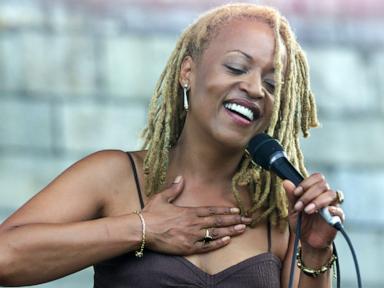
Cassandra Wilson didn't just sing jazz. She tore up the rulebook and built a new house entirely out of blues, folk, country, and smoke. When the legendary vocalist passed away at her home in Jackson, Mississippi at age 70, the music world lost one of its most daring innovators. You won't find many artists who could take a standard, turn around and cover a pop or rock track by Bob Dylan or U2, and make both sound like they belonged in the exact same smoky midnight club.
Born Cassandra Fowlkes in December 1955, her musical footprint spanned decades of shape-shifting genius. Her manager, Robert Torre, confirmed she died peacefully surrounded by family and close friends. But rather than offering a standard obituary, let's look at why her approach completely redefined what an American jazz vocalist could achieve.
Breaking the Mold of Traditional Standards
Most jazz vocalists of the late 20th century relied heavily on the Great American Songbook. Cassandra started there, sure. But her unique, low contralto voice demanded a different canvas.
She moved to New York City in the early 1980s and quickly aligned with forward-thinking instrumentalists. She became a founding member of the experimental M-Base collective led by saxophonist Steve Coleman. That experience taught her to treat her voice like an instrument rather than just a vehicle for lyrics.
Critics took notice. Famed critic Gary Giddins described her as a singer blessed with an unmistakable timbre and attack who expanded the playing field. She didn't stay inside comfortable boundaries. Instead, she brought acoustic intimacy and deep-rooted southern storytelling into contemporary jazz.
The Masterpieces That Defined an Era
If you want to understand her genius, you have to listen to her mid-1990s output on Blue Note Records. Albums like Blue Light 'til Dawn (1993) and New Moon Daughter (1995) changed the entire landscape of vocal jazz production.
- She stripped away glossy arrangements.
- She brought in slide guitars, acoustic percussion, and eerie blues textures.
- She won her first Grammy Award for Best Jazz Vocal Performance with New Moon Daughter.
Time magazine named her "America's Best Singer" in 2001, an accolade that barely scratched the surface of her cultural impact. She earned a second Grammy later on, collected multiple international honors, and was named an NEA Jazz Master in 2022.
Coming Home to Mississippi
In 2015, Cassandra moved back to her hometown of Jackson, Mississippi. She wanted to invest directly in her roots. Alongside singer Rhonda Richmond, she co-founded a local jazz club named The Yellow Scarf and launched Ojah Records.
She stepped away from the relentless touring schedule that burns out so many road-weary musicians. She chose instead to foster local artistic expression and celebrate the deep blues heritage of her home state. That choice cemented her authenticity. She wasn't just performing American music history; she was living it.
Her legacy remains entirely unmatched. No other artist managed to bridge Delta blues, acoustic folk-rock, and sophisticated jazz harmonies with such effortless grace.
Listen to Blue Light 'til Dawn today. Hear how she leaves space in the music, letting every single note hang heavily in the air. That was her gift. She trusted the silence, she trusted her own ears, and she left modern vocal jazz vastly better than she found it.
Cassandra Wilson tribute performance
This video provides an overview of Cassandra Wilson's monumental career and honors her legacy as a boundary-pushing Grammy-winning jazz icon.