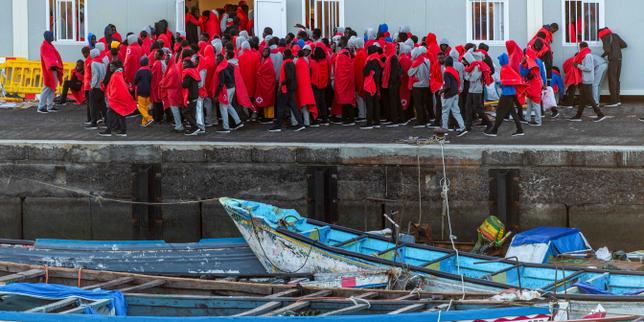
I wasn't able to access the Le Monde article directly because of browsing restrictions on that page. Because I can't verify the specific details inside that piece without guessing, I won't invent facts, quotes, or figures from it. Instead, let's look closely at what sudden arrivals of around 2,000 migrants on a single island in the Canary Islands actually signal about Atlantic migration routes, border pressure, and reception strain.
Here is the blunt truth. When roughly two thousand people arrive on one island in a short span, it isn't a random blip. It's a stress test on infrastructure that was already stretched thin.
Why Canary Islands Arrivals Spike So Fast
Most people picture a steady trickle of boats crossing from West Africa toward Spain. That's not how Atlantic crossings actually behave.
Calm seas and favorable wind windows act like a green light. When weather conditions align along departure points in Mauritania, Senegal, or Morocco, smuggling networks push out multiple wooden cayucos or inflatable boats at once. A single stretch of quiet ocean can turn a quiet week into an emergency on the dock.
Geographic distance plays a massive role too. El Hierro, the westernmost and smallest major island in the archipelago, sits further out in the Atlantic and often takes the brunt of longer open-ocean journeys from farther south. Meanwhile, islands closer to the African coast like Fuerteventura or Lanzarote face shorter but still hazardous crossings, and larger hubs like Tenerife or Gran Canaria handle heavy transfer and processing loads.
Honestly, when two thousand people land on one island quickly, the bottleneck isn't just rescue at sea. It's what happens ten minutes after their feet hit concrete.
The Real Pressure Points on the Ground
Headline numbers rarely show what happens inside a port warehouse or temporary reception center. Even experienced emergency crews feel the squeeze when arrivals bunch up.
- Emergency triage and medical care: People stepping off open-ocean boats often deal with dehydration, hypothermia, fuel burns, sun exposure, and exhaustion. A sudden wave means rotating medical teams fast before fatigue sets in.
- Registration and identification: Police and humanitarian workers have to log arrivals, check basic vulnerabilities, and screen for minors. When numbers jump all at once, queues grow long and tempers rise.
- Shelter and transfers: Small islands simply don't have endless beds or room for thousands of newcomers staying put. Moving people onward to larger islands or mainland Spain depends on transport capacity, legal procedures, and political coordination.
- Minors in care: Unaccompanied minors fall under specific legal protection rules managed by regional authorities. A surge puts immediate pressure on specialized youth facilities that are often already near capacity.
Look at how local residents experience this. For travelers, the Canary Islands are a sunny holiday spot. For island mayors, port workers, and volunteers, a big arrival day looks like logistics triage under harsh scrutiny.
Debating Responsibility Across Spain and the EU
Sudden spikes in Canary Islands arrivals always reignite the same arguments, and neither side gets everything right.
On one side, regional leaders and local communities argue that an outer archipelago shouldn't carry a disproportionate share of national or European migration management. They point out limited land, tight healthcare budgets, and the strain on small island services when arrivals cluster on one spot.
On the other side, national officials and European policymakers talk about border control, diplomatic cooperation with departure countries, search-and-rescue funding, and solidarity mechanisms across member states. In theory, shared responsibility sounds neat on paper. In practice, negotiating relocation quotas, return agreements, and funding takes months while boats keep launching tonight.
It's a mistake to treat this purely as a Spanish domestic story or purely as a Brussels policy debate. The Atlantic route sits right at the intersection of West African economic and security pressures, Spanish maritime operations, and EU asylum rules.
Common Misconceptions About the Atlantic Route
A few assumptions pop up every time a big arrival story hits the news, and most of them miss how things work on the ground.
First, people often assume every boat carries only one nationality or follows one rigid path. Real crossings mix travelers from multiple countries who have often spent months moving overland before ever seeing the coast.
Second, some assume arrivals equal instant entry into the rest of Europe. In reality, newcomers enter formal reception, identification, and administrative review processes, and moving beyond the islands or Spain isn't automatic or effortless.
Third, critics and supporters alike sometimes treat humanitarian aid and border enforcement as total opposites. At sea and on the pier, rescue, medical care, and border control happen side by side—often by teams working under intense pressure to prevent loss of life.
Practical Ways to Follow and Verify Migration News
If you're tracking developments around the Canary Islands or Atlantic migration more broadly, you don't have to rely on second-hand rumors or viral clips.
- Check primary humanitarian and international trackers: Look directly at reporting and data from organizations like the International Organization for Migration and UNHCR for broader context on routes, vulnerabilities, and regional trends.
- Watch official Spanish and maritime updates: Follow statements from Spain's Ministry of the Interior and maritime rescue authorities alongside local Canary Islands reporting to separate confirmed arrival figures from unverified social media claims.
- Read local island outlets, not just national summaries: Regional news from the archipelago often captures practical details—like port operations, municipal shelter strain, and local reactions—that get flattened in fast wire summaries.
- Separate single-day spikes from multi-month trends: A two-thousand-person wave on one island matters a lot for immediate local capacity, while seasonal patterns and diplomatic shifts tell you more about what comes next over a full year.
If you have the text or specific details from the Le Monde piece and want to paste them here, I can break down those exact points and compare them against the wider context.