Decades of war leave scars that don't bleed right away. Instead, they wait quietly beneath the dirt, turning everyday fields into silent hazards. In Cambodia, that grim reality has shaped rural life for generations. But a recent landmine cleanup in Koh Kong province offers a stark reminder of how targeted international backing can actually change daily survival on the ground.
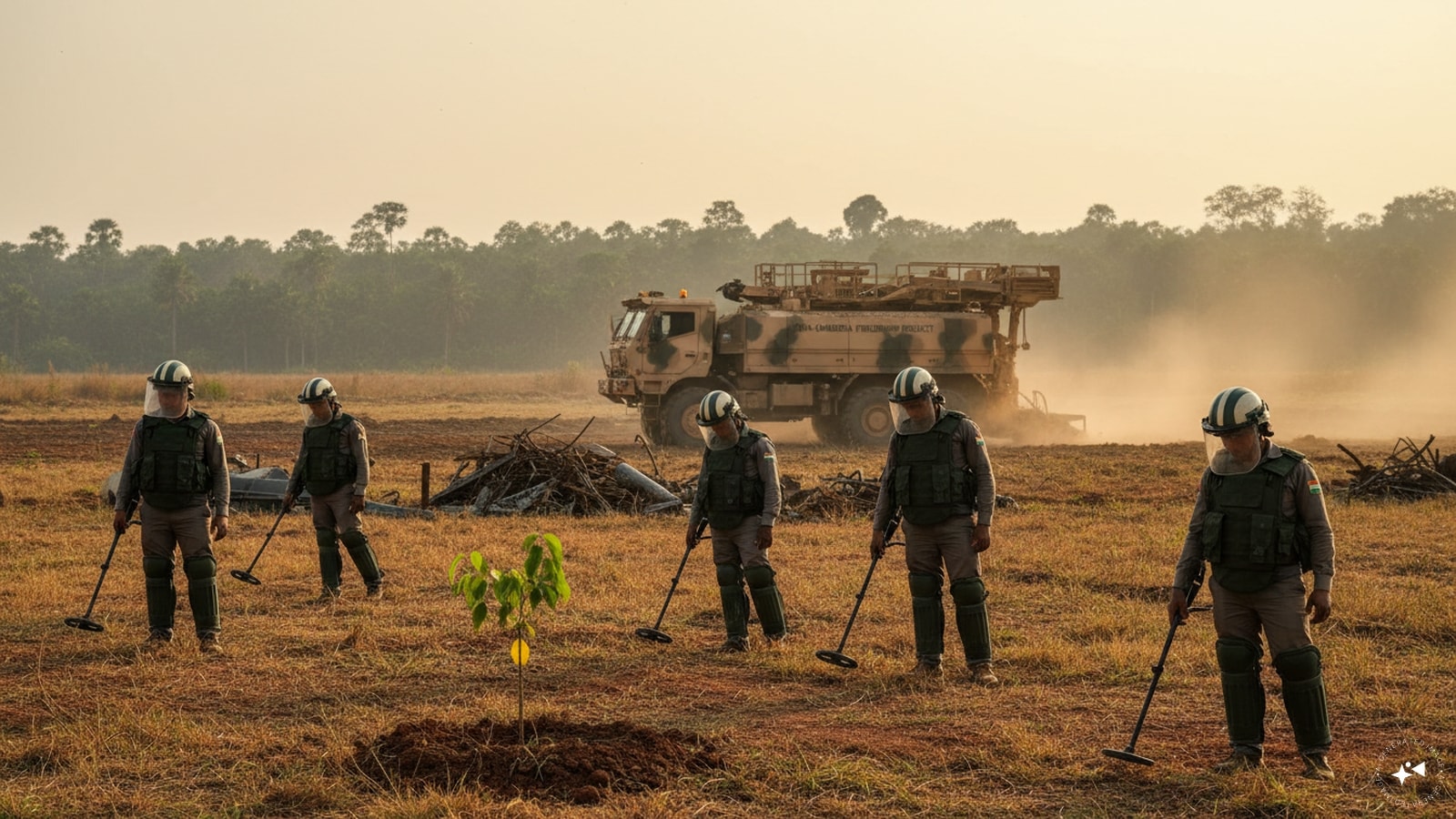
Nearly 198,000 square metres of mine-contaminated land in Kaoh Pao village has finally been cleared and handed back to the local community. For the roughly 134 families living there, this isn't just an abstract milestone. It means they can finally farm, build homes, and move around without second-guessing every step.
Inside the Koh Kong Handover
When you look at the logistics, numbers matter. Exactly 197,810 square metres of hazardous earth were inspected, cleared of unexploded ordnance, and officially certified safe.
Tanu Priya, the Deputy Chief of Mission at the Indian Embassy in Phnom Penh, joined local Cambodian authorities—including Koh Kong Deputy Governor Y Nearynet and Tep Kallyan from the Cambodian Mine Action and Victim Assistance Authority—at the handover ceremony.
Getting this specific patch of land back means families don't have to risk their lives just to plant crops or expand their livelihoods. It shifts the local economy away from constant fear and toward stable, long-term development.
How the Mekong-Ganga Framework Drives Relief
This demining initiative didn't happen in a vacuum. It operates under India's Quick Impact Project (QIP) scheme, which is part of the broader Mekong-Ganga Cooperation framework. This regional setup links India with five Southeast Asian nations: Cambodia, Laos, Myanmar, Thailand, and Vietnam.
The strategy behind QIPs is simple. Instead of dragging out bureaucratic red tape for years, these projects target immediate, localized needs. India has approved 75 QIPs in Cambodia so far. Out of those, 55 are already finished, while the remaining 20 sit at various stages of implementation. They tackle everything from education and health to sanitation and humanitarian mine action.
Decades of Practical Support on the Ground
India's involvement in Cambodia's demining sector isn't a new diplomatic fad. It dates back to the early 1990s. Over the decades, this partnership has taken practical, hands-on forms rather than just empty promises.
- Technical Assistance: Providing specialized training for local demining personnel.
- Equipment and K9 Units: Supplying advanced demining gear and mine-detection dogs to speed up clearance.
- Victim Assistance: Backing programs designed to support individuals and families affected by past blasts.
Clearing land like the plot in Kaoh Pao village takes patience, dangerous fieldwork, and consistent institutional support.
What Happens Next for Rural Communities
Clearing the land is only half the battle. Once the mines are gone, the real work of community rebuilding begins. For the 134 families in Koh Kong, the immediate priority is turning these safe zones into productive agricultural plots and residential security.
If you're tracking international development trends, the takeaway is clear. Small, focused infrastructure grants often yield faster results than massive multi-year loans. By cutting through delays and targeting the exact villages most affected by remnants of war, projects like this show how targeted cooperation actually delivers tangible results.