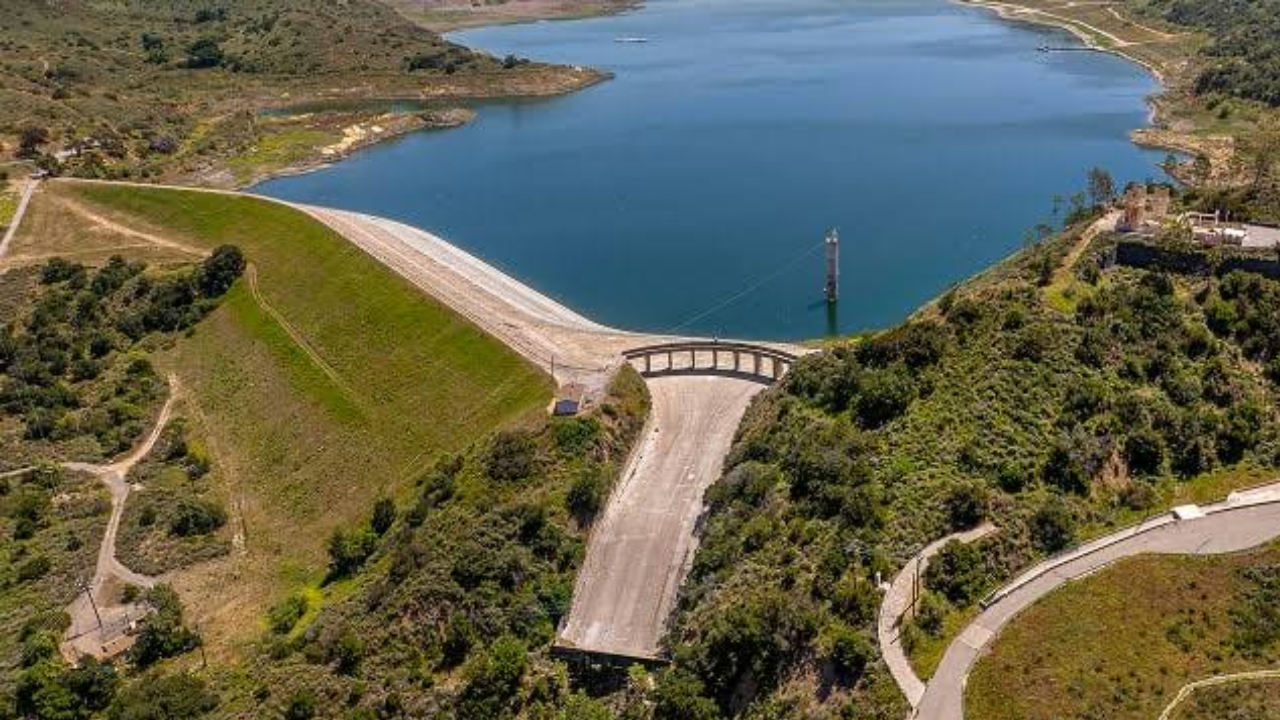
Orange County's famous Irvine Lake won't look like much for quite a while. Crews are actively dropping water levels right now, kicking off a massive multi-year overhaul that will leave the 750-acre reservoir completely dry.
Built back in 1933 by damming Santiago Creek, this vital body of water is facing a hard reset. The California Division of Safety of Dams classifies the aging Santiago Creek Dam with an extremely high downstream hazard rating. Decades of heavy weather, shifting seismic standards, and standard wear mean the infrastructure needs a total teardown and rebuild.
If you're wondering how a project of this scale happens, or what it means for local water storage and recreation, let's break down what's actually going on behind the scenes.
The Drawdown Timeline and Construction Scope
Water managers aren't just pulling the plug overnight. The Irvine Ranch Water District initiated a gradual drawdown, dropping the reservoir from its standard operating level of 735 feet down to roughly 720 feet. This cuts the stored volume from 2,800 acre-feet to a minimal 300 acre-feet.
That remaining 300 acre-feet will sit in the basin until next summer. Once conditions permit, contractors will drain the bed entirely.
The scope of work is massive. Engineers are planning to:
- Construct an entirely new, modern concrete spillway capable of managing severe runoff.
- Reinforce the main earthen dam structure from the ground up.
- Replace the aging outlet tower that regulates water flow.
When work wraps up roughly five years from now, the upgrades will restore the lake's total design capacity to a hefty 28,000 acre-feet. That's a huge upgrade in regional storm capture capabilities.
Managing Flood Risks Versus Drought Realities
California water politics always balance on a razor's edge between severe drought and sudden, destructive flooding. Lowering Irvine Lake serves an immediate safety purpose ahead of major seasonal storms.
John Fabris, spokesperson for the Irvine Ranch Water District, points out that drawing down levels ensures enough empty reservoir space exists to catch heavy runoff and protect downstream communities. While winter rains might temporarily bump water levels up slightly over the coming months, teams will continuously pump or drain it back down to that 300 acre-feet baseline.
Critics and local residents often question why draining a freshwater source makes sense during dry cycles. The answer comes down to regulatory mandates. When state inspectors flag a 93-year-old dam with high-hazard status, local agencies have zero wiggle room. Ignoring structural warnings isn't an option. Fixing it now prevents catastrophic failures later.
What Happens to the Fish and Local Recreation?
Irvine Lake operates primarily as a popular shoreline fishing spot in Orange County, distinct because swimming, boating, and camping are strictly prohibited along its banks. Naturally, local anglers panicked when news broke that the entire basin would be sucked dry.
Concerns quickly piled up regarding non-native white sturgeon and other stocked fish populations living in the lake. Anglers filed formal appeals with regional water quality boards, demanding an organized rescue and relocation plan to prevent mass fish kills during the draining process.
The water district's stance is straightforward. Every fish in Irvine Lake arrived via historic stocking programs rather than natural migration routes. There are no native fish populations in the reservoir. Even so, water officials are coordinating with the California Department of Fish and Wildlife to evaluate potential relocation options for surviving populations before the final dry-out next summer.
Once construction finishes and refilling begins, public shoreline fishing will return. But anglers are looking at a long five-year hiatus before casting a line back into these waters.
Aging infrastructure across the American West demands billions in heavy capital investments. Irvine Lake is just one piece of a much larger puzzle as aging twentieth-century engineering meets twenty-first-century climate extremes.