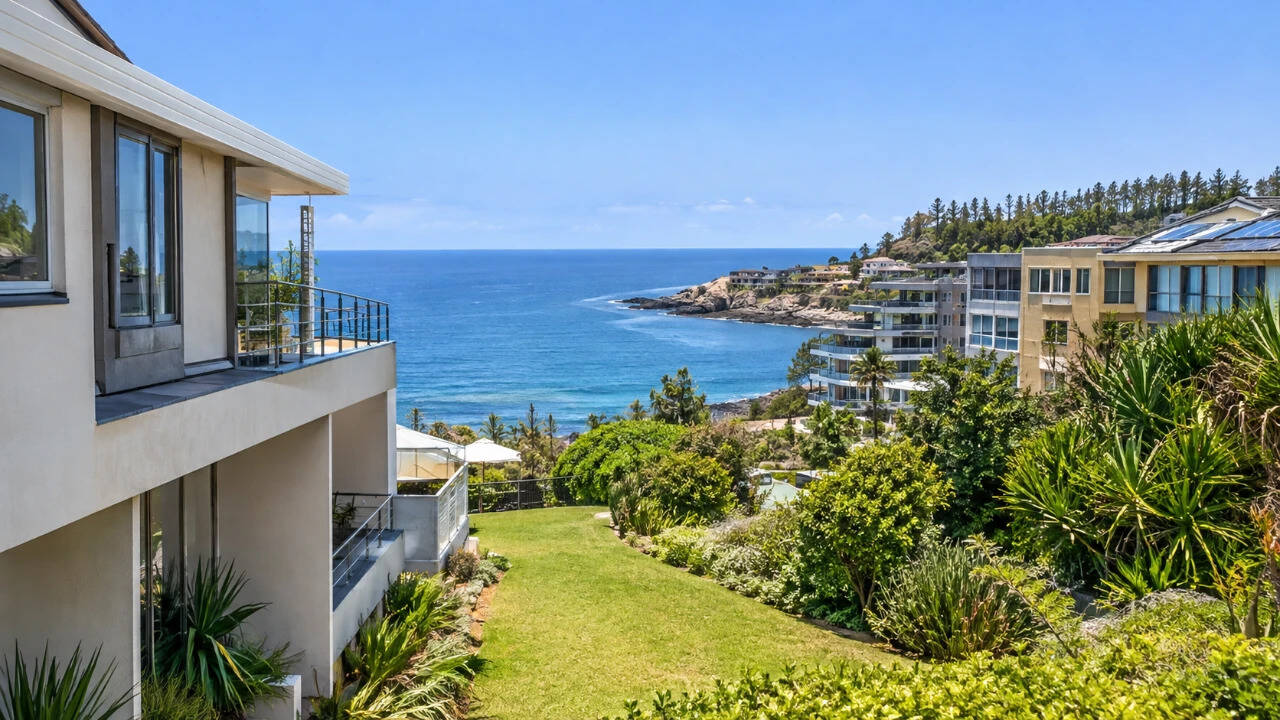
Paying $6.2 million for a home in Bronte because the agent swore the ocean views were safe is a massive gamble. Honestly, it's a gamble that blew up in dramatic fashion in 2026 when Sydney buyers Filda Keci and Steven Wallace fought to get their $310,000 deposit back after discovering a huge development proposal next door that threatened to block those prized ocean views.
The court sided with the buyers. The contract was rescinded, the $310,000 deposit went back to them, and the house later resold in August 2026 for $5.1 million. That's $1.1 million less than the original contract price.
If you're shopping for coastal property, there's a big lesson here. A pretty view on inspection day isn't a permanent feature. It's a snapshot in time.
How Ocean Views Disappear Over The Back Fence
In the Bronte dispute, buyers exchanged contracts in February 2026 after agent Alexander Phillips marketed sweeping ocean views and talked about an approved project next door involving nine townhouses. That nine-unit detail wasn't technically false. Yet Justice Kate Williams in the New South Wales Supreme Court found the representation misleading because it left out a much bigger threat. A larger proposal for 100 to 120 dwellings on the adjoining land had already been declared a State Significant Development, and the sellers knew about it before listing the property.
Think about why that omission mattered so much. The larger proposal hadn't been approved yet when the contract was signed. Still, the court recognized a real risk that the taller, denser project could wipe out the ocean views that drove the $6.2 million price tag.
When a real estate agent gives you half the story about neighboring development, silence can cross the line into misrepresentation. According to NSW Fair Trading guidance on misrepresentation, misleading conduct isn't limited to outright lies. Omitting material facts or creating a false impression about what's happening next door can get a deal undone, even if the agent claims they didn't intend to deceive anyone.
Why State Significant Developments Change Coastal Risk
Local council zoning maps used to give buyers a decent sense of what could rise next door. Not anymore.
Across Sydney, major housing projects are increasingly moving through state-level pathways rather than standard local council approvals. As noted by McCabes legal analysis of the Bronte case and buyer's agent commentary highlighted in coverage of the dispute, state-significant proposals often push for heights and densities well beyond traditional local controls. For example, public planning records such as the NSW Planning Housing Delivery Authority briefing and local project disclosures like the 122–128 Hewlett Street Bronte proposal show how multi-storey apartment concepts and concurrent rezoning bids can reshape coastal pockets like Bronte.
Let's be real. A nine-townhouse approval feels manageable. A nine-storey block with roughly 85 to 120 apartments feels like a wall.
Even when a larger proposal is only at the expression-of-interest or early assessment stage, its mere existence changes risk. If a buyer only checks an old local approval or takes an agent's word at face value, they can walk straight into a valuation trap.
The Real Cost Hits Both Buyers And Sellers
Court victories sound clean on paper. In practice, everyone takes a hit.
For the Bronte buyers, getting their $310,000 deposit refunded prevented a catastrophic loss of value on a $6.2 million purchase. Still, legal action on an urgent timeline—filing on May 1 ahead of a May 11 settlement—means stress, legal bills, and uncertainty while already overseas.
Sellers get burned too. In this case, the sellers had bought the home in March 2023 for $5.55 million and had already committed to a $7 million purchase in Coogee. When the $6.2 million contract collapsed and the Bronte home later sold in August 2026 for $5.1 million, the sellers ended up $1.1 million shy of the February contract price and $450,000 below what they paid in 2023. Meanwhile, delaying settlement on their own next purchase exposed them to steep daily holding or interest costs reported during the expedited court hearing.
Here's what people miss when they cheer a rescinded contract. Rescission unwinds the sale, not the market consequences. Once word spreads that a property's view line is under threat, future buyers price that risk right into their bids.
Tighter Rules And Persistent Misconceptions Around Views
A few myths keep tripping up property buyers in high-priced coastal suburbs:
- Myth 1: "If it isn't approved yet, it won't happen." Wrong. Courts look at whether there is a real risk of a proposal going ahead, not just whether final approval has already been stamped.
- Myth 2: "The agent didn't lie, so I have no case." Half-truths hurt. Saying something true about a smaller project while hiding a bigger plan next door can still be ruled misleading.
- Myth 3: "I don't need to check planning portals myself." Big mistake. Relying solely on sales spin leaves you blind to state referrals, rezoning requests, and early briefings.
Regulators in New South Wales have also been tightening rules around agent conduct and property advertising. Under the NSW Property and Stock Agents Amendment (Underquoting and Other Agent Conduct) Act 2026 and NSW Fair Trading reform updates, authorities have rolled out stricter pricing rules and higher maximum penalties for serious agent offences starting in mid-to-late 2026, with further Statement of Information rules scheduled for February 2027. Better advertising transparency helps, yet it doesn't replace independent planning checks before you sign a binding contract.
Keep in mind that every dispute turns on its exact facts. Courts weigh what was said, what was left out, what the parties knew, and how central the view was to the buyer's decision.
Practical Next Steps Before You Sign On Coastal Property
If you're eyeing a home with ocean views, don't wait until settlement week to ask hard questions. Do this before exchanging contracts:
- Search state and local planning portals directly. Check both local council development applications and state-significant or housing-delivery pathways for neighboring lots, not just current approvals.
- Get view and overshadowing claims in writing. Ask specific questions over email about known neighboring proposals, height limits, and rezoning discussions so nothing stays vague or verbal.
- Have your solicitor or conveyancer review neighboring risk. Pair title and planning checks with independent legal advice before committing a 5% or 10% deposit.
- Price in future neighbors today. Ask yourself if you'd still love the house—and pay the asking price—if a taller building went up next door.
If you're browsing in signed-out mode, signing in to a Google Account can make it easier to save threads like this and pick up your property research later. Either way, verify the sky and the horizon yourself before you sign.