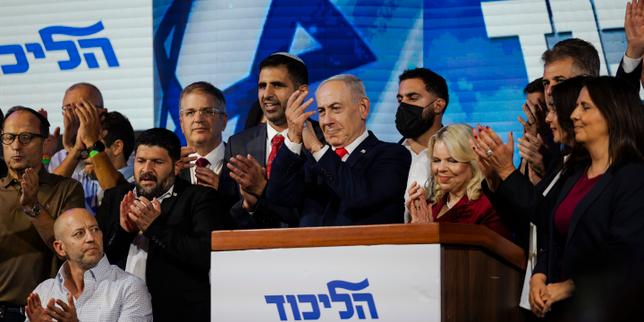
Israel's political chessboard is locked in a familiar state of high-stakes paralysis. Following the legislative elections, Benjamin Netanyahu finds himself clinging to power without a clear path to the magic number of 61 seats required for a absolute majority at the Knesset. Instead of retreating, the veteran leader has launched a public appeal for a wide national coalition, drawing strict red lines that immediately exclude Arab political factions.
If you're trying to figure out how Israel's fractured parliament got here, you have to look past the surface numbers. The arithmetic of the 26th Knesset leaves the incumbent right-wing and religious bloc short, while the fragmented opposition faces its own monumental hurdle of trying to bridge deep ideological divides just to block Netanyahu's path.
The Battle For Numbers Inside the Knesset
Elections rarely deliver clean victories in Israel's proportional system, but this cycle feels uniquely volatile. Netanyahu's core bloc commands roughly 53 seats, leaving a dangerous gap to bridge before the president officially hands out the mandate to form a government. The opposition, spearheaded by figures like Gadi Eisenkot, sits close behind with around 48 seats.
Neither side can govern alone. That simple reality forces everyone into uncomfortable math.
Netanyahu's recent outreach isn't a gesture of compromise; it's a survival tactic. He wants a broad government, but under his explicit leadership and with zero reliance on parties like Ra'am or the Joint List, which he aggressively targets and accuses of crossing national loyalties.
Why the Opposition Faces an Impossible Dilemma
While Netanyahu scrambles for defectors from the center or right, the anti-Netanyahu camp faces a trap of its own making. To cross the 61-seat threshold, the opposition would either need stunning defections from Likud loyalists or tacit cooperation from Arab parties—a prospect that carries massive domestic political fallout in mainstream Israeli politics.
The campaign itself was defined by unprecedented voter turnout, hovering near 78 percent, showing an electorate deeply divided over the future of the country, ongoing regional conflicts, and the heavy shadow of the post-October 7 landscape. Voters didn't give a mandate for stability. They delivered a mandate for friction.
What Happens Next as President Herzog Steps In
President Isaac Herzog holds the cards now. Consultations with party leaders will dictate who gets the initial window to build a functioning coalition. History shows that Netanyahu is a master of protracted coalition negotiations, often grinding down opponents over weeks of intense horse-trading.
Yet, the walls are closing in. Economic pressures, regional threats involving Iran, and deep societal fatigue mean Israel cannot afford months of administrative paralysis. Watch the individual defections closely over the next week. That is where this government will actually be won or lost.