Hosting APEC in Shenzhen wasn't an accident of geography or logistics. It was a calculated political stage.
When Chinese President Xi Jinping welcomed Asia-Pacific leaders to the 33rd APEC Economic Leaders' Meeting in Shenzhen in mid-November 2026, Beijing wasn't just showing off glass skyscrapers and electric buses. It was holding up a forty-six-year-old economic experiment and saying, look what happens when state direction meets open trade. State media leaned hard into the imagery, even invoking Shenzhen's nickname as the "City of the Roc" and urging Asia-Pacific cooperation to spread its wings and fly high and far.
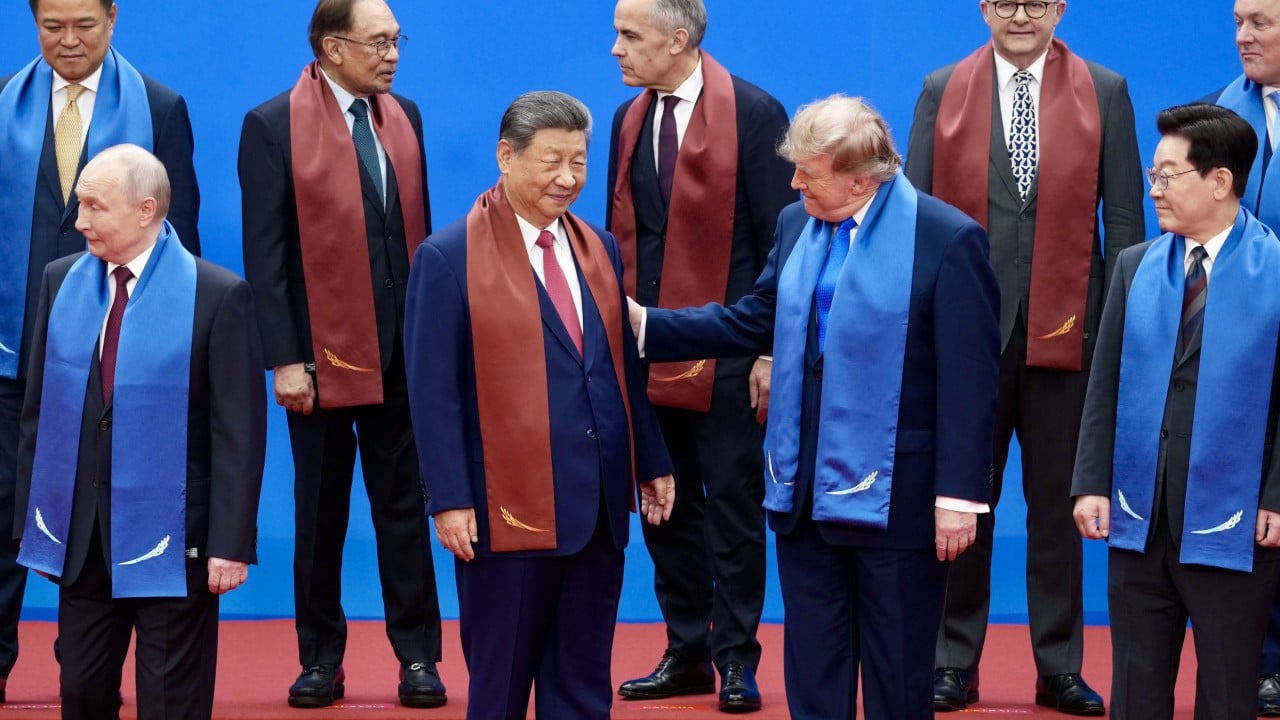
Look closely at the timing and the framing. This was China's first APEC hosting duty since 2014, landing right in the middle of tariff truces, supply-chain realignments, and a historic trilateral gathering in Shenzhen that brought Xi, US President Donald Trump, and Russian President Vladimir Putin to the same table. Using the Shenzhen miracle as the backdrop for a fresh APEC cooperation push gave Beijing a neat story to tell: the same city that grew from a small border town into a tech and manufacturing powerhouse can anchor a new wave of regional growth.
Why the Shenzhen Miracle Fits Beijing's APEC Script
To understand why Shenzhen carries so much weight in China's diplomacy, you have to strip away the boosterism and look at the numbers and policy history. Named one of China's first special economic zones in 1980 under Deng Xiaoping's reform and opening-up push, Shenzhen went from a low-base border locality to a city of over 18 million residents with GDP topping 3.87 trillion yuan (roughly US$580.4 billion) as of 2025, averaging 18.5% annual growth over that 1980–2025 stretch.
That trajectory is catnip for policymakers in emerging and middle-income economies across APEC. When Xi talks about writing a "new chapter of the Asia-Pacific miracle", he's connecting local transformation to regional scale. APEC economies already account for nearly 40% of the world's population and over 60% of global economic output, while trade with fellow APEC economies made up nearly 70% of Shenzhen's total foreign trade during the first three quarters of 2026.
Honestly, though, calling it a pure free-market fairytale misses half the story. Shenzhen succeeded because Beijing paired special regulatory exemptions and foreign investment access with heavy state planning, infrastructure buildouts, and industrial policy. Today, Shenzhen is home to heavyweights like Huawei and BYD—companies that sit right at the center of US-China tech and clean-energy competition. Staging APEC there lets China present industrial statecraft as a proven growth engine rather than a trade distortion.
The Four Pillars and Institutional Pledges
During the November 19, 2026 leaders' meeting, Xi framed his pitch around building an Asia-Pacific community across four core pillars—economy and trade, connectivity, innovation/digital growth, and green transition plus livelihoods—under the theme "Building an Asia-Pacific Community to Prosper Together" and the 2026 APEC Leaders' Shenzhen Outlook.
Rather than stopping at broad slogans, Beijing put concrete institutional and financial markers on the table:
- US$20 million for practical cooperation: Xi announced a US$20 million Chinese contribution to back APEC practical cooperation projects.
- A new research hub in Shenzhen: China pledged to establish a Center for Asia-Pacific Community Studies right in Shenzhen to drive policy research, exchanges, and intellectual support.
- Specialized cooperation bodies: Beijing said it will set up cooperation institutions covering digital technology, cross-border data flows, clean energy, and small and medium-sized enterprise (SME) development.
- Bay-area and trade integration: Alongside the APEC Leaders' Declaration and outcome documents on trade, connectivity, and innovation, Xi also floated a World Association for Bay Areas Economic Cooperation, tying the Guangdong-Hong Kong-Macao Greater Bay Area directly into regional integration.
From a diplomatic standpoint, anchoring these bodies in Shenzhen does two things at once. It rewards the city with long-term regional relevance and signals to neighboring economies that China wants to shape rules in fast-moving areas like clean energy, digital trade, and cross-border data—not just traditional factory goods.
What This Means Beyond the Photo Ops
Big summits produce plenty of soaring speeches. The real test is what happens once the motorcades leave and the working groups start drafting rules.
Because APEC operates on voluntary commitments and consensus rather than binding treaties, announcements like the APEC Trade Digitalization Cooperation Framework (2027–2030) or pledges on smooth cross-border data flows depend on national implementation. If you're running a business or tracking policy in the region, you shouldn't treat a summit declaration as a finished law. Watch for follow-through regulations, customs pilots, and actual funding rules.
There's also a sharp geopolitical tension running underneath the cooperation talk. In Shenzhen, bilateral talks between Xi and Trump took place alongside tariff truces—such as the temporary suspension of China's additional 24% tariff on US goods, rare earth export controls, and port fees on US-linked vessels running through January 10, 2027. Meanwhile, regional partners have to weigh the benefits of deeper trade and tech links with China against supply-chain diversification and strategic rivalry. Even on the sidelines, trade dynamics stayed messy: Mexico's President Claudia Sheinbaum met Xi in Shenzhen while ruling out a free-trade pact and keeping tariffs of up to 50% in place.
What Most Observers Overlook About Shenzhen
A common mistake when people talk about the Shenzhen model is assuming any city can copy-paste it just by drawing a special zone on a map. That's a quick way to waste money.
Shenzhen had unique starting conditions: proximity to Hong Kong's capital, legal norms, and trade links, massive migration from across China, and relentless central government backing over decades. Trying to replicate "instant miracle" status without deep industrial clusters, port and logistics scale, or patient capital usually leads to half-empty industrial parks instead of global tech hubs.
Another detail worth keeping in mind is the gap between macro opening-up pledges and day-to-day market access. At the APEC CEO Summit on November 18, 2026, Xi spoke about cutting tariffs, expanding market access, steadily opening the service sector, and aligning rules and standards. Yet analysts and companies pointed out that broad assurances still need concrete sector-level rules and timelines to move the needle for foreign investors.
Practical Next Steps for Businesses and Analysts
If you follow Asia-Pacific trade, tech, or policy, don't stop at headline summaries from the summit. Put these steps on your calendar and workflow:
- Mark January 10, 2027: Track whether the US-China tariff, rare earth export control, and port fee suspensions are extended, modified, or allowed to lapse as that truce window approaches.
- Audit your digital and cloud footprint: If your operations rely on cross-border data transfers or third-country cloud data centers in Southeast Asia, review upcoming data-flow frameworks and compliance rules carefully.
- Follow the implementing details: Watch Chinese ministries and APEC working groups over the coming months for concrete rules behind the service-sector opening pledges, the 2027–2030 trade digitalization framework, and the new Shenzhen cooperation institutions.
- Separate narrative from execution: Compare Beijing's vision of an open, innovation-led Asia-Pacific community against actual bilateral deals, tariff moves, and supply-chain shifts across individual member economies.
The Shenzhen story gives China a powerful symbol for regional cooperation. Whether that symbol turns into lasting economic integration depends on what gets built after the cameras turn off.