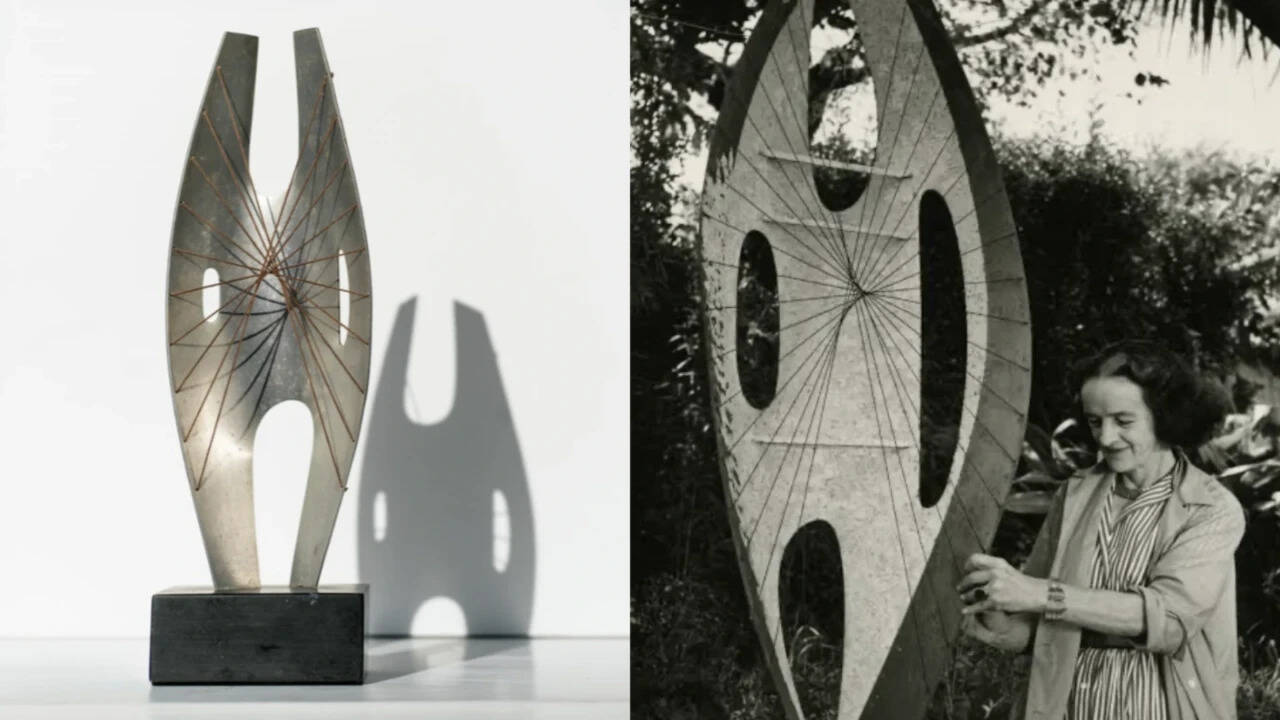
When British sculptor Barbara Hepworth handed a 13-inch aluminium-and-string model of her famous Winged Figure to her doctor in St Ives, she wasn't thinking about auction records. She was simply saying thank you. Now, nearly six decades later, that modest medical gift is heading to auction in Cornwall with an estimated price tag hitting £80,000.
If you follow modern British art, stories like this pop up more often than you think. Masterpieces don't just live in climate-controlled gallery boxes; they sat on living room sideboards, gathered dust in doctor's surgeries, and passed through informal friendships. Let's look at why this specific study is grabbing headlines, what collectors actually care about when buying Hepworth, and how an ordinary general practitioner became an indispensable part of the St Ives avant-garde. Recently making waves lately: Why Roger Taylor Leaving Duran Duran Over Tinnitus Matters More Than You Think.
The Doctor Who Treated the St Ives Art Scene
General practitioners usually deal with seasonal flus, minor injuries, and routine checkups. When Dr Roger Slack arrived in St Ives back in 1947, his patient ledger looked a little different. He found himself treating some of the most radical creative minds working in Britain.
We aren't just talking about Barbara Hepworth. Slack treated painters like Peter Lanyon, Patrick Heron, Terry Frost, and Tony O'Malley. In fact, O'Malley credited Slack with saving his life on multiple occasions, and the two formed a tight bond that went way beyond the clinic walls. More insights on this are explored by GQ.
Slack didn't just play the role of the quiet healer. He immersed himself completely in the local culture. During the fifties, he picked up a camera to document St Ives street life and recorded oral histories from elderly locals who had personally known the eccentric self-taught painter Alfred Wallis. Hepworth noticed his keen eye and actively pushed him to write a book about Wallis. She even traded raw materials with him, handing over chunks of marble because Slack had developed a personal interest in carving stone himself.
That mutual exchange of ideas turned into genuine friendship. By 1967, Hepworth wanted to give Slack something tangible to mark their years of close connection. She signed and dated a miniature aluminium-and-string model, numbering it 5 out of a tiny edition of just nine.
Inside the Design of Winged Figure
To understand why a thirteen-inch object commands such massive bids, you have to look at the monumental original. In 1961, the John Lewis Partnership picked Hepworth over six rival sculptors to create a signature public artwork for their flagship Oxford Street department store in London.
Her final design grew directly out of an earlier smaller work from 1957. Completed in 1963, the massive public installation stands nearly six metres tall on the exterior wall of the building. It features two sweeping wing-like forms laced together by delicate metal strings.
Hepworth wanted viewers to feel an absolute sense of kinetic liberation. She talked openly about wanting to capture the universal dream of moving effortlessly through air and water without physical drag. The curved aluminium catches daylight differently hour by hour, casting dynamic shadows across the busy London street. It became so culturally significant that the structure earned Grade II listed status back in 2016.
Owning a study from that exact creative lineage is rare. The model going under the hammer via Lay's Auctioneers in Cornwall as part of their upcoming Cornish Art sale isn't just a decorative trinket. It is a direct tangible link to one of Britain's most celebrated public monuments.
What Drives the Value of Miniature Modern Bronzes and Studies
Market values for post-war British sculptors baffle casual observers. You look at a thirteen-inch metal object with some string attached and wonder why it could clear eighty grand. Three distinct market drivers explain the price point.
First, rarity dictates everything. An edition size of nine means very few people on earth will ever own one. Most sit safely locked away in institutional collections or private estates that rarely liquidate.
Second, provenance changes the game entirely. Art buyers pay huge premiums for documented personal history. A random studio cast is valuable, but a piece inscribed by Hepworth and handed directly to her trusted physician carries an unrepeatable human narrative.
Third, Hepworth's standing in international modernism remains ironclad. Her explorations of negative space, pierced forms, and organic curves redefined how the world looked at sculpture. Museums fight over her market supply because her output was finite and intensely physical.
If you plan on bidding on mid-century studio pottery or Cornish modern art, always verify the catalogue raisonné numbers, exhibition history, and direct family or archival paper trails. Pieces with clean documentation always outperform anonymous works by wide margins.
Check your local provincial auction houses if you want to spot undervalued British art. Sometimes history is hiding right where you least expect it.