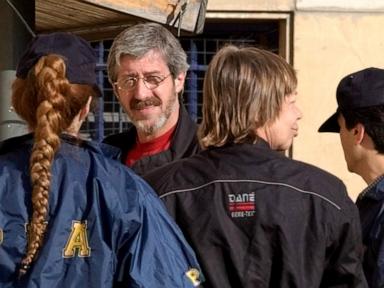
Argentine federal police arrested Betina Erika Köpcke in Buenos Aires over suspicions she helped her husband, former Red Brigades militant Leonardo Bertulazzi, slip out of house arrest ahead of his extradition to Italy. Honestly, if you thought a 74-year-old fugitive lowering himself down from a fifth-floor balcony was just a bizarre one-man stunt, think again.
The arrest happened in San Telmo, the same historic Buenos Aires neighborhood where Bertulazzi had been confined while facing a 27-year prison sentence in Italy for terrorism-related offenses, including aggravated kidnapping and possessing explosives. Security Minister Alejandra Monteoliva announced that federal judge María Servini ordered the arrest at the request of federal prosecutor Alejandra Mangano. Köpcke, 77, was held incommunicado as investigators dug into how a man on an electronic ankle monitor vanished on November 10, 2026.
Most headlines treat this like a quirky spy thriller because of the ropes, harness, and ankle-tag slip. That misses the bigger point. Escapes of high-profile fugitives under house arrest rarely happen in a vacuum. When an aging convict with decades of underground logistics experience disappears right before extradition, investigators look first at inner circles, routines, and overlooked gaps in supervision.
Why House Arrest Keeps Backfiring in High-Risk Extraditions
Let's be real about house arrest. It saves taxpayers money and keeps older or ill detainees out of overcrowded cells, sure. Yet for fugitives with international networks and a history of clandestine movement, it carries obvious risks that courts often underestimate.
Bertulazzi's case shows why. Captured by Argentine Federal Police in August 2024 after spending roughly four decades on the run, he was waiting for the final green light to be sent back to Italy over crimes tied to the 1970s far-left Red Brigades—specifically the 1977 kidnapping of industrialist Pietro Costa, part of whose ransom Italian courts linked to militant funding. Even with an electronic ankle monitor, house arrest relies heavily on compliance, timely alerts, and physical security that apartments simply aren't built to provide.
Once police realized his ankle monitor had stopped transmitting movement data on November 10 and found him gone, the search turned from routine monitoring to a full-scale manhunt. Authorities said photographs found on a cell phone Bertulazzi left behind pointed toward Köpcke's involvement, including images of her near the gate used in the getaway and photos of ropes tied to the descent. Those details haven't been tested in court yet, and Köpcke has been detained on suspicion rather than convicted, so keeping a clear line between investigative allegations and proven guilt matters.
What Investigators Look For After a Balcony Break
When someone bypasses electronic monitoring and exits from an upper floor, police don't just dust for fingerprints on a windowsill. They reconstruct a timeline backward.
- Abandoned devices and digital trails: A phone left behind can turn into a roadmap, revealing scouted exit points, gear photos, or timing cues that a fugitive forgot to wipe.
- Outside logistics: Ropes, harnesses, cash, and safe houses take coordination. Even a former mountaineer or seasoned logistics operative usually needs help moving gear or lining up what happens on the street below.
- Neighborhood blind spots: Dense areas like San Telmo mix older apartment blocks, courtyards, and narrow streets that make rapid tracking harder once someone hits the pavement.
The Political and Legal Clash Behind the Arrest
This story isn't just about ropes and extradition paperwork. It's colliding with sharp political and legal arguments inside Argentina.
Security Minister Monteoliva struck a hard line, warning that anyone who assisted Bertulazzi will face justice and vowing to trace every link in the escape chain. At the same time, human rights organizations pushed back against Köpcke's detention, criticizing the measure as unlawful. That friction isn't unusual in cases involving former 1970s militants or older suspects, where debates over due process, detention conditions, and political messaging often run hot.
From a legal standpoint, prosecutors have to prove more than proximity or marriage. Under Argentine procedure, holding a suspect and building a case for aiding an escape requires linking specific acts—like scouting an exit or supplying gear—to the flight itself. Meanwhile, Bertulazzi remains at large, meaning every lead pulled from his phone or associates is a race against time before he crosses another border or disappears deeper into anonymity.
Misconceptions People Have About This Case
- Myth: Electronic ankle monitors lock a fugitive inside. Not really. Most ankle bracelets are tracking and alert tools, not physical restraints. If someone tampers with or removes a device, authorities get notified, but there's no guard standing at the door unless physical surveillance is active.
- Myth: Decades-old convictions fade in urgency. Extradition treaties and serious terrorism-related convictions don't just expire because a suspect grows older. Italy still sought Bertulazzi to serve a 27-year sentence tied to his past offenses.
- Myth: An arrest means the case is solved. Detaining Köpcke is a major investigative move, not a verdict. She is presumed innocent unless proven guilty in court, and finding Bertulazzi himself remains the primary objective for police.
Practical Next Steps for Following the Investigation
If you're tracking this story—whether as a reader, researcher, or journalist following international law enforcement—don't get swept up in viral rumors about disguises or movie-style plots. Stick to verifiable developments.
- Watch official judicial and prosecutorial filings: Pay attention to updates involving Judge María Servini and Prosecutor Alejandra Mangano, since formal charges and evidentiary rulings carry far more weight than early social media claims.
- Separate police allegations from court findings: Treat statements from security officials about cell phone photos and suspected assistance as investigative leads until prosecutors present evidence in court.
- Track cross-border extradition and manhunt updates: Follow verified reports from major wire services and outlets like The Guardian or Infobae to see whether Argentine authorities locate Bertulazzi or move forward with accomplice charges.
Police arrest of Betina Erika Köpcke in San Telmo offers local video coverage of the arrest in Buenos Aires and the context surrounding Bertulazzi's escape.