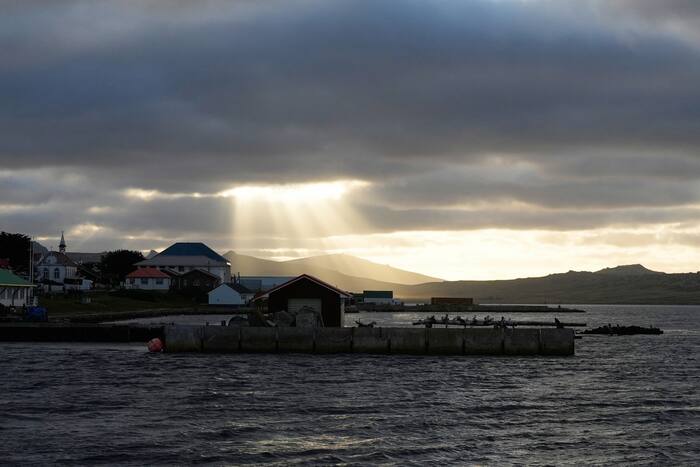
Argentina just took a major hit in Hamburg, losing an emergency court bid to freeze offshore oil work near the Falkland Islands. By an 18-3 vote on November 28, 2026, the International Tribunal for the Law of the Sea (ITLOS) turned down Buenos Aires's request to halt work on the Sea Lion oil project.
Here is the bottom line right up front. The tribunal didn't declare who owns the islands. Honestly, that's the part headlines often miss. Judges ruled they lacked jurisdiction because deciding Argentina's claims would require settling territorial sovereignty over the South Atlantic archipelago, which sits roughly 300 miles off Argentina's coast and is administered by Britain.
For roughly 3,500 Falkland Islanders, this ruling clears a huge immediate hurdle for an energy project that could transform their small, fishing-heavy economy. Yet the fight isn't over. A separate arbitration panel can still hear arguments down the road, and political pressure from Buenos Aires hasn't gone anywhere.
What the Hamburg Tribunal Actually Decided
When countries fight over ocean resources, they often turn to the United Nations Convention on the Law of the Sea (UNCLOS). Argentina filed for arbitration in late September 2026 and asked ITLOS in October for provisional measures to stop new drilling and production equipment at Sea Lion, restrict Britain's use of exploration data, block new authorizations, and prevent interference with Argentina's maritime protection efforts.
Argentina argued it wasn't asking the judges to rule on sovereignty. Instead, Buenos Aires claimed it wanted sea law applied to stop unilateral resource work while the dispute sits unresolved.
The majority of judges weren't buying that framing. Under UNCLOS, maritime tribunals handle ocean rights and obligations, not core land-sovereignty disputes between nations. Because resolving Argentina's claims would depend on which country legitimately holds sovereignty over the islands, the tribunal found no prima facie basis for an Annex VII arbitral panel to take jurisdiction over those requests.
Three judges dissented: Horinouchi, Patel, and Judge ad hoc Vinuesa. And the tribunal stressed that its order doesn't prejudge the future arbitral panel's ultimate decision on jurisdiction over the merits. Still, 18-3 is a lopsided vote, and it gives London and the Sea Lion developers breathing room right now.
Why Jurisdiction Trips Up Resource Cases
If you've ever watched energy disputes in contested waters, you see this pattern repeatedly. Energy companies and governments talk about barrels, seismic surveys, and exclusive economic zones. Lawyers, though, have to clear jurisdictional gates first.
If a court lacks authority to decide who holds sovereign title over land, it can't easily grant remedies that assume one side's rights are unlawful because the other side owns the territory. In practical terms, Buenos Aires tried to use a sea-law emergency stop to freeze an offshore project without first getting a binding ruling on the underlying sovereignty conflict. The judges drew a sharp line around what their treaty covers.
Why the Falkland Islands Oil Dispute Runs So Deep
You can't understand this courtroom clash by looking at oil prices alone. This conflict has been simmering for nearly two centuries.
Britain has administered the islands since 1833, while Argentina claims them as the Malvinas. In 1982, Argentine forces invaded, sparking a 74-day war that ended with Argentina's surrender and killed 649 Argentine military personnel, 255 British military personnel, and three islanders. A 2013 referendum saw islanders vote overwhelmingly—99.8% in favor, with just three votes against—to stay a British Overseas Territory, though Argentina rejects that vote on the grounds that self-determination doesn't apply to a population it views as implanted after 1833.
Under President Javier Milei, Buenos Aires has ramped up pressure against unauthorized offshore oil work, moving to sanction participating companies and threatening legal action against executives tied to Falklands projects. Meanwhile, London insists British sovereignty and the islanders' right to self-determination are beyond question, and British Foreign Secretary Ed Miliband and Attorney General Ellie Reeves called the ruling a vindication of the UK's legal defense.
What's Happening With the Sea Lion Project Right Now
Sea Lion sits within 200 nautical miles north of the Falkland Islands. Israel's Navitas Petroleum holds a 65% stake as operator, and Britain's Rockhopper Exploration holds 35%, backed by licenses from the Falkland Islands Government and UK support.
After getting development approval for Phases 1 and 2, the companies announced a final investment decision in December 2025 and reported financial close later that month. In August 2026, they said infrastructure prep was moving ahead toward drilling in early 2027 and first oil in the first quarter of 2028.
During the ITLOS proceedings, Britain put assurances on the record that drilling won't start before March 21, 2027, and extraction won't start before March 2028, with no new licenses granted while the licensing regime remains suspended. That timetable matters. Even without an ITLOS injunction, commercial and political friction hasn't vanished. In October 2026, Rockhopper shared an update from Navitas about replacing two contractors amid Argentine sanction pressure, and reports noted major U.S. oil services firm Halliburton said it wouldn't work on Sea Lion.
What Most Coverage Overlooks About Offshore Risk
Basic news recaps usually treat a court loss as a simple "win for oil" or "loss for Argentina." In real-world energy projects, it's messier than that.
First, winning an emergency jurisdictional battle doesn't erase supply-chain risk. Offshore projects depend on specialized vessels, subsea equipment, and service contractors. When a neighboring government threatens sanctions or criminal notices against companies and executives, some vendors will step back simply to avoid legal or commercial headaches in Latin America.
Second, big geopolitical shifts ripple into smaller disputes. Analysts have pointed to broader diplomatic noise—including discussions involving U.S. leadership and shifting regional postures—that makes predicting every move tricky. A smart investor or analyst watches contracting updates and sovereign assurances just as closely as court dockets.
Third, the human and economic stakes in Stanley are huge. Forecasts have suggested Sea Lion could dramatically expand the Falklands' economic output, which is why the islands' Legislative Assembly welcomed the ruling as good news for residents. At the same time, environmental oversight and long-term fiscal management will test local institutions once production ramps up.
Practical Next Steps If You're Tracking This Story
If you follow energy markets, international law, or South Atlantic geopolitics, don't stop at today's headline. Here's how to stay sharp over the coming months:
- Watch the arbitration clock. Track progress on constituting the Annex VII arbitral tribunal, which Britain indicated could be in place by January 2027 at the latest.
- Check official tribunal and government releases. Read primary updates such as the ITLOS case overview and official statements from the UK government to separate legal assurances from political spin.
- Monitor operator filings. Follow announcements from Navitas Petroleum and Rockhopper Exploration for contractor updates, capital discipline, and any shifts around the March 2027 drilling window.
- Separate sovereignty noise from operational facts. Keep a running list of confirmed milestones—rig availability, permits, and production timelines—so you aren't swayed by tough rhetoric alone.