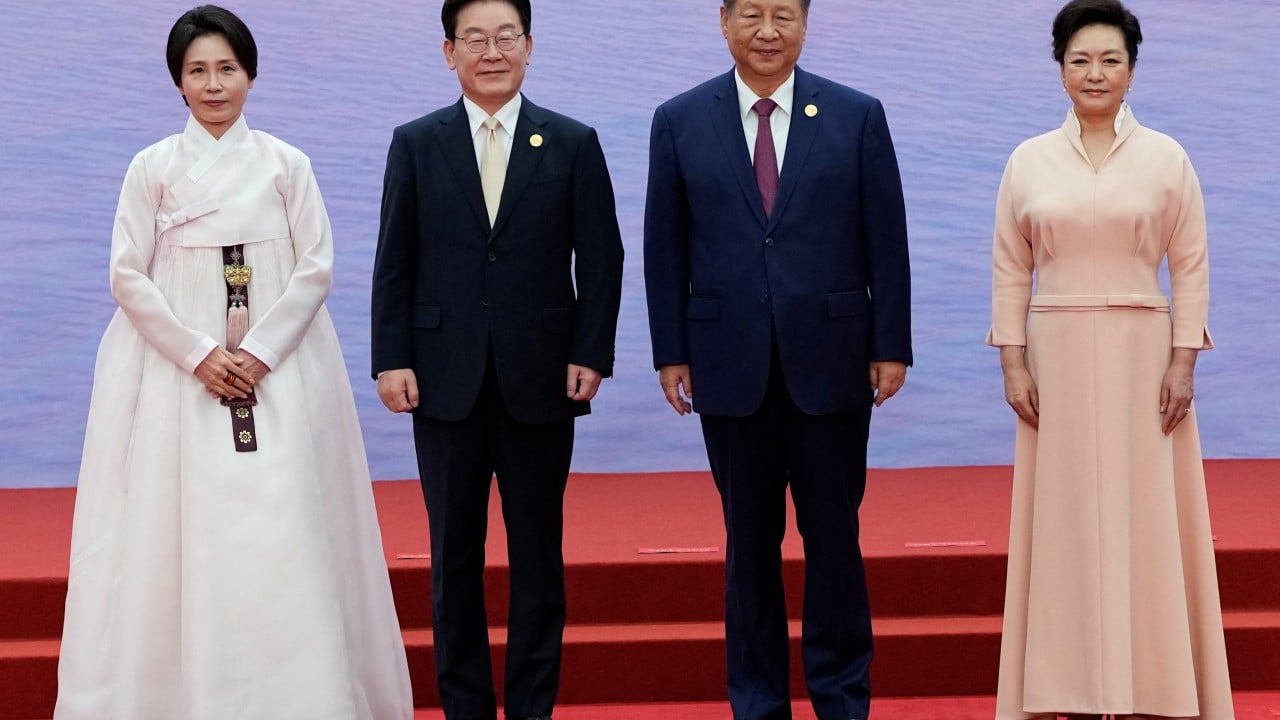
Silk, brocade, and quiet power. That's what showed up on the red carpet in Shenzhen on Wednesday night, November 18, 2026.
At the welcome banquet for the 33rd APEC Economic Leaders' Meeting, APEC sartorial diplomacy stole headlines from trade tariffs and supply-chain charts. Vietnam's first lady Ngo Phuong Ly greeted China's Peng Liyuan in the receiving line wearing a traditional ao dai, while South Korea's first lady Kim Hea-kyung stepped out in a hanbok and Peng blended classic Chinese styling with modern lines. Meanwhile, Sasithorn Chantarasomboon appeared in a Thai Boranpiman style, and Carolyn Yeh, spouse of Taiwan's envoy Stan Shih, also leaned into traditional dress.
Some analysts roll their eyes at banquet fashion. I think that's a mistake. When leaders are locked in tense negotiations over AI, trade friction, and regional security, what their spouses wear isn't fluff—it's deliberate cultural signaling that sets the room's temperature before a single policy speech starts.
How APEC Sartorial Diplomacy Works Behind Closed Doors
Let's be honest about summit banquets. Most of us watch them for the awkward handshakes, the group photo risers, and the outfits. Behind the scenes, though, protocol teams treat dress codes like chess moves.
When Ngo Phuong Ly arrived in Shenzhen alongside President To Lam, choosing an ao dai wasn't a random wardrobe pick. Vietnam and China have deep historical ties—China was the first country to establish diplomatic relations with Vietnam on January 18, 1950—yet their relationship constantly balances cooperation with competing maritime and economic interests. Wearing unmistakable national heritage signals pride without saying a word.
Earlier in April 2026, Ngo Phuong Ly and Peng Liyuan met for cultural dialogue in Beijing, where Ngo Phuong Ly noted that while politics and economics anchor bilateral ties, culture and the arts connect people's hearts. Seeing them in Shenzhen seven months later shows how consistent visual messaging reinforces months of quiet cultural groundwork.
Peng Liyuan herself has built a long track record around tailored Chinese silhouettes that nod to tradition without feeling stuck in a museum. In Shenzhen, her blend of traditional and modern elements fit the city's identity: a former 1978 fishing village turned high-tech showcase that Xi Jinping highlighted in his banquet toast as a symbol of openness and reform.
Why Traditional Garments Carry Different Weight for Each Guest
Not every traditional outfit carries the same diplomatic calculation. Context changes everything.
For a host spouse like Peng Liyuan, dressing to bridge heritage and modernity projects confidence and hospitality. For a visiting spouse like Kim Hea-kyung in a hanbok, wearing a distinct national garment asserts cultural identity in a crowded multilateral room where 21 APEC economies are jockeying for visibility.
Sasithorn Chantarasomboon's Thai Boranpiman look and Carolyn Yeh's traditional choice alongside Stan Shih add even more texture to that visual mosaic. Instead of everyone defaulting to uniform Western black-tie, the banquet turned into a live showcase of regional craft.
Three Mistakes Observers Make Watching Summit Fashion
If you cover or follow international summits, it's easy to misread what you're seeing on camera. Here are three traps I see people fall into repeatedly.
- Treating outfits as policy substitutes. A warm smile or a shared textile moment doesn't erase tough trade negotiations or geopolitical friction. Fashion softens the stage; it doesn't rewrite treaties.
- Assuming "traditional" means static. Ao dai, hanbok, and Chinese formal wear all evolve in fabric weight, cut, embroidery, and styling. Calling something "traditional" without looking at modern tailoring misses how living cultures adapt.
- Ignoring the host city's backdrop. Shenzhen isn't Beijing's imperial courtyards or historic monuments. Holding a banquet in a hyper-modern southern tech hub changes how traditional garments read—sometimes creating a sharp, memorable contrast between ancient craft and futuristic glass.
What This Means If You Track Global Brands or Cultural Strategy
You don't need a diplomatic passport to learn from what happened in Shenzhen. Brands, institutions, and cultural communicators deal with the same tension every day: how do you honor heritage while staying relevant right now?
- Audit your visual cues first. Before launching a campaign or event, ask what your colors, silhouettes, and settings communicate before anyone speaks.
- Pair symbolism with substance. Cultural nods land best when backed by real engagement, like sustained cultural exchanges rather than one-off photo ops.
- Watch the contrast between place and tradition. Pairing classic craft with a modern setting often creates stronger visual memory than matching everything to a single era.
- Verify context before drawing conclusions. Check bilateral histories and recent diplomatic visits so you don't over-read a handshake or under-read a deliberate choice of dress.
WATCH: Vietnam's To Lam Arrives In China For 33rd APEC Economic Leaders' Week
This clip shows the Vietnamese delegation's arrival in Shenzhen for the 33rd APEC Economic Leaders' Week, giving helpful context on the summit backdrop surrounding Ngo Phuong Ly and To Lam's appearance.