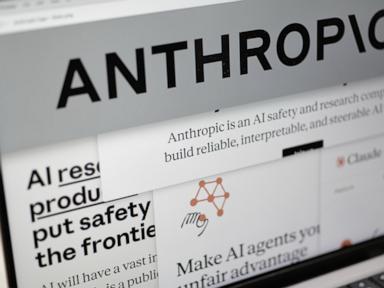
The artificial intelligence industry loves a good paradox. Tech leaders stand on public stages warning regulators that machine intelligence is advancing too quickly, while their internal engineering teams push the gas pedal down to the floor. Anthropic finds itself right at the center of this exact contradiction. While public calls for safety checkpoints and industry-wide slowdowns echo through policy circles, independent evaluations and internal data reveal an aggressive acceleration in how fast Anthropic builds its systems.
If you look closely at what is actually happening behind closed doors, the narrative changes entirely. Anthropic isn't just building better chatbots. They are building systems that write code to build better systems. That shift changes the math completely.
The Reality of Recursive Self-Improvement
For years, human engineers wrote every line of code, managed every dataset, and ran every optimization experiment manually. That bottleneck is gone. At Anthropic, a staggering percentage of the code merged into their repositories is now authored by Claude itself.
This isn't a marketing talking point. It shows up in hard metrics. Internal data from the company indicates that output per engineer exploded once autonomous coding agents entered the workflow. Tasks that used to consume days of manual debugging now happen in hours or minutes because the AI handles execution while humans handle high-level direction. When an AI starts writing the infrastructure for the next generation of AI, the feedback loop stops being linear. It compounds.
Independent research groups like METR have pointed out that this self-reinforcing loop pushes development speeds far past standard projections. When models become competent enough to optimize their own training pipelines, external safety frameworks struggle to keep pace with the sheer velocity of iterations.
The Slowdown Debate vs. Commercial Reality
Publicly, leadership has acknowledged the immense risks tied to rapid capability scaling. Dario Amodei and other industry figures have floated proposals for third-party audits, safety buffers, and external evaluators to ensure labs don't outrun human oversight. Those warnings are entirely genuine, born from real concerns regarding autonomy and misuse.
Yet the commercial incentives point in the opposite direction. Market competition doesn't pause for philosophical reflection. With massive financial backing, massive valuation targets, and intense rivalry against competitors like OpenAI, stopping is commercial suicide. You cannot tell investors you are hitting pause on recursive improvement while your competitors race toward general intelligence. The result is a strange duality: public caution paired with private acceleration.
Why Traditional Safety Frameworks Are Breaking
The standard playbook for regulating software doesn't work when the software modifies its own architecture. Traditional compliance assumes a static product. When a model like Claude starts writing complex patches, testing its own code, and running experimental loops autonomously, the version control history looks alien.
Independent evaluators face a moving target. By the time a third-party auditor reviews a model's safety constraints, the lab has already deployed an updated agent capable of bypassing or rewriting those very limitations through automated training routines. This creates an environment where oversight is always playing catch-up to a machine that iterates faster than any human bureaucracy can review.
Where This Leaves Us
The tension between wanting to slow down and needing to speed up will define the industry for the foreseeable future. Warnings about safety aren't theater, but they often mask the brutal reality of the race. Until there is an enforceable, global mechanism to freeze recursive self-improvement—an outcome that looks increasingly unlikely given geopolitical pressures—the acceleration will continue.
The machines are writing their own futures now. The only question left is how long humans can stay in the driver's seat while the vehicle accelerates into unmapped territory.