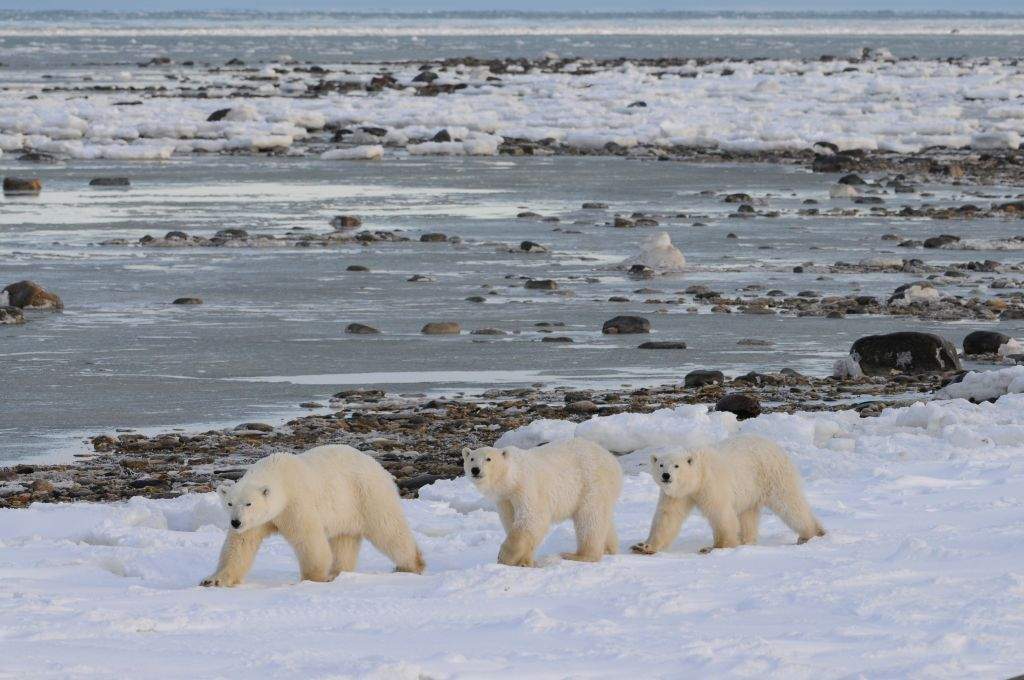
Every autumn, the subarctic coastline of Manitoba transforms into a staging ground for one of the most intense wildlife spectacles on the planet. Hundreds of polar bears gather near the shores of Hudson Bay, pacing the gravel and waiting for the water to turn to ice. They are hungry, restless, and right on the doorstep of Churchill, a remote town universally billed as the polar bear capital of the world.
If you look at the calendar, it is Polar Bear Week. But beneath the global livestreams and eco-tourism snapshots lies a much tenser reality. The bears are arriving sooner, staying longer, and spending roughly a month more on land than their grandparents ever did. That extra time ashore creates a compounding collision course between human safety concerns and urgent conservation demands.
The Shifting Timeline of Hudson Bay
To understand why Churchill is perpetually on high alert right now, you have to look at the ice. Or rather, the lack of it. Hudson Bay historically freezes over early enough in the winter to give bears a solid platform for hunting seals. Today, climate-driven sea ice loss means that freeze-up is delayed by approximately a month compared to historical baselines.
The math is brutal for apex predators. Bears step off the melting ice in early summer, drift toward the coast, and find themselves stranded on dry land with virtually nothing to eat for weeks on end. When the autumn winds finally start to drop temperatures, a biological switch flips. The bears march toward the coast en masse, tracking the cooling scent of the coming freeze.
That migration brings them straight into the municipal footprint of Churchill. And when hungry, curious bears intersect with a human settlement, the margin for error shrinks to zero.
Managing the Conflict on the Ground
Churchill does not handle this annual migration by crossing its fingers. The town operates under a finely tuned survival playbook, anchored heavily by Manitoba’s dedicated Polar Bear Alert program. Conservation officers patrol the perimeter day and night, haze bears away from residential yards, and use a holding facility—affectionately known by locals as the polar bear jail—for repeat offenders who refuse to take a hint.
Yet, local perspectives suggest that managing the wildlife isn't the only piece of the puzzle. Indigenous elders and long-term residents frequently point out a deeper truth: you have to manage the people just as much as the bears.
Tourism booms every autumn. Photographers, documentary crews, and eager travelers flood the local hotels and pile into tundra buggies to catch a glimpse of a white fur coat against the tundra. Unfortunately, human curiosity often trumps common sense. Visitors step out of bounds, ignore advisory signs, and forget they are sharing space with an animal that views humans as an opportunistic calorie source. Keeping people safe requires constant policing of tourist behavior just as much as tracking bear movements.
Tech Innovations Replacing Old Methods
Stakes are too high to rely solely on shouting and flare guns anymore. Organizations like Polar Bears International are actively deploying new tools to keep the peace.
Take waste management, for instance. Landfills are basically an all-you-can-eat buffet for a starving bear. After fires and infrastructure challenges impacted older waste sites, Churchill revamped its approach by installing heavy-duty electric fencing and upgrading disposal systems to completely block bear access.
On top of physical barriers, tech is stepping in. Systems like "Bear-vision"—smart camera networks equipped with radar-like detection—are being rolled out at local waste facilities to spot approaching bears and fire off automated early warnings. Researchers are also testing non-lethal deterrents like specialized drone flights and targeted acoustic frequencies to gently nudge bears away from town boundaries before conservation officers have to intervene manually.
What Churchill Teaches Us About Adaptation
The western Hudson Bay polar bear subpopulation has faced serious pressure, declining by nearly half since 1979 as sea ice shrinks and reproductive rates drop. That trend points toward an intensely difficult future for the region.
Yet, Churchill refuses to panic. Mayor Mike Spence and local leaders have built an identity around a pragmatic, rural ethos of fixing problems instead of complaining about them. Whether it is surviving the closure of military installations, rebuilding washed-out rail lines, or inventing new ways to live alongside massive carnivores, the town treats adaptation as a daily habit.
Polar Bear Week brings global attention to the fragile state of Arctic ice. But for the people living on the rocky shores of Hudson Bay, it is just another autumn week of locking doors, watching the horizon, and figuring out how two very different species can share the same patch of earth just a little bit longer.


