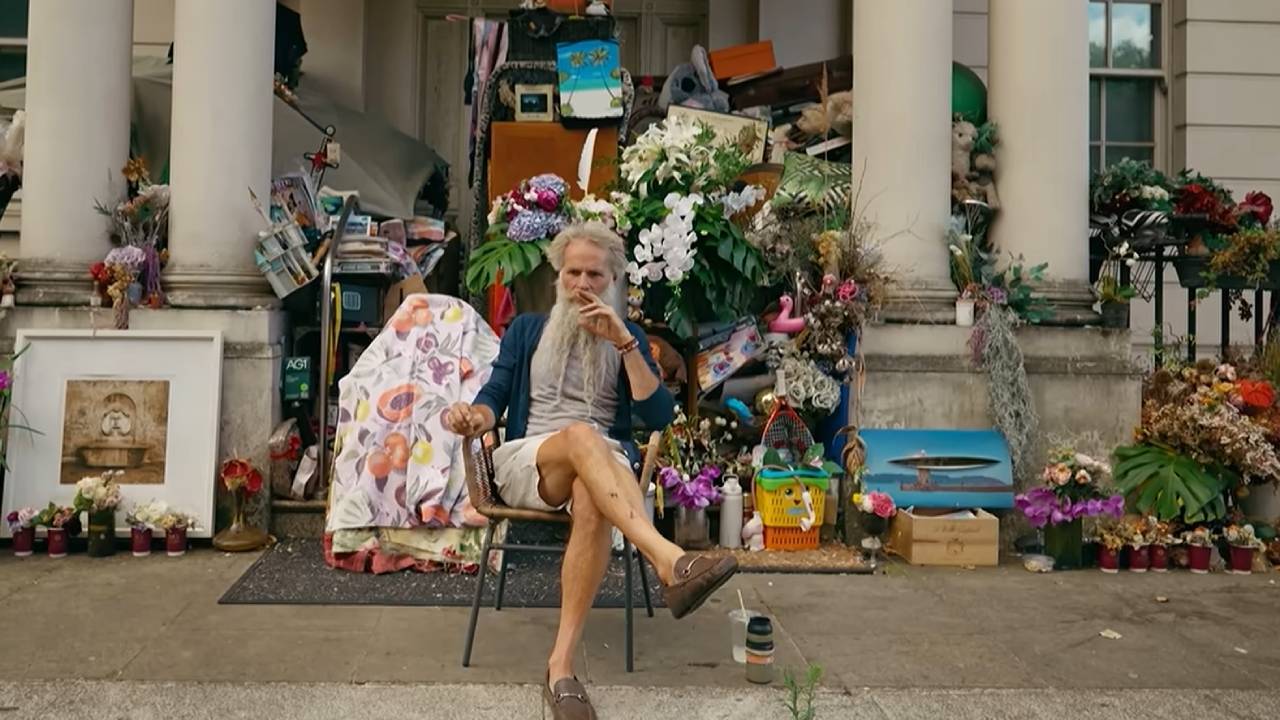
London is a city of extremes. Billion-pound properties sit dark and vacant while people sleep on pavement slabs just meters away. But few situations capture this brutal urban irony quite like the story of Anders Fernstedt. For three and a half years, Fernstedt has made his permanent home right outside a sprawling 45-room mansion at 2 to 8A Rutland Gate in Knightsbridge.
The property itself is staggering. It sold for a jaw-dropping £210 million back in 2020, featuring 116 windows, marble bathrooms, an indoor pool, and direct views of Hyde Park. Yet, the buyer never moved in. The windows stay dark, the marble collects dust, and the porch has become the sleeping quarters for a former tech worker and journalist who drifted out of the conventional economy.
People want to know how someone survives years on the streets of Zone 1 London without cash. They wonder how he handles freezing winter nights or why local residents haven't called the police to clear him out. The answers reveal a lot about modern housing, resilience, and the strange unwritten rules of city neighborhoods.
From Tech and Journalism to the Pavement
Anders Fernstedt didn't start life on the streets. Raised by his mother in Sweden, he spent years building a career that spanned both Sweden and the United States, working in the technology sector. Later, he moved to England in 2016 and transitioned into journalism and fact-checking.
Then came the pandemic. Freelance commissions dried up. While he had early savings from a tech company share portfolio acquired during his time in the US, it was only enough to fund a frugal lifestyle for a few years. Half of that time was spent living out of a tent.
Money doesn't always vanish in a dramatic crash. Sometimes, it just bleeds out slowly. Fernstedt has noted that he grew so accustomed to extreme frugality that he barely noticed the exact moment his funds hit absolute zero. When the last of the savings went, the pavement outside the Rutland Gate mega-mansion was already serving as a temporary spot. Temporary turned into permanent.
Engineering an Outdoor Home
Most people assume sleeping outside in London equals misery and constant disruption. Fernstedt approaches it like a logistical puzzle. He is an avid camper with a deep interest in nature, and he treats his shelter on the mansion's porch with tactical precision.
He compares his setup to a Mongolian yurt, adapting natural materials and makeshift walls to block the wind. His bedding setup is legendary among anyone who has heard his story. He relies on seven layers of Hungarian down duvets and heavy bedding. He claims he hasn't suffered a single bad night's sleep in years, managing to stay warm through harsh British winters while letting air circulate during humid summer spells.
Technology hasn't completely vanished from his routine either. Without mains electricity, he relies heavily on portable power banks to charge his phone. This keeps him connected to digital books, allowing him to read history titles and the diaries of filmmaker Andrei Tarkovsky. For basic hygiene, food, and fresh socks, he walks to a charity center near Victoria station that offers showers and hot meals.
The Quiet Tolerance of Knightsbridge Neighbours
Living outside a property worth over two hundred million pounds in one of the most exclusive districts in the world sounds like a recipe for immediate eviction. Yet, Fernstedt is still there. Why?
The relationship between Fernstedt and the local residents is built on mutual respect and quiet boundaries. When he first arrived, he realized that ignoring the neighborhood wouldn't work. He made sure his makeshift camp stayed immaculately tidy and quiet. He understood that children and grandchildren passing by would talk to their families, humanizing his presence.
Over time, the local dynamic shifted. Neighbours began walking up to offer assistance. Donations have included food, clothing, and even a high-end Italian dinner jacket. Beyond material gifts, it is the simple human interaction that keeps him grounded.
There's also a pragmatic angle that property owners and residents understand. An occupied porch acts as a deterrent. A quiet, watchful presence right by the entrance helps keep out opportunistic thieves, fly-tippers, and vandals who might otherwise target the vacant £210 million estate.
The Reality of Living Off-Grid
Fernstedt claims he is virtually disconnected from money now, spending cash only on small essentials like filter coffee. For him, the lack of traditional housing has ironically brought a strange form of psychological security.
In temporary hostels or rented rooms, the fear of losing accommodation or having belongings stolen can consume a person. After years in the exact same spot at Rutland Gate, that anxiety has faded. He knows his space, he knows his neighbors, and he knows his routine.
Urban poverty is usually viewed through a lens of total desperation. Fernstedt's routine proves that human adaptability runs deep, even if the backdrop is an absurd monument to vacant billionaire wealth.