Tech giants expected a quiet rollout for their massive artificial intelligence infrastructure projects across rural and suburban America. Voters had a very different plan.
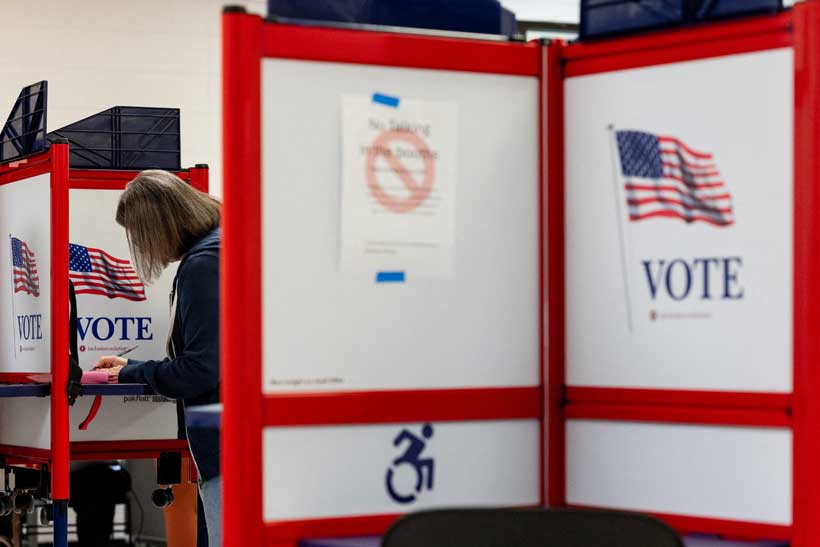
During the 2026 US midterm elections, the expansion of AI data centers transformed from a niche zoning squabble into a full-blown political movement. Across more than 50 local ballot initiatives in 13 states—from Ohio and Illinois to Florida and California—voters overwhelmingly rejected the unbridled construction of warehouse-sized server farms. Communities voted to freeze permits, block tax abatements, and limit the immense power and water consumption of tech companies like Amazon, Google, and Microsoft.
If 2024 was the year AI promises dominated Wall Street pitch decks, 2026 became the year main street drew a hard line in the sand.
The Ballot Box Revolt
For years, local city councils signed non-disclosure agreements with tech developers, handing out generous property tax breaks in exchange for high-tech economic promises. That quiet playbook completely broke down at the ballot box.
In the 2026 midterms, voters took matters directly into their own hands via citizen-led ballot measures. The results were not just close defeats; they were absolute blowouts:
- Alhambra, California: Approximately 82% of voters approved a total ban on data center construction within city limits.
- Edgewater, Florida: Over 77% of voters backed a strict prohibition on approving, constructing, or expanding new facilities.
- Ohio Municipalities: Across 21 separate ballot initiatives in Ohio alone, voters consistently approved measures capping electrical demand for single facilities at 25 megawatts or requiring voter approval for developments exceeding 20 megawatts or 500,000 gallons of water per day.
- Bloomington, Illinois: Nearly 78% of voters backed a advisory moratorium on large-scale data center builds.
According to tracking data from Ballotpedia, roughly 77% of all data center-related ballot initiatives in 2026 ended in restrictions, bans, or formal moratoriums. Citizen groups organized faster than corporate lobbyists could respond.
Beyond Partisan Lines
What makes this backlash fascinating isn't just the sheer number of rejected permits—it's who voted against them.
In a hyper-polarized political environment, resistance to data centers emerged as a rare cross-party issue. In Franklin County, Ohio, Democratic organizers found themselves standing shoulder-to-shoulder with GOP candidates on local opposition slates.
Grassroots coalitions like Protect Grove City in Ohio demonstrated that concern over utility bills, diesel generator noise, and farmland preservation unites suburban mothers, rural conservative farmers, and urban environmentalists alike.
Statewide candidates took notice. In Georgia, the gubernatorial debate shifted toward reining in unmonitored power consumption, while high-profile Senate races in the Rust Belt featured candidates branding their opponents as champions of corporate "tech dumps."
Why Communities Are Fighting Back
The sudden resistance isn't driven by anti-technology sentiment. It comes down to three basic physical realities that hyperscalers can no longer obscure:
- Power Grid Strain and Rising Bills: A single midsize data center can consume as much electricity as tens of thousands of homes. As power utilities scramble to upgrade infrastructure to accommodate gigawatt-scale AI loads, everyday ratepayers are stuck with higher monthly electric bills.
- Water Depletion: Cooling tens of thousands of high-density GPUs requires millions of gallons of water daily. In drought-prone regions, diverting municipal water supplies to cool servers powering AI chatbots has proven politically toxic.
- The Job Creation Myth: Unlike traditional manufacturing plants or logistics hubs that employ thousands of local workers, a completed 100-megawatt data center often runs on a skeleton crew of 30 to 50 operational staff. Communities realized they were handing over vast tracts of land and tax subsidies for minimal long-term local employment.
Data Center Watch reported that opposition led to at least 45 major data center projects—representing roughly $68 billion in proposed capital investments—being blocked or delayed in mid-2026 alone.
What Tech Companies Must Do Next
Hyperscalers can no longer rely on top-down tax deals and quiet zoning board approvals. Moving forward, AI infrastructure development requires a complete strategic overhaul:
- Abandon Stealth Permitting: Operating behind anonymous LLC names and non-disclosure agreements destroys local trust before ground is even broken. Early, transparent engagement is now mandatory.
- Bring Your Own Power: Developers who rely on existing residential grids will face immediate legal and ballot challenges. Microgrids, modular nuclear reactors (SMRs), and dedicated off-grid renewable generation are becoming baseline prerequisites for public approval.
- Offer Direct Community Offsets: Guarantees on local utility rate caps, municipal water recycling facilities, and tangible public infrastructure investments must replace vague promises of regional economic growth.
The 2026 midterm election results sent a unmistakable signal to Silicon Valley: the physical footprint of the digital cloud has hit real-world boundaries, and voters hold the ultimate veto power.