Tragedies don't happen in a vacuum. They build slowly, brick by negligent brick, until a spark forces a reckoning that can no longer be ignored.
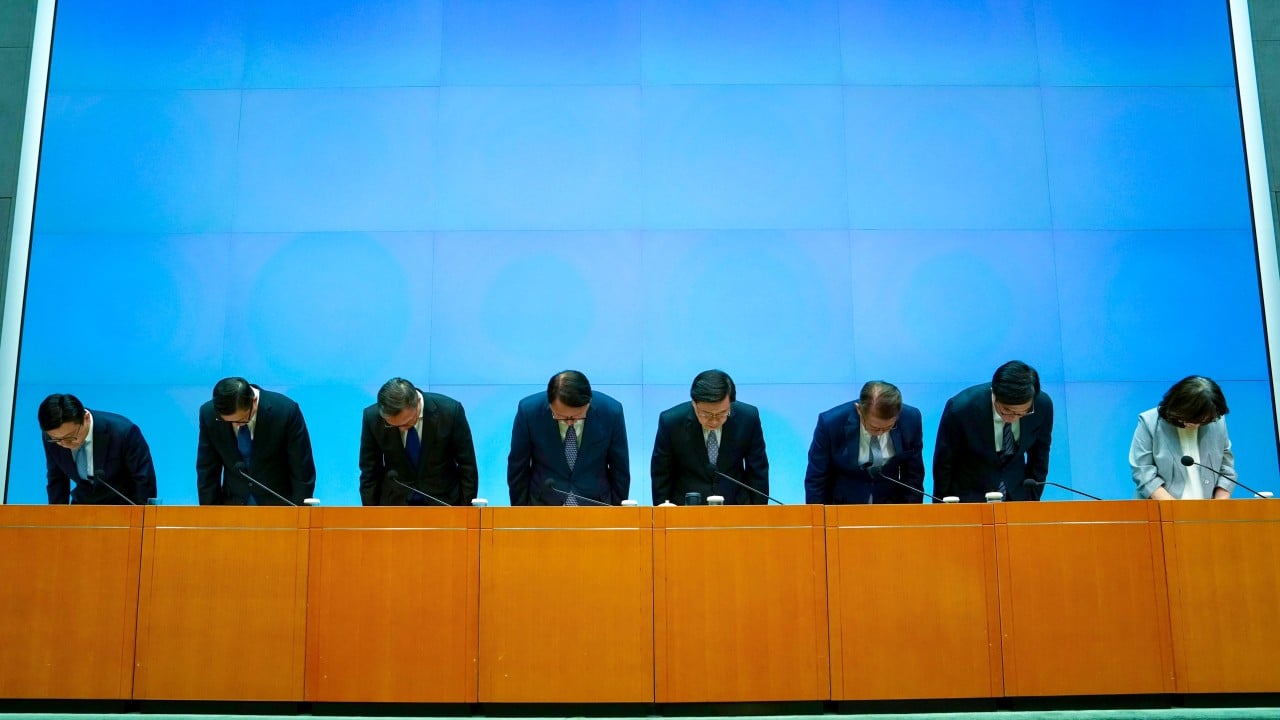
Hong Kong's housing chief Winnie Ho resigned yesterday, accepting political responsibility after an independent committee released a scathing, hard-hitting report on the catastrophic Tai Po fire at Wang Fuk Court. Chief Executive John Lee and seven principal officials bowed in public apology, admitting what many residents already knew. Decades of institutional failure, regulatory gaps, and oversight blind spots paved the way for a disaster that claimed 168 lives.
When you look past the political fallout and the public apologies, the report exposes deep structural rot. It's a stark reminder that complacency in urban safety is lethal.
The Anatomy of Regulatory Blind Spots
The independent inquiry, led by Judge David Lok Kai-hong, didn't pull its punches. Investigators found that private sector players—specifically contractor Prestige Construction & Engineering Co Ltd and project consultant Will Power Architects Co Ltd—bore primary responsibility for the catastrophe. Unscrupulous contractors cut corners. Consultants looked the other way.
Yet, the government cannot simply point fingers at greedy corporations. The report laid bare that the Housing Bureau's independent checking unit completely failed in its supervisory duties.
For years, systemic loopholes allowed massive hazards to slip right through the regulatory net. There was no ban on construction site smoking. There were zero enforceable standards for temporary combustible materials like styrofoam boards and scaffolding nets clinging to aging residential blocks. Regulators basically waited for a catastrophe to happen before checking if the doors were locked.
That isn't just an oversight. That's a systemic choice to prioritize speed and deregulation over basic human safety.
Political Accountability Versus Personal Blame
Winnie Ho stepped down immediately, stating she wanted to bear the political weight of the disaster. Chief Executive John Lee accepted her resignation and submitted a request to Beijing to remove her from office, while Deputy Financial Secretary Michael Wong takes over the housing portfolio concurrently.
Critics will argue whether a minister who wasn't personally on-site should have to fall on her sword. But that misses the point of ministerial accountability. When an entire machinery of governance fails across decades, someone at the top has to answer for the accumulated rust. Ho's departure marks a rare moment where a senior Hong Kong official actually took direct political responsibility for an administrative failure rather than hiding behind bureaucratic jargon.
Still, resignations alone won't rebuild burnt homes or bring back the victims.
The Hard Truth About Hong Kongs Construction Industry
The inquiry's findings point to rot that extends deep into the contracting ecosystem. Investigators uncovered rampant malpractice, leading to at least 25 criminal charges—including manslaughter, conspiracy to defraud, money laundering, and tax evasion—against the contractor, the consulting firm, and seven individuals.
To combat this, the committee recommended sweeping legislative overhauls. This includes criminalizing bid-rigging across the construction industry with teeth-gritting penalties of up to ten years in prison and HK$10 million fines. Chief Secretary Eric Chan will now head a new high-level steering committee to force these reforms through.
It's a step forward. But it also raises an uncomfortable question. Why did it take 168 deaths at Wang Fuk Court for the government to criminalize dangerous practices that insiders whispered about for years?
What Needs to Change Right Now
Public apologies and bowed heads make for powerful headlines, but safety is built in the mundane details of daily enforcement.
If Hong Kong wants to prevent another Tai Po tragedy, the administration has to fundamentally shift how it polices private contractors and aging residential renovations. Stricter onsite inspections can't be reactive. Regulators need real enforcement powers, clear bans on highly combustible materials during renovations, and zero tolerance for private consultants who rubber-stamp dangerous work.
The system broke because nobody wanted to do the hard, tedious work of policing contractors until the smoke cleared. Now that the truth is out in the open, the real test is whether these promised reforms actually survive the political news cycle.
Lives depend on whether officials follow through. Stop waiting for the next disaster to update the rulebook.