Empty big-box stores are the modern ghosts of American suburbia. When a massive retail footprint goes dark, it usually stays dark, dragging down neighboring property values while collecting dust and overgrown weeds.
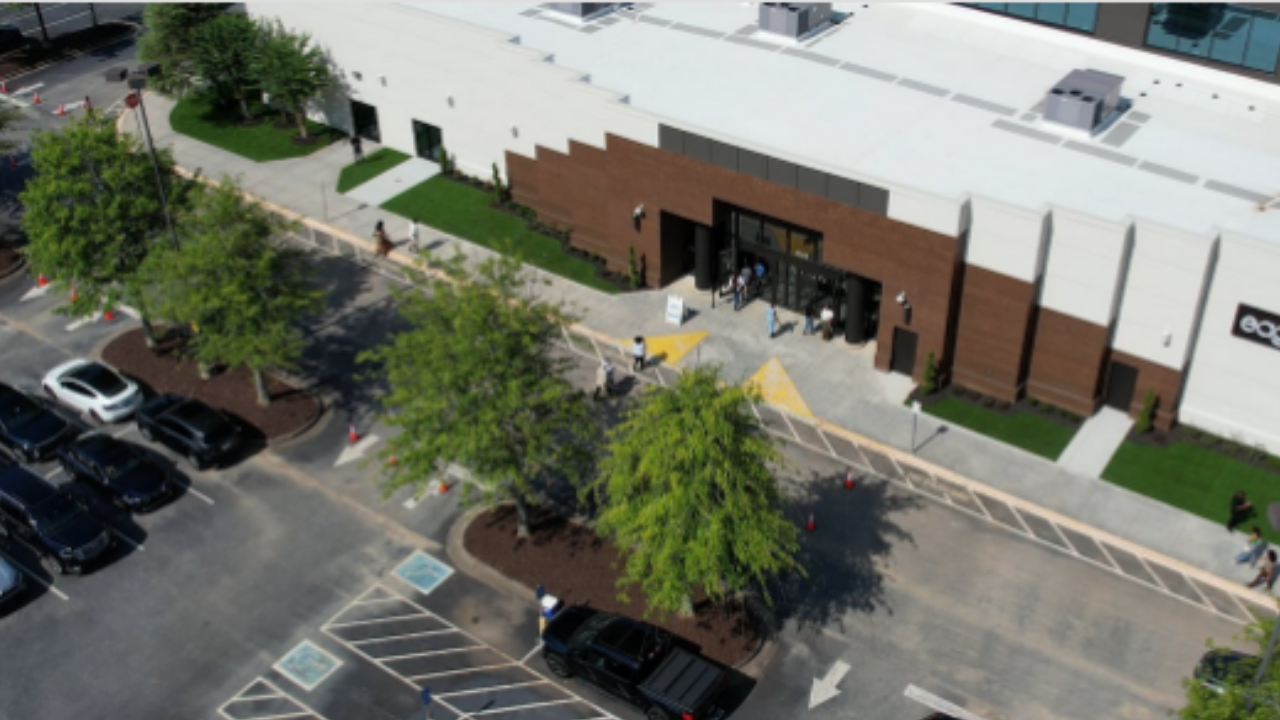
Take the former Kohl’s location on Holcomb Bridge Road in Roswell, Georgia. It closed its doors in 2016 and sat completely vacant for nearly a decade. The parking lot became a makeshift resting spot for semi-trailers, and the 80,000-square-foot building stood as a monument to retail decay.
Then a massive financial investment changed everything.
Eagles Nest Church, working alongside Atlanta-based real estate firm Regent Partners, poured $28 million into the property to turn it into an expansive church and multi-use venue. It is a textbook case of adaptive reuse on a massive scale. But the story behind this transformation reveals how empty commercial real estate is finding new life in unexpected ways.
The Journey From Retail Box to Sanctuary
Big-box conversions are hard. Retail floor plans don't easily translate into community gathering spaces.
When Eagles Nest Church bought the 15-acre retail site in December 2022 for $13 million, the interior was an empty shell. Bringing the structure up to code required stripping the old commercial layout down to its bones. Contractors ripped out drop ceilings and retail flooring, replacing them with high-grade acoustic materials, modern lighting, and heavy structural reinforcement to support a 1,000-seat auditorium.
The total project cost ballooned to $28 million. That figure covers the property acquisition, structural overhauls, parking lot redesigns, and site prep for future phases of the broader master plan known as The Beacon at East Roswell.
For the congregation, the opening marks the end of a nomadic decade. Founded in 2012 by Senior Pastor Lee Jenkins—a former University of Tennessee football player, New York Giants draft pick, and Wall Street wealth manager—the church spent more than fourteen years without a permanent building. Services bounced from hotel ballrooms and office parks to an indoor karting entertainment center and a local high school gym.
Now, they own an 80,000-square-foot permanent campus.
Why Adaptive Reuse is Exploding Across Suburbia
Retail habits changed permanently over the last ten years, leaving behind millions of square feet of empty commercial space. Traditional malls and strip centers face high vacancy rates, forcing cities and developers to rethink zoning laws.
Demolishing these massive concrete structures is prohibitively expensive and environmentally wasteful. Adaptive reuse offers a smarter path.
Converting dead retail spaces into churches, medical centers, recreational hubs, or mixed-use residential areas breathes life back into local economies. In Roswell, the church project is only phase one. Future stages involve bringing Class A retail shops, restaurants, family-focused businesses, and a childcare facility to the surrounding 16-acre site.
Instead of remaining a dead zone, the old retail footprint functions seven days a week. The new facility hosts Sunday worship services, but it also opens its doors for weddings, corporate training, conferences, and musical performances.
What Commercial Real Estate Investors Can Learn
If you watch commercial property trends, this project highlights a blueprint for tackling dead retail assets.
- Look beyond the retail label: Big-box footprints offer wide-open floor plans that can be reconfigured for assembly halls, entertainment venues, or educational facilities.
- Partner with real estate developers: Churches and non-profits rarely have the urban planning expertise required for massive commercial overhauls. Collaborating with firms like Regent Partners bridges that gap.
- Integrate mixed-use potential: Standalone buildings struggle if they don't serve the surrounding neighborhood daily. Adding retail shops and dining options turns a single-purpose building into a community anchor.
Empty retail spaces don't have to stay blights on the landscape. With enough capital and creative vision, a boarded-up department store can become the busiest corner in town. Stop writing off dead strip malls as permanent losses. Sometimes, they are just waiting for a completely different script.