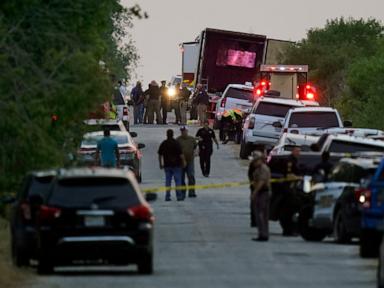
On a sweltering day in June 2022, a abandoned semi-truck trailer on a remote back road in San Antonio, Texas, became a tomb. Inside, federal investigators found 48 bodies slumped against the metal walls. Sixteen survivors were rushed to hospitals, where five more died, bringing the death toll of the horrific migrant smuggling incident to 53. Now, years later, the legal fallout continues to ripple through international courts. Rigoberto Ramon Miranda-Orozco, a 39-year-old Guatemalan man, just received a 30-year federal prison sentence for his role in orchestrating the travel.
It’s one of the deadliest human smuggling events in modern U.S. history. But focusing solely on individual sentencing misses the wider systemic failure fueling these networks.
Inside the 2022 San Antonio Tragedy
The details of that June day remain horrifying. Court records show that 64 migrants were packed tight inside the tractor-trailer. The air conditioning unit was broken. Inside, temperatures spiked near 90 degrees Fahrenheit without proper ventilation.
When first responders finally opened the doors, they didn't just find bodies. They found discarded clothing stripped off in desperate attempts to cool down. They found claw marks scarring the interior walls. People had tried desperately to claw their way out of a rolling oven. Among the 53 dead were six juveniles and at least one pregnant woman. Twenty-one of the victims were from Guatemala alone.
Migrants had paid up to $15,000 each to transnational criminal organizations promising safe passage into the United States. Instead, they bought a death sentence.
The Role of Rigoberto Ramon Miranda-Orozco
Miranda-Orozco wasn’t driving the truck. His role was logistical. According to the U.S. Department of Justice, he coordinated travel routes from Guatemala through Mexico, handing migrants off to domestic cells in the United States.
Arrested in Guatemala in 2024 and extradited to the U.S., Miranda-Orozco pleaded guilty on July 2 to conspiracy and aiding and abetting alien smuggling resulting in death and serious bodily injury. Prosecutors pointed out a chilling detail during the proceedings: Miranda-Orozco was actively planning subsequent smuggling runs weeks after he learned about the San Antonio massacre. He didn't stop. The profit margins superseded human life.
U.S. District Judge Orlando Garcia handed down the 30-year sentence in a San Antonio federal courtroom. Yet, Miranda-Orozco is only one node in a massive enterprise. Other key players have received even harsher penalties. Felipe Orduna-Torres, identified as a domestic ringleader, was sentenced to life in prison. Armando Gonzales-Ortega, an assistant, received 83 years behind bars.
Why Harsh Sentences Alone Won't Stop the Trade
Governments love high prison terms because they provide a sense of closure. Thirty years, eighty-three years, life sentences—these numbers look tough on paper. But experts and community advocates argue they won't make a dent in the underlying problem.
The economics of human smuggling are entirely built on supply and demand. Extreme poverty, gang violence, and political instability in Central America push desperate people into the hands of cartels. If one logistics coordinator goes away, another steps up in days. The financial incentives are simply too high for traffickers to abandon the trade.
Real deterrence requires targeting the financial lifelines of transnational criminal networks and addressing root causes in countries like Guatemala, Honduras, and El Salvador. Punishing mid-level coordinators provides courtroom drama, but it leaves the systemic engine of illegal trafficking completely untouched.
As courts continue sentencing remaining defendants in the coming months, the grim reality is that trucks will keep rolling unless border policies and foreign aid shift from reactive punishment to proactive prevention.
Case of 53 migrant deaths sets precedent in human trafficking investigations
This video report breaks down the court proceedings and highlights how the historic San Antonio tragedy changed federal prosecution strategies for human smuggling rings.
http://googleusercontent.com/youtube_content/1