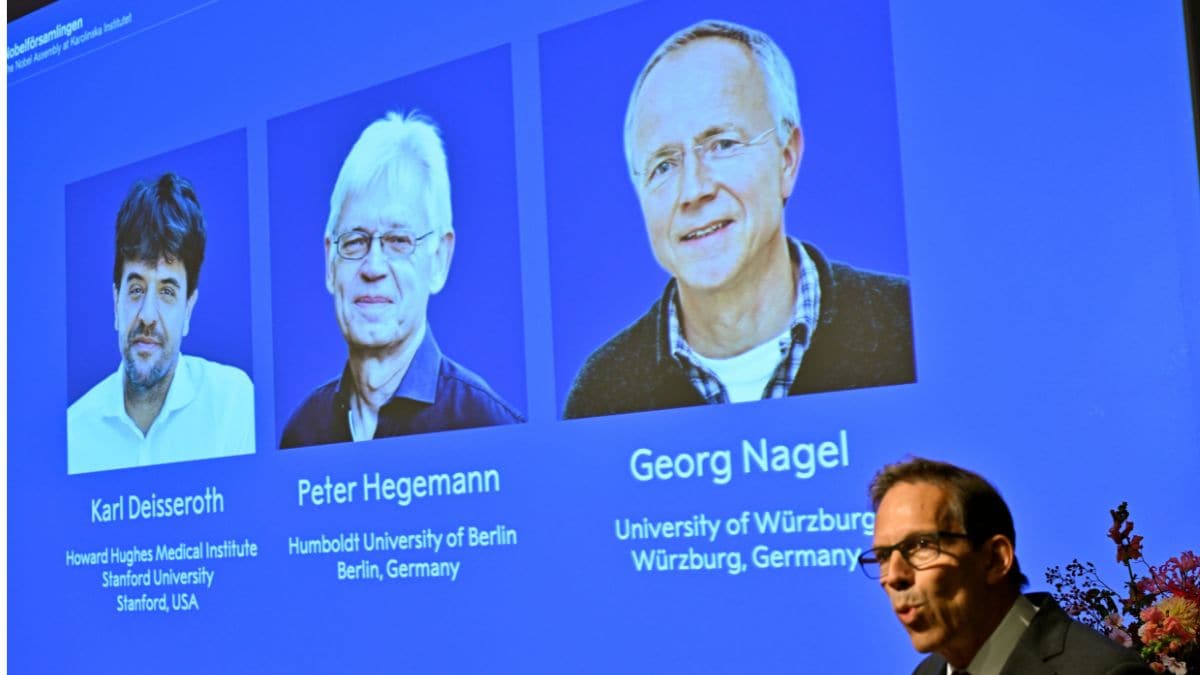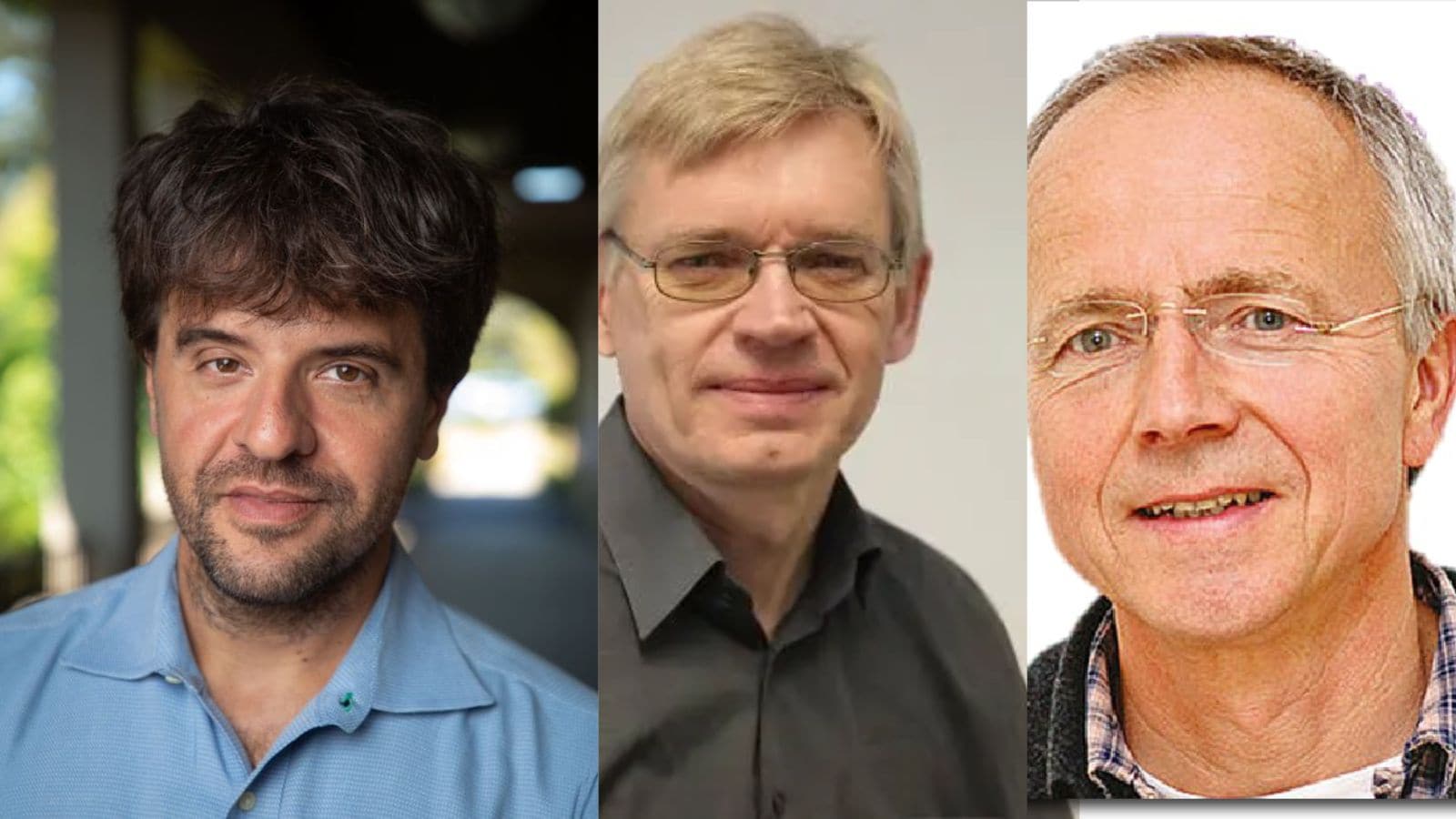
Controlling living brain cells using flashes of light sounds like science fiction. Yet, the Karolinska Institute just awarded the 2026 Nobel Prize in Physiology or Medicine to the exact team who made it reality: Karl Deisseroth, Peter Hegemann, and Georg Nagel.
For decades, neuroscience had a massive structural problem. Researchers could record electrical activity from neurons or dump drugs into neural tissue, but they couldn't turn specific cells on or off with high precision. It was like trying to fix a microchip by hitting it with a hammer.
Then came optogenetics. This breakthrough merged optics and genetics, giving researchers a way to manipulate individual neural circuits in real-time inside living, moving animals.
The Microbial Roots of a Neural Revolution
The foundation for this prize wasn't built in a neurology lab. It started with basic microbiology. Peter Hegemann and Georg Nagel spent years studying how single-celled green algae react to light. They discovered microbial proteins called channelrhodopsins—ion channels that open or close when light hits them.
Think about what that means. These algae didn't have eyes, but they possessed molecular switches powered entirely by photons.
Nagel and Hegemann isolated these light-gated ion channels and proved they could function when placed into other cellular environments. But the giant leap to neuroscience required someone to bridge biophysics and psychiatry.
Enter Karl Deisseroth.
Working at Stanford University, Deisseroth took the genetic code for these algal proteins and introduced it into specific nerve cells in rats. When he shone a blue light on those neurons, they fired instantly. When the light turned off, the firing stopped.
By 2007, Deisseroth’s team successfully used the technique in the brains of living mice. They didn't just observe behavior anymore; they drove it. They could switch specific neural circuits on and off within milliseconds, mapping out the precise cellular highways responsible for movement, fear, and memory.
Why This Technique Matters Right Now
You might wonder why this discovery earned a Nobel Prize now, years after the initial papers were published. Science moves slowly until its clinical impact becomes undeniable.
Before optogenetics, researchers relied on electrical stimulation. That approach blasts an entire brain region with current, firing every neuron in the vicinity whether you want them to or not. It lacks precision.
Optogenetics changed the game by offering genetic specificity. Scientists can target only dopamine-producing neurons, or only specific inhibitory interneurons, leaving neighboring cells completely unaffected.
This level of control has allowed laboratories worldwide to map complex neural networks with terrifying accuracy. Researchers now understand how specific circuits drive anxiety, parkinsonian tremors, and depression models in animals.
Clinical applications are already expanding beyond basic research. Teams are actively working on optogenetic therapies to restore sight in people suffering from degenerative retinal diseases by turning surviving retinal cells into light-sensitive detectors.
What the Headlines Miss
Most mainstream news coverage frames this prize as a sudden overnight triumph. It wasn't. It took decades of tedious biochemistry, endless trial and error, and cross-disciplinary collaboration between German biophysicists and an American psychiatrist-engineer.
Deisseroth famously maintained his clinical practice as a psychiatrist while running his bioengineering lab. That dual perspective matters. He wasn't building toys for a physics department; he was looking for tools to solve psychiatric disorders that have baffled medicine for centuries.
When you look at the 12 million Swedish kronor prize shared by the trio, you are looking at the price tag for patience. Basic science funded decades ago without an immediate commercial product is what ultimately delivers cures.
If you want to understand where modern medicine is heading, look past the pharmaceutical ads and watch the labs using light to rewrite electrical signals in living tissue. The brain is no longer a black box. We finally have the flashlight.