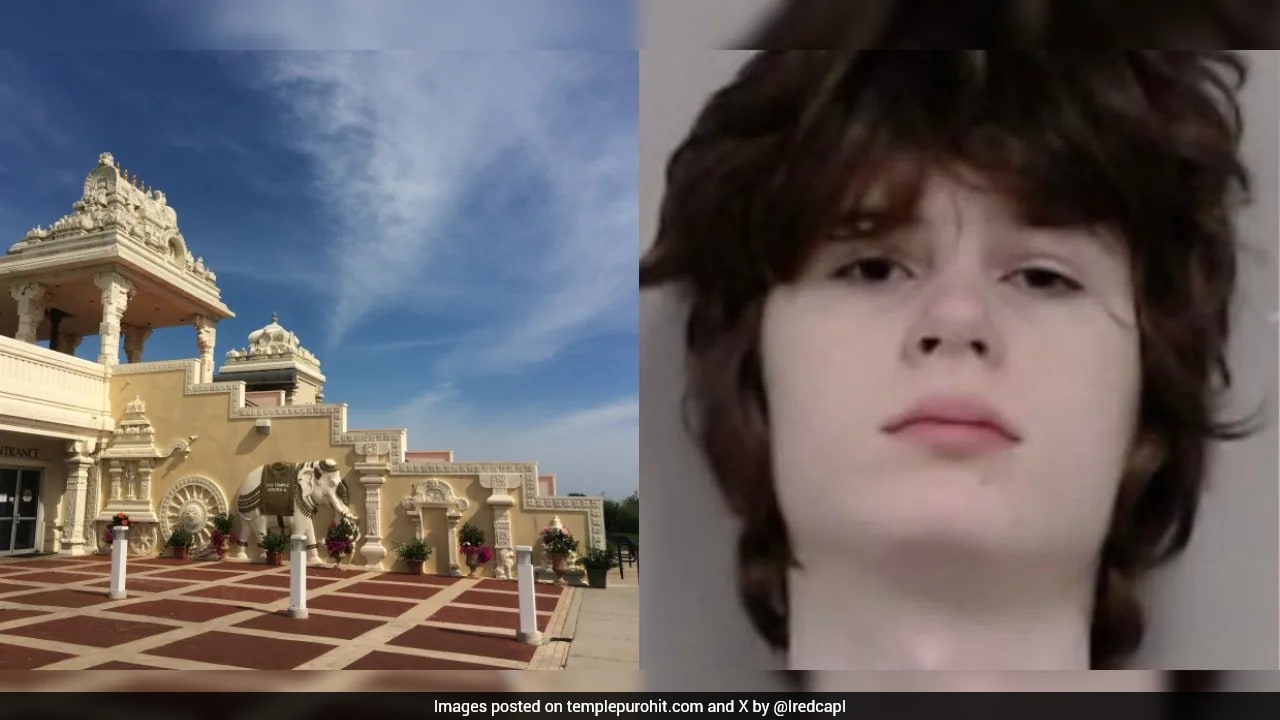
When 105 members of Congress band together to demand action from the FBI, people usually pay attention. That is exactly what happened following a terrifying near-miss at a Hindu temple in Aurora, Illinois. A bipartisan group of lawmakers, led by Indian American Congressman Raja Krishnamoorthi, sent a formal letter to FBI Director Kash Patel. They want the attempted mass shooting at the Sri Venkateswara Swami Balaji temple treated as a federal hate crime.
It is easy to scroll past breaking headlines and forget the human reality behind them. Krishnamoorthi and his own family were actually inside the temple worshipping when the suspect, 19-year-old Alexandros Paporakis of Palatine, Illinois, allegedly drove up with a rifle on October 11. Police report that Paporakis fled after his weapon failed to fire, but investigators later recovered body armor, hundreds of rounds of ammunition, and an eight-legged white supremacist manifesto targeting people of Indian descent. If you liked this post, you might want to check out: this related article.
That is not just an isolated brush with a deranged individual. It is part of a much larger, uglier wave of hostility that requires immediate, aggressive scrutiny from federal authorities.
Moving Past Local Charges to Federal Accountability
Local authorities moved fast, arresting Paporakis the same day and slapping him with charges including terrorist threats and weapons possession. But local charges do not capture the full scope of an ideologically motivated terror plot. For another perspective on this development, refer to the latest update from Al Jazeera.
The congressional letter makes this distinction crystal clear. Signatories—including senators Dick Durbin, Tammy Duckworth, Andy Kim, and Chris Van Hollen, alongside the entire Illinois House Democratic delegation—are pushing the Bureau to look at the broader picture. They want to know if the case is being thoroughly examined for racial, ethnic, and religious bias, and whether the Department of Justice's Civil Rights Division is actively involved.
When someone drafts a white supremacist manifesto detailing violence against a specific house of worship, you stop treating it as a random weapons violation. You treat it as domestic terrorism.
The Digital Fuel Feeding Physical Violence
You cannot talk about modern hate crimes without looking at what happens online. The lawmakers' letter didn't just focus on the Aurora incident; it zoomed out to examine the explosive growth of online hostility targeting South Asian Americans.
Think about the numbers for a second. Citing data from a September report by the Center for the Study of Organized Hate, the letter notes that over 542,000 anti-South Asian hateful posts flooded X between January 2005 and June 2026. Monthly volumes jumped by roughly 240 percent over that timeframe. Meanwhile, a Carnegie Endowment for International Peace survey found that nearly half of Indian American respondents encountered racist posts targeting their community very or somewhat often since early 2005, with one in four reporting direct exposure to slurs.
Online vitriol does not stay contained on computer screens. It bleeds directly into the physical world, radicalizing isolated young adults and giving them targets. Lawmakers are pressing the FBI to explain how it tracks these digital extremist networks and whether the Bureau has enough analytical horsepower and language expertise to keep up.
Holding Public Institutions Accountable
The letter also takes direct aim at federal rhetoric. Lawmakers criticized recent messaging from agencies like the Department of Homeland Security and the Department of Education, arguing that tone-deaf or xenophobic official posts risk lending state-sanctioned legitimacy to racial stereotyping. When government bodies casually lean into harmful tropes, it signals open season for bad actors on the street.
Nobody should ever have to look over their shoulder while sitting in a house of worship. The FBI has until October 29 to respond to the congressional demands. Communities across the country are watching to see if federal agencies will finally treat the rising tide of anti-South Asian hate with the urgency it demands.